
2026
Lavarice
Entrant
Sinitsa Buro
Category
Interior Design - Retails, Shops, Department Stores & Mall
Client's Name
Lavarice
Country / Region
Russia
Gallery

About The Entry
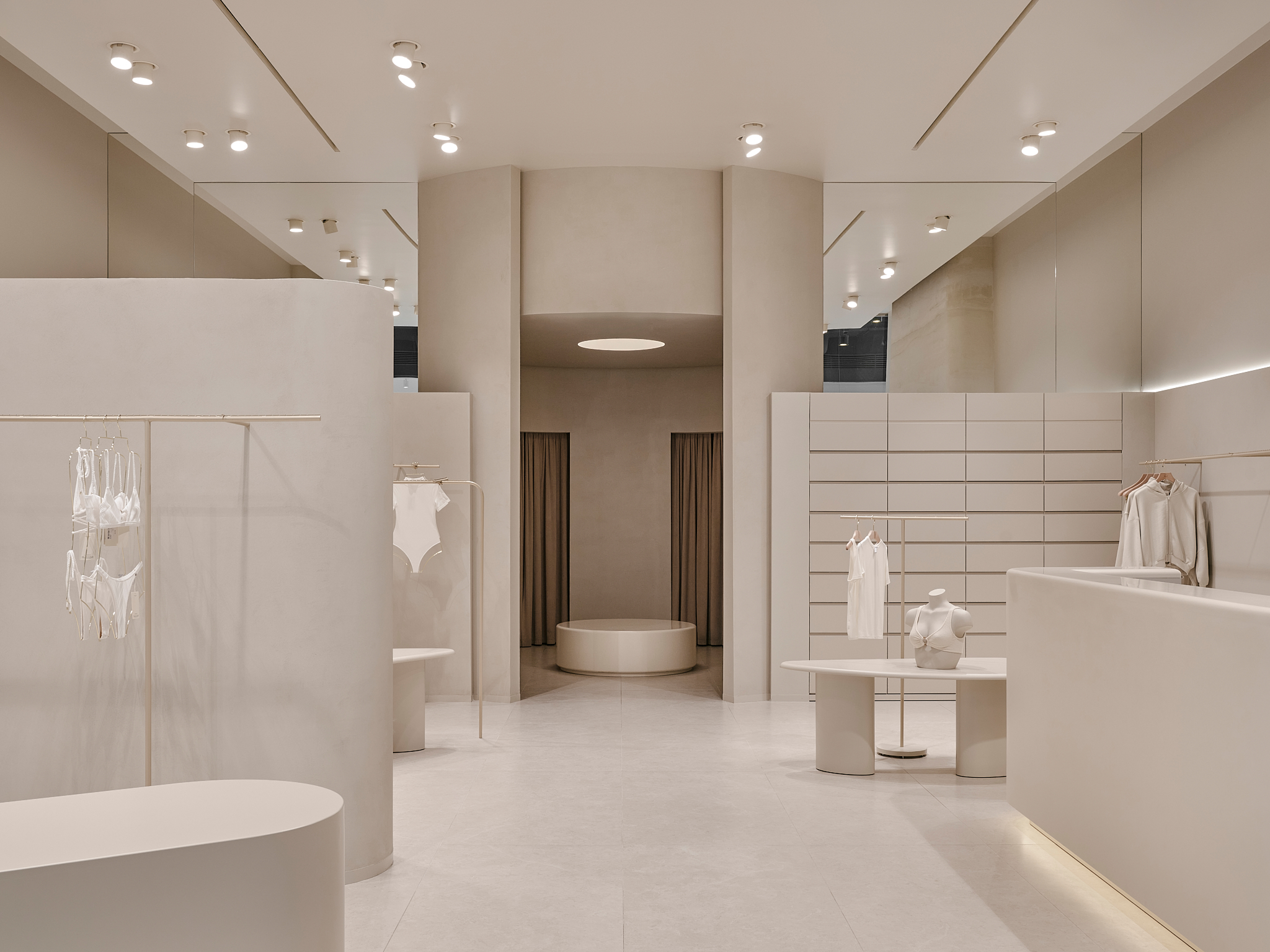
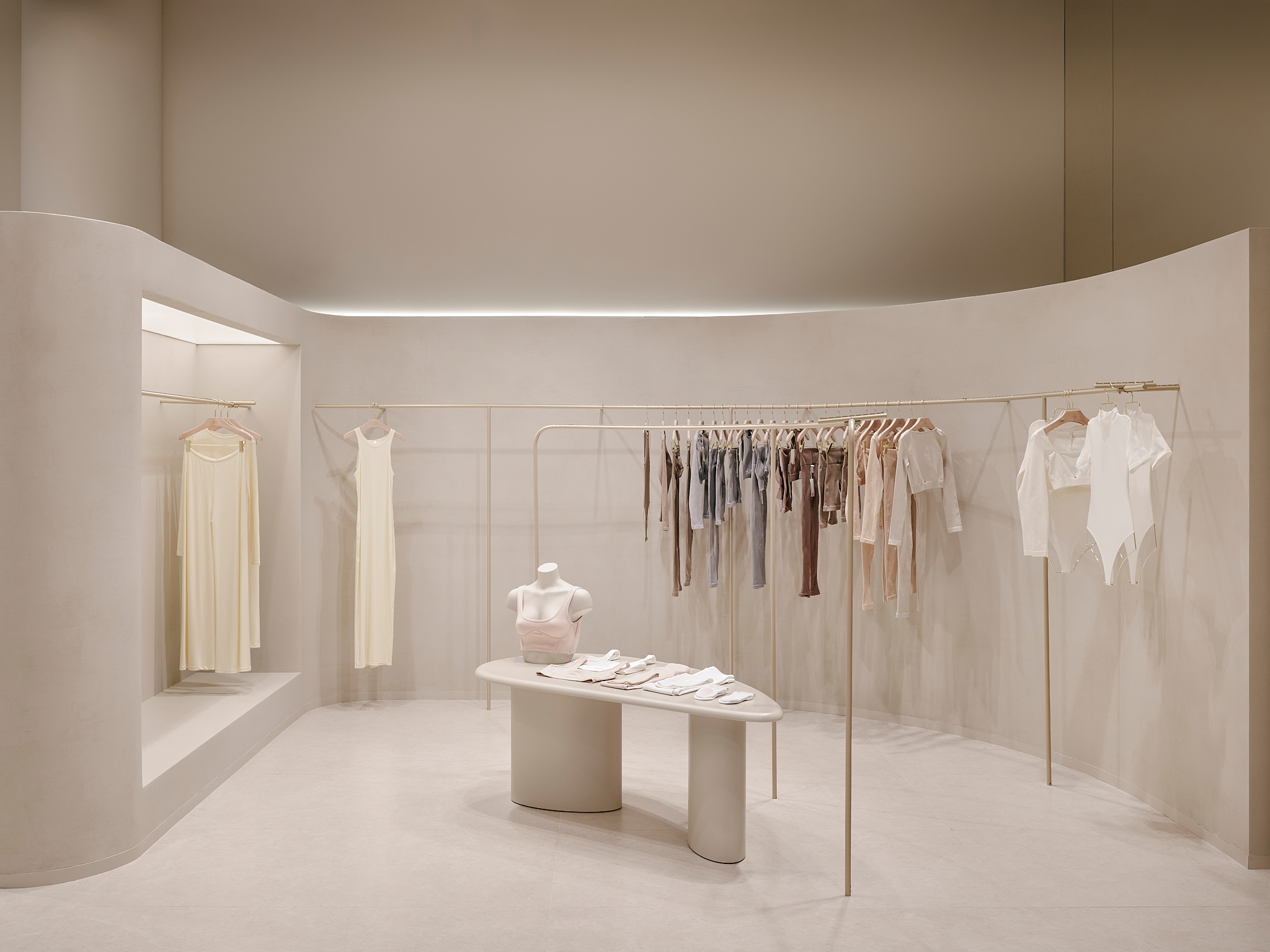
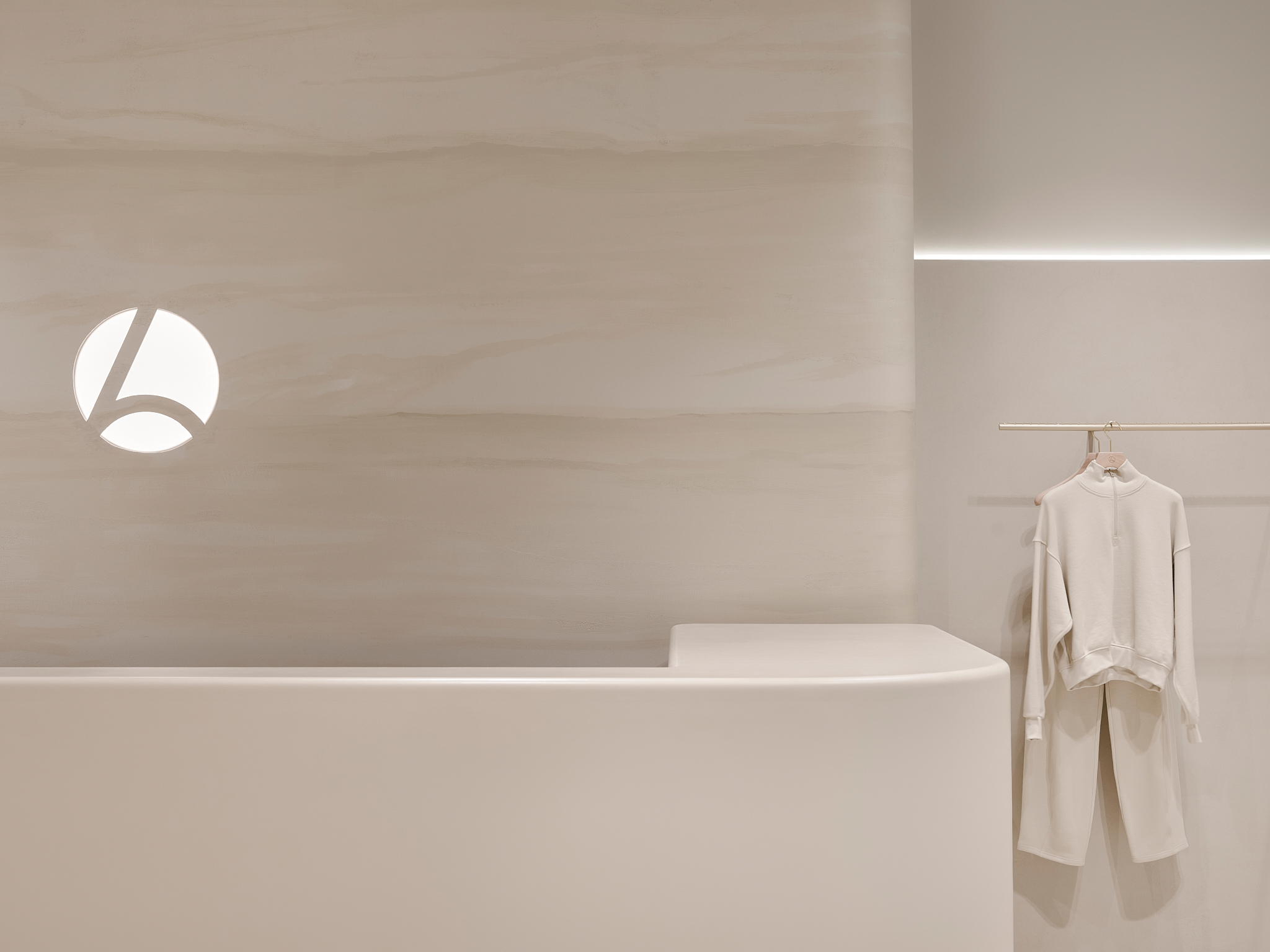
The interior design of the Lavarice lingerie store in Solaris Shopping Mall develops an architectural concept first created for the Lavarice Hollywood boutique.
By the time Lavarice approached us, they were already a network with significant experience working with both designers and construction teams. The brief called for change, but initially there was no clear direction: the client knew that existing stores looked good but could be better, yet didn’t know how. They requested a space that maintained continuity with previous projects while offering a new, plastic architectural solution. They wanted to preserve recognizability while adding depth and expressiveness.
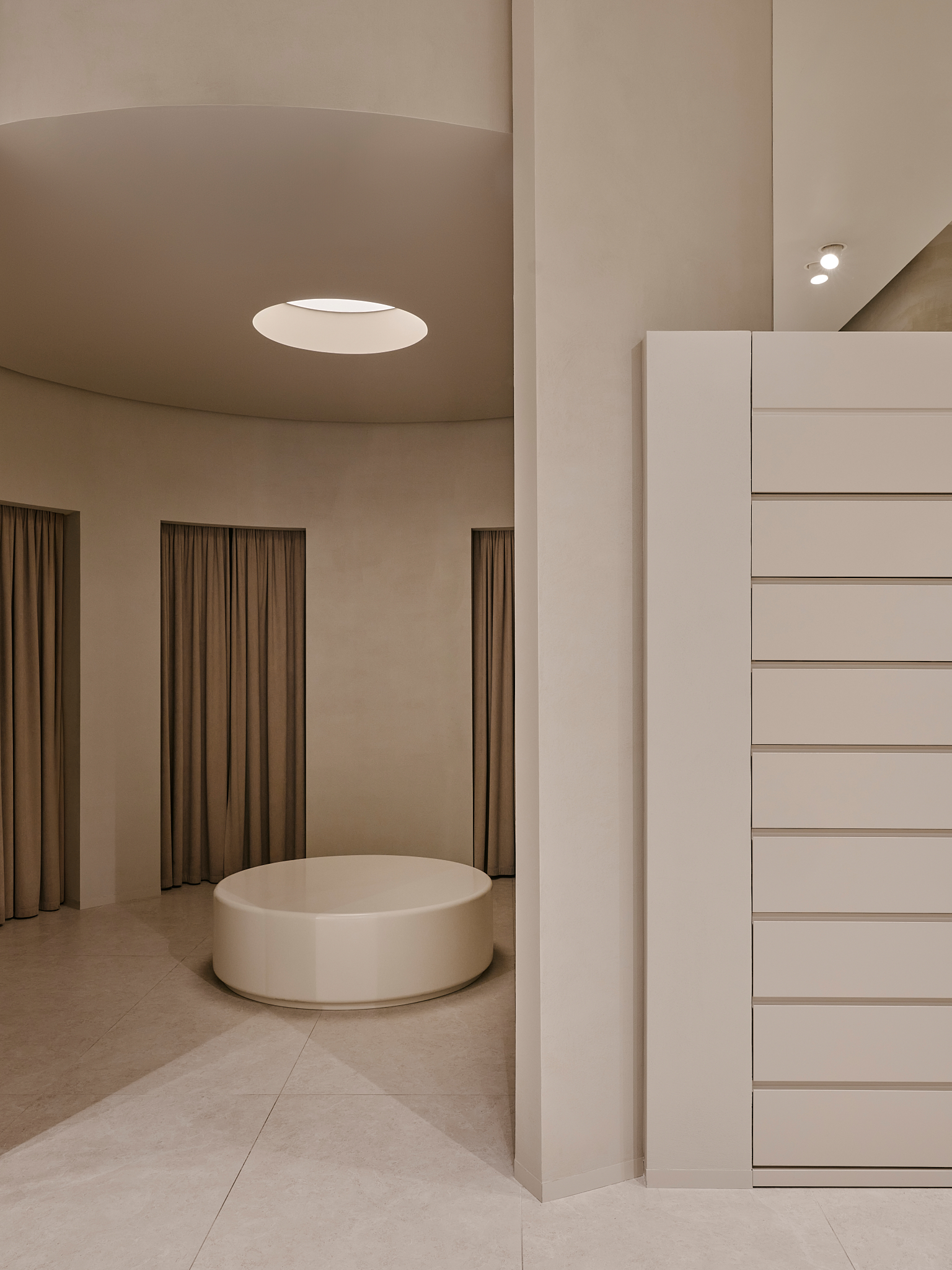
Through iterative design development, the new interior reinterprets the brand’s language through architectural categories—contrasting precise forms with soft plasticity, visual clarity with an emotional narrative. The space had an elongated layout, high ceilings, and minimal engineering constraints. These parameters allowed us to work with large volumes and structure perception according to the human scale. The central element became the fitting room—a sculptural volume resembling a mysterious altar with its own light scenario. This approach is now being used across the entire Lavarice network.
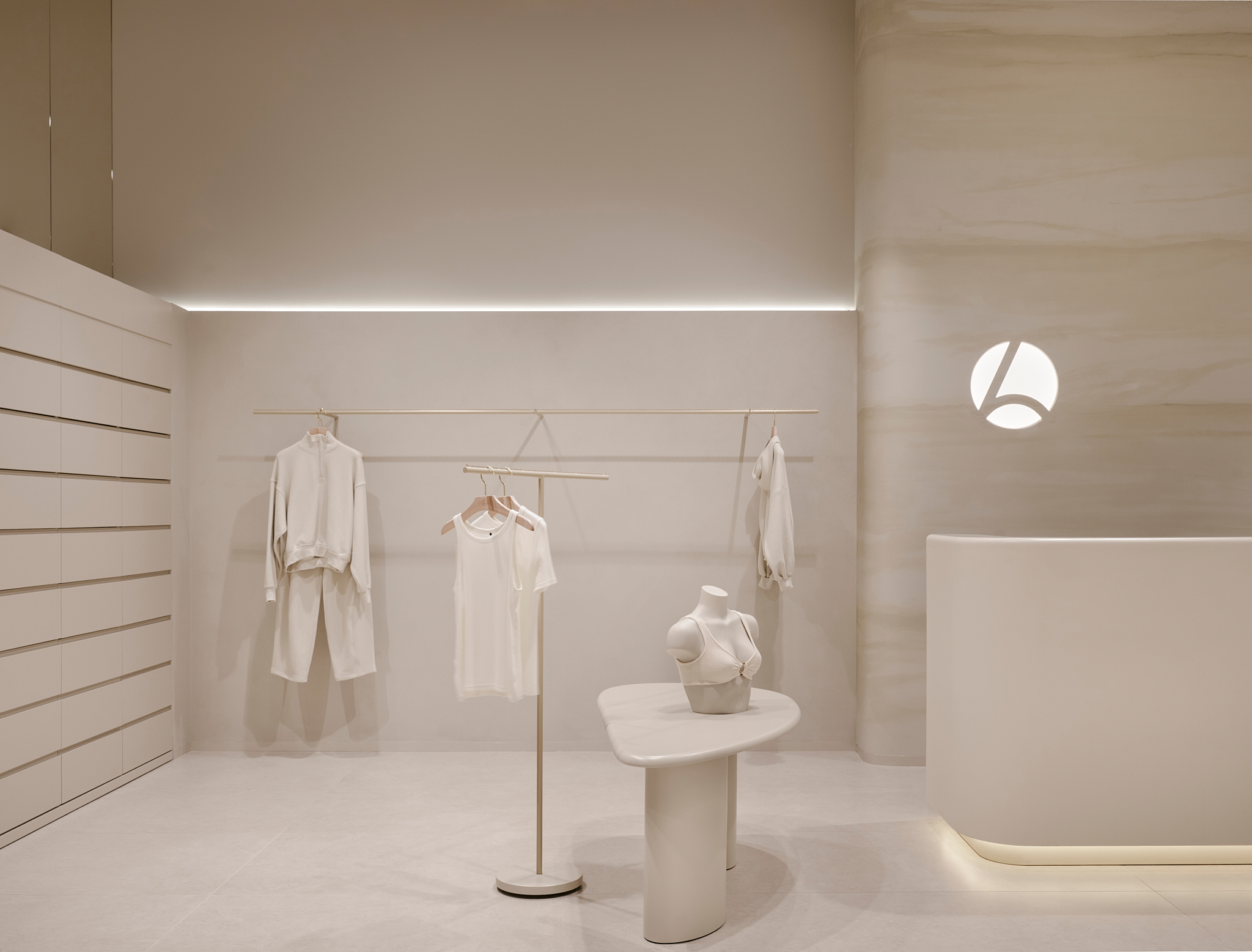
The cylindrical form engages in dialogue with the straight lines of columns and ceiling. The contrast between fluidity and rational geometry generates spatial dynamics. “Although we rarely use symmetry, here the layout is softened with slight asymmetry, balancing the composition and tempering the interior’s grandeur, giving the space a sense of liveliness,” says Anastasia Kolchina, co-founder of Sinitsa Bureau. Along the longitudinal axis, a smooth sequence unfolds—entrance, display area, fitting rooms—preserving transparency and a sense of continuity. Mirrors above the hall amplify the interplay of reflections and visually expand the space.
The internal arrangement of the fitting rooms was proposed by the client—an approach tested in previous projects. Lighting inside is distributed to reflect infinitely in mirrors, creating a soft, flattering illumination that does not distort colors—essential both for the brand and its users.
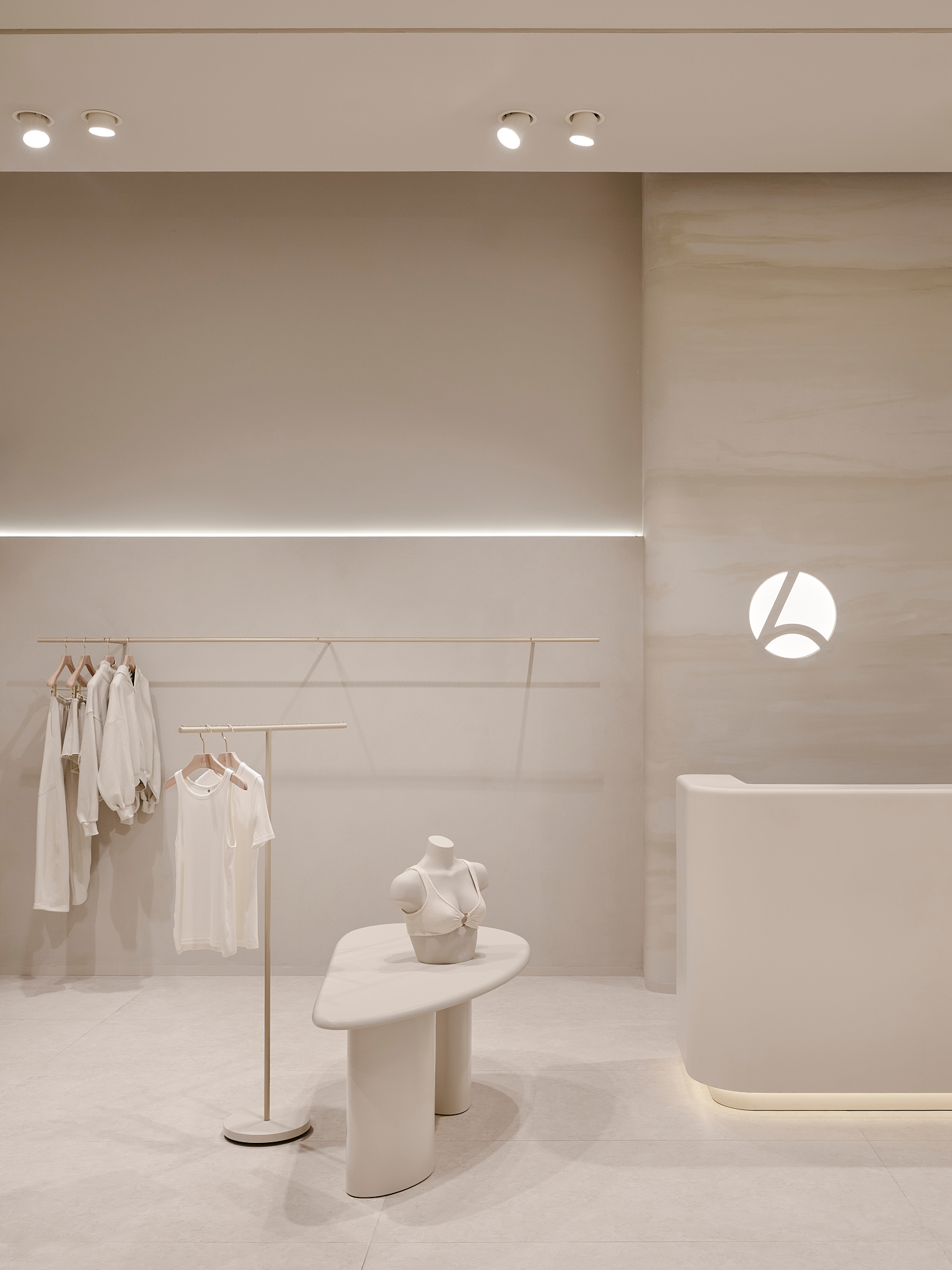
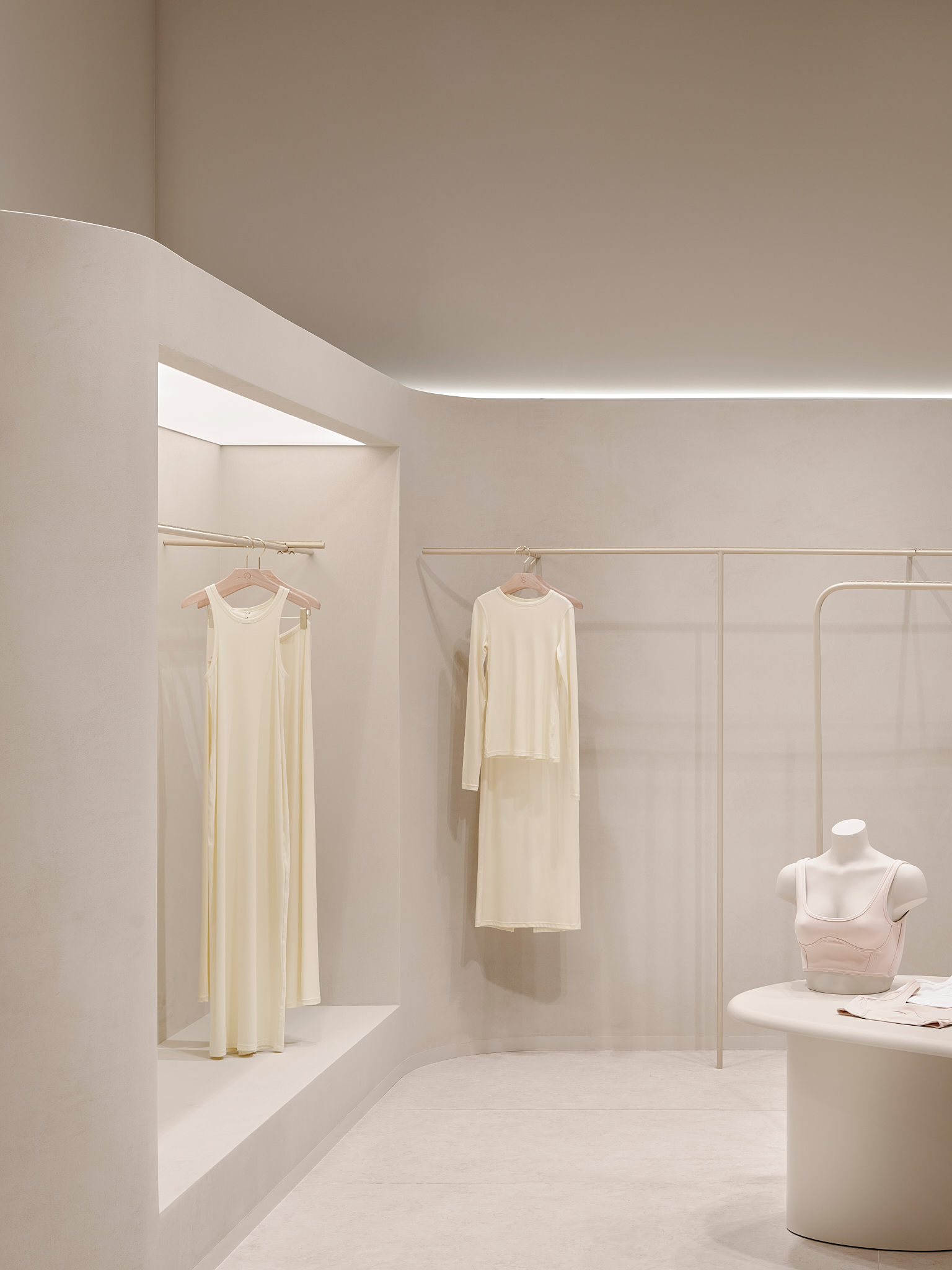
The composition is built on the contrast between fluid monolithic masses and delicate linear details. A monochromatic sandy palette, reminiscent of skin and sand tones, reinforces the idea of naturalness. Thin metal rails echo motifs from previous interiors and enhance the feeling of lightness. The combination of dense plaster textures and nearly graphic transparency of metal creates distinctive tension and an emotional rhythm. Materials with matte finishes and neutral gloss are used to diffuse light.
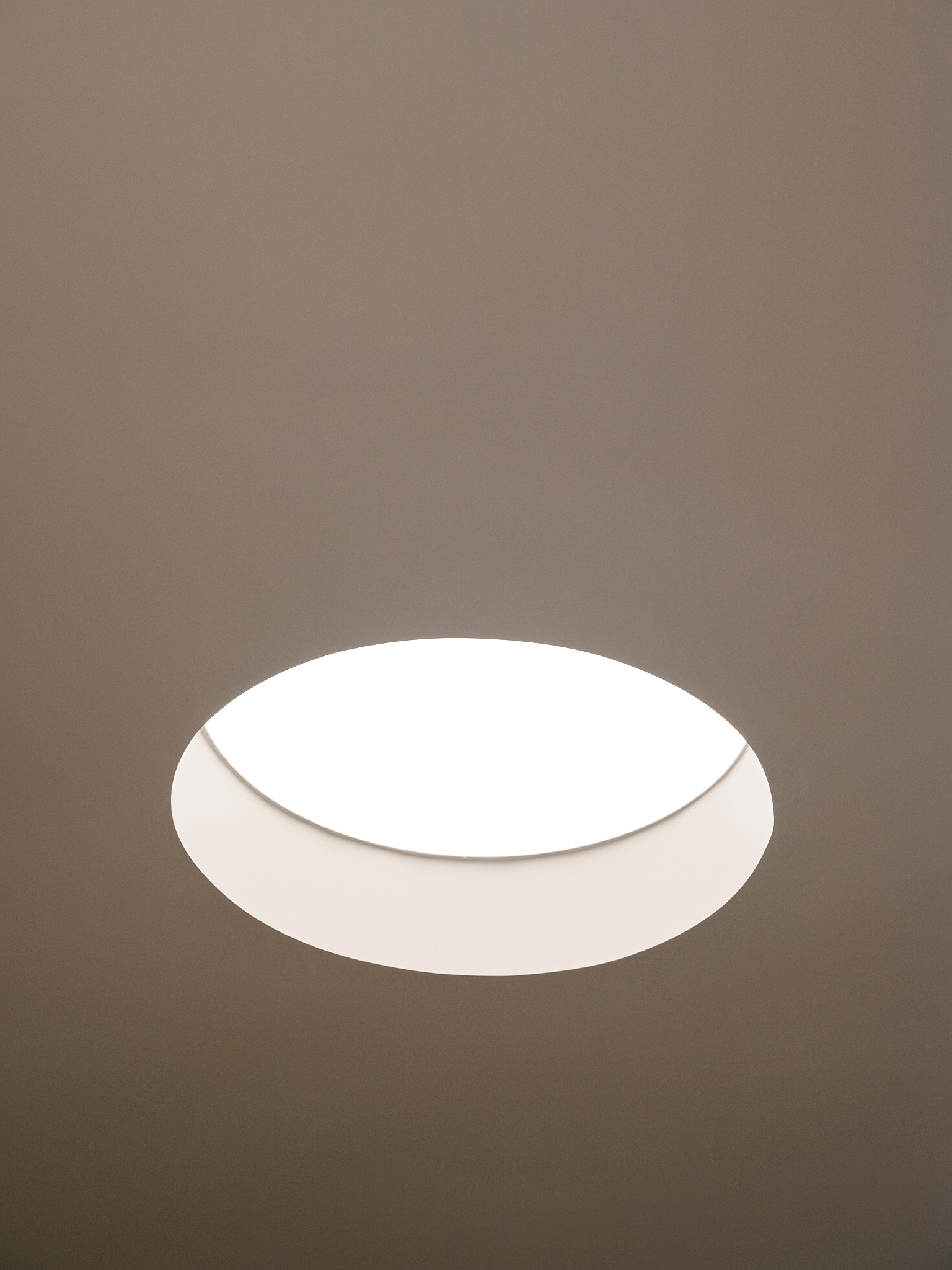
Lighting is inspired by natural scenarios—caves and Balinese temples, where light dissolves into the texture of materials. Soft lighting establishes an emotional gradient between the open retail area and the intimate core of the fitting room.
Lavarice has strong visual content, so one of the tasks was to find optimal points for screens and lightboxes. Their placement was refined multiple times to ensure that images became part of the architectural fabric rather than standalone accents.
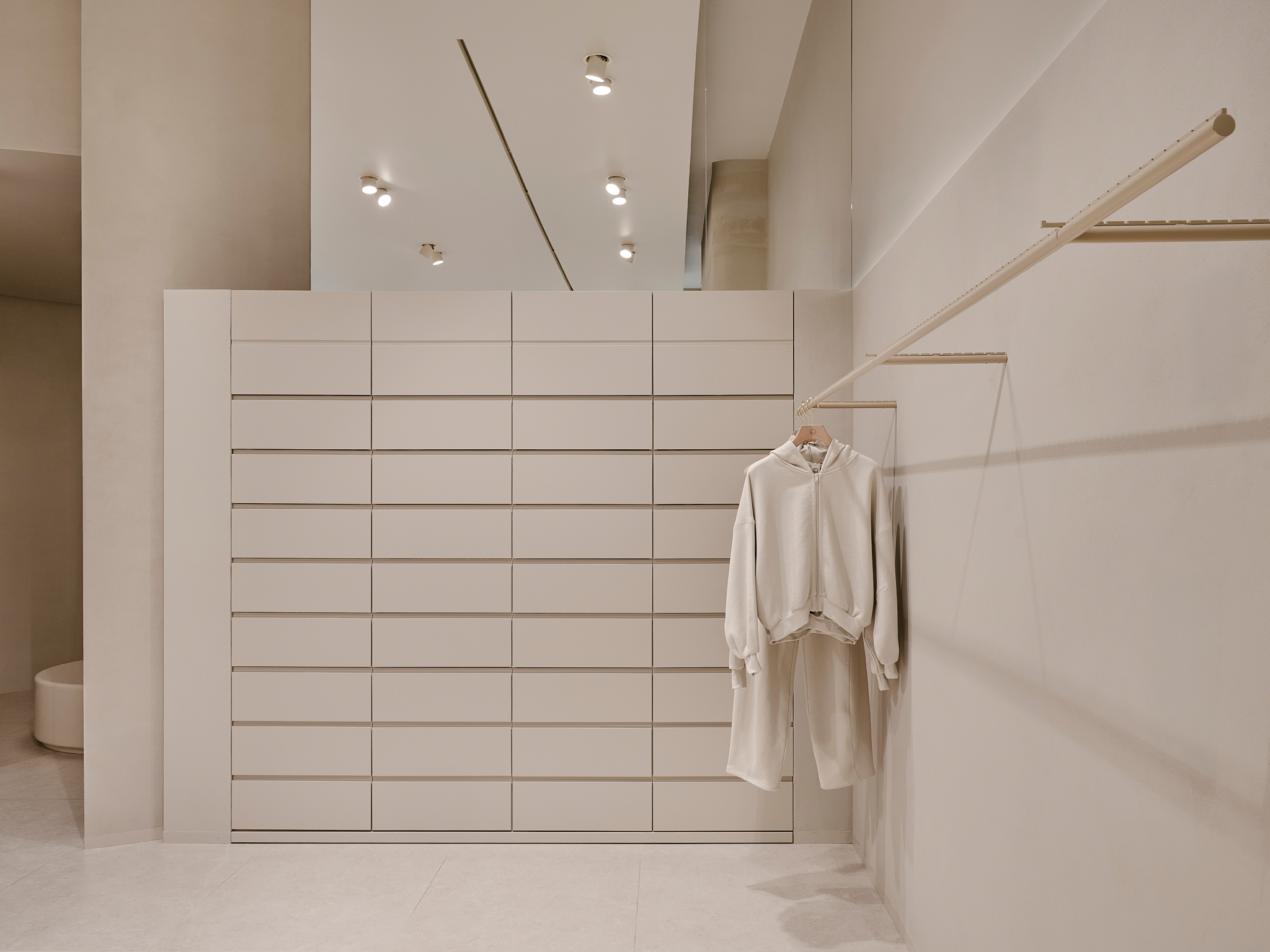
For staff convenience, integrated storage systems—hidden drawers and niches—allow order to be maintained without disrupting visual clarity.
The project was implemented in collaboration with the Lavarice team, the technical director, and the brand’s regular contractors. Work was carried out carefully—without dismantling the existing ceiling and with precise integration of engineering systems. Despite complex logistics, construction proceeded quickly and smoothly.
Lavarice demonstrates how architecture can convey brand values not through decoration but through form, scale, and light. Here, corporeality, softness, and internal balance become spatial categories, transforming a commercial interior into a space for personal experience and self-acceptance.
All furniture and equipment were designed according to the architects’ project.
Credits
Entrant
Nature Times Art Design Co.,Ltd
Category
Interior Design - Villas

Entrant
Narduli Studio
Category
Architectural Design - Public Art & Public Art Installation
Entrant
SHANG YUE INTERIOR DESIGN CO. LTD.
Category
Interior Design - Residential