Henry (Penghui) Zhang
1. Congratulations on winning the London Design Awards! Can you introduce yourself and share about what inspired you to pursue design as a career?
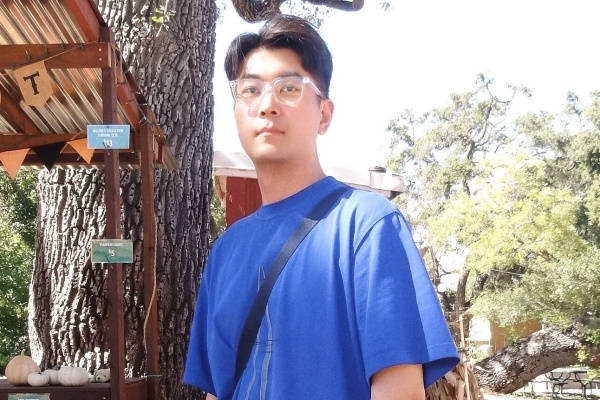
My name is Henry (Penghui) Zhang. I’m originally from Ordos, China, and I hold a Master of Architecture from the University of Pennsylvania and an MFA degree in Interior Design from Pratt Institute. I’m currently an architectural and interior designer at Elkus Manfredi Architects, and I’ve previously worked at KPF New York and interned at Gensler Chicago.
My inspiration to pursue design came from a very early fascination with how spaces shape human emotion and behaviour. I grew up in a place where the landscape is vast and sculptural, and that sense of form and spatial drama deeply influenced me. Later, discovering Zaha Hadid’s work confirmed for me what design could be—fluid, bold, and boundary-breaking. That vision continues to drive me today.
2. What does being recognised in the London Design Awards mean to you?
This recognition is significant. It feels like a culmination of years of academic study, research, and professional effort. For me, the award is not only an honour but also a validation that the ideas I’ve been pursuing—merging architecture and interior design without drawing a boundary between them—resonate with others in the field.
3. How has this achievement impacted your career, team, or agency, and what opportunities has it brought so far?
The award has strengthened my professional profile and brought greater visibility to my work. It has sparked new conversations, both internally with colleagues and externally with collaborators and potential clients. It has also opened doors to future design opportunities and expanded my network, especially among designers who share an interest in cross-disciplinary practice.
4. What role does experimentation play in your creative process? Can you share an example?
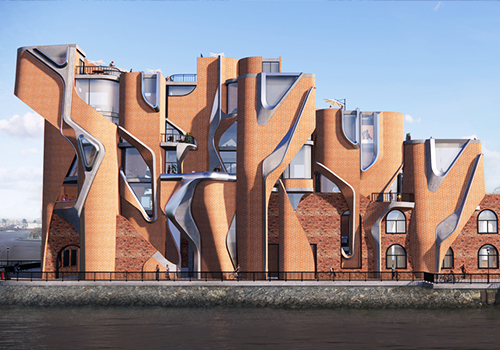
Experimentation is essential to my process. I frequently explore design ideas through digital sculpture and drawing before translating them into architecture or interiors. For example, while developing my award-winning project, I used digital sculpting tools to test fluid geometries and spatial sequences. These exploratory forms later informed the final design language and helped me discover unexpected solutions.
5. What's the most unusual source of inspiration you've ever drawn from for a project?
One of the most unusual but rewarding inspirations came from working on prop designs for a friend’s upcoming film. The narrative and character-driven approach of filmmaking forced me to think about design through storytelling, symbolism, and mood—not just function. That cinematic mindset later influenced how I approached spatial atmosphere in my architectural work.
6. What’s one thing you wish more people understood about the design process?
I wish more people understood that design is not simply about aesthetics; it’s a process of negotiation—between ideas, constraints, and human needs. Great design is always intentional and analytical. Even the simplest forms often result from hundreds of decisions, revisions, and conversations.
7. How do you navigate the balance between meeting client expectations and staying true to your ideas?
I see design as a dialogue. Clients bring goals and constraints, and I bring vision and expertise. My approach is to first understand their priorities, then use design logic to show how thoughtful ideas can meet or even elevate those needs. The balance comes from communicating clearly, being adaptable, and using strong conceptual foundations to guide the discussion.
8. What were the challenges you faced while working on your award-winning design, and how did you overcome them?
One major challenge was reconciling ambitious design goals with practical limitations—such as budget, construction feasibility, or client preferences. This is something that often separates academic work from professional practice. I overcame this by refining the core concept until it could survive simplification. When the idea behind a project is strong, you can adapt the form while keeping the essence intact.
9. How do you recharge your creativity when you hit a creative block?
I switch mediums. Stepping away from architecture to do digital sculpting, painting, or even working on film props often refreshes my mind. These parallel creative practices allow me to return to architectural problems with a renewed perspective and a more open mindset.
10. What personal values or experiences do you infuse into your designs?
I bring a sense of fluidity, openness, and cultural sensitivity into my work. Growing up in a landscape that felt both vast and sculptural taught me to appreciate expressive forms and spatial harmony. My cross-disciplinary training also shapes my belief that architecture and interior design should be seen as one continuous practice—not two separate professions.
11. What is an advice that you would you give to aspiring designers aiming for success?
Stay curious, stay experimental, and don’t limit yourself to one medium. The discipline of design is evolving faster than ever, and being a generalist with depth—someone who can think across scales and platforms—has tremendous value. Most importantly, trust your instincts, but also build the skills to articulate and defend your ideas.
12. If you could collaborate with any designer, past or present, who would it be and why?
I would choose Zaha Hadid. Her work reshaped the conversation about what architecture can be, pushing boundaries of geometry and imagination. Collaborating with her—even hypothetically—would be an unparalleled opportunity to learn from her fearless approach to form and innovation.
13. What's one question you wish people would ask you about your work, and what's your answer?
Question: How do you envision the future of design across disciplines?
Answer: I believe the future lies in dissolving boundaries—between architecture, interiors, digital art, product design, and even film. Designers today have the tools to move fluidly among media, and that cross-pollination will create richer, more holistic environments. My goal is to continue exploring that intersection as a generalist who can think at multiple scales.