Ernest Hui
1. Congratulations on winning the London Design Awards! Can you introduce yourself and share about what inspired you to pursue design as a career?
I am Ernest Hui, Head of Design at Cathay Pacific. My personal reason for choosing this path has always been simple. I wanted to create positive change in the world, even if it came one small moment at a time. Design gave me a way to do that. It allowed me to connect people with experiences that made their lives a little clearer, a little easier, and hopefully a little more meaningful.
2. What does being recognised in the London Design Awards mean to you?
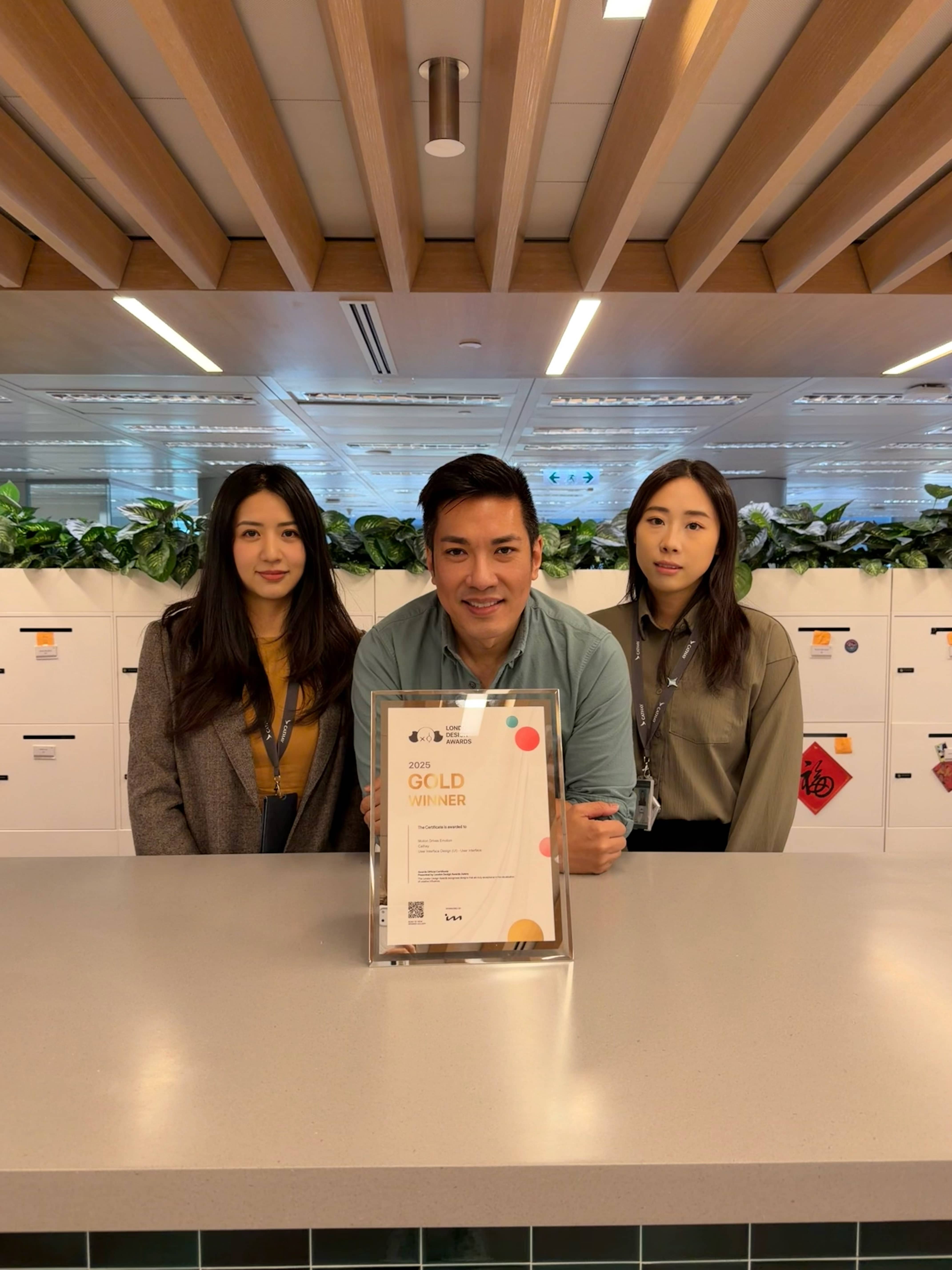
It is a meaningful affirmation of the work and thinking behind this concept. More importantly, it recognises the effort and curiosity of the designers involved, Christel and Sherry. They pushed themselves to explore emotion, movement and connection in ways that step beyond our day-to-day constraints. That is what makes this recognition special.
3. How has this achievement impacted your career, team, or agency, and what opportunities has it brought so far?
It has strengthened our belief that thoughtful ideas still matter in an age where speed often overshadows craft. For the team, it has shown that exploration can sit beside delivery work and still produce value. For our wider organisation, it has become a reminder that even a large enterprise can nurture creative thinking when we create the right space for it.
4. What role does experimentation play in your creative process? Can you share an example?
Experimentation is essential. It helps us shed the mental patterns that form when we are deeply embedded in day to day operations. This micro interactions concept was a direct product of that mindset. We challenged ourselves to break away from familiar constraints and allow movement, rhythm and emotion to guide the narrative. That willingness to explore led to something fresh.
5. What's the most unusual source of inspiration you've ever drawn from for a project?
Human behaviour has always been my most powerful and surprising source of insight. The complexities of why we react the way we do, and how tiny cues shape our emotions, are endless. Every time I study a behaviour pattern, I am reminded that people carry far more depth than they show on the surface. That understanding often becomes the starting point for my work.
6. What’s one thing you wish more people understood about the design process?
Design is not decoration. It is empathy, clarity and disciplined problem solving. It requires craft, curiosity and a willingness to sit with ambiguity. The final outcome often looks simple, but the path to reach that simplicity is rarely straightforward.
7. How do you navigate the balance between meeting client expectations and staying true to your ideas?
I focus on the intent behind each request. When I understand the motivation and the problem to be solved, I can shape ideas that honour both the needs of the organisation and the integrity of the design. Staying true to the idea does not mean resisting input. It means guiding decisions toward outcomes that respect the people who will eventually use the product.
8. What were the challenges you faced while working on your award-winning design, and how did you overcome them?
The biggest challenge was to let go of the ingrained thinking that comes from working in a fast-paced corporate environment. We had to strip away assumptions and allow imagination to take the lead. Creating a safe space for the team and offering directional mentorship helped us shift into a more open and exploratory mindset.
9. How do you recharge your creativity when you hit a creative block?
I look for activities that take up my full attention and cognitive capacity. General aviation flying is one of them. Whether in a cockpit or a simulator, the level of focus required gives me a rare mental reset. It clears out noise and creates the space for clarity to return.
10. What personal values or experiences do you infuse into your designs?
Empathy sits at the core. It guides how I see people, their struggles and their expectations. Alongside that, I bring a strong focus on craft, a clear understanding of the problem, and a disciplined approach to execution. These values shape both the work and the way I mentor my team.
11. What is an advice that you would you give to aspiring designers aiming for success?
Stay forever curious. Keep asking new questions. The moment you stop being curious, you stop growing. Curiosity is what makes you notice the small details that others may overlook and those details often change everything.
12. If you could collaborate with any designer, past or present, who would it be and why?
I would choose a writer from the world of science fiction. Asimov, Clarke or perhaps Roddenberry. They understood human nature with remarkable clarity. Their work explored what happens when technology advances faster than our ability to understand ourselves. Their insight into the human condition would add a profound dimension to any design exploration.
13. What's one question you wish people would ask you about your work, and what's your answer?
The question would be, what do you want your work to achieve and be remembered for. My answer is that I hope it leaves behind a trail of small, positive shifts. Moments where someone felt understood or supported. If my work can do that, even quietly, then it has served its purpose.