Chia Yu Lin
1. Congratulations on winning the London Design Awards! Can you introduce yourself and share about what inspired you to pursue design as a career?
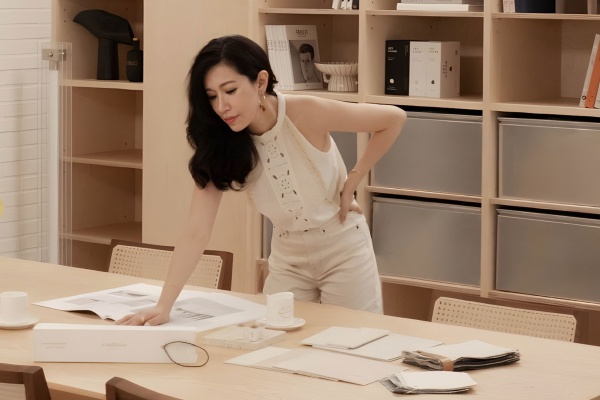
Hello everyone, I am Chia Yu Lin from ININHOME Co., Ltd., and it is a great honour to receive the London Design Awards. In recent years, ININHOME has primarily focused on residential interior design. I have always believed that space is not merely a functional container, but also an expression of lifestyle and emotion.
My decision to pursue design as a profession stems from my constant exploration of how to truly make people feel the warmth and aesthetics of home. Design connects materials, light, and human experiences, ultimately influencing the way people live. Seeing users feel relaxed and at ease in the completed space is my greatest motivation to keep moving forward.
This recognition from the London Design Awards is not only a celebration of the work but also a reminder to maintain curiosity and passion, treating design as a dialogue with the world. Moving forward, I will continue to uphold the philosophy of combining aesthetics with comfort to create spaces that touch people’s hearts.
2. What does being recognised in the London Design Awards mean to you?
Winning this award is not just recognition of my work but also a responsibility. It reminds me to continuously maintain creativity and professionalism in order to bring forth more valuable projects. At the same time, it serves as motivation to further explore the connections between people, space, and life.
For me, this honour is more than just a trophy; it is a source of strength. It reinforces the idea that the value of design lies in creating beauty that people can feel. I will continue to use my work to create more moments that resonate deeply with people.
3. How has this achievement impacted your career, team, or agency, and what opportunities has it brought so far?
This achievement has brought tremendous recognition to my career, my design team, and ININHOME Co., Ltd. It has not only elevated our visibility on the international stage but also marked an important milestone, encouraging us to further diversify our projects and expand internationally.
4. What role does experimentation play in your creative process? Can you share an example?
Experimentation plays a vital role in our creative process, serving as a tool for exploration and breakthroughs. It allows us to go beyond simply solving problems and pushes us to create new possibilities.
For example, in one residential project, we experimented with combining diverse materials with very different textures. By carefully balancing proportions, light, and construction techniques, we created a space that felt both modern and serene. This became one of the homeowner’s favourite highlights of the project.
5. What's the most unusual source of inspiration you've ever drawn from for a project?
I believe inspiration is not only drawn from interior spaces but also from the broader context of architecture, the environment, and the client’s personal traits. In one residential project, we considered not only the interior but also the unique features of the building and its surroundings. By adopting a “bringing the outside in” approach, we extended the mountain and river views into the interiors, turning the home into a viewing platform.
At the same time, we observed the client’s cultural sensibilities and lifestyle needs. For a homeowner with a refined appreciation of art and aesthetics, we incorporated weathered stone to echo the mountain textures and metal lines to reflect the flow of light. The result was a home that harmonised with nature while reflecting the owner’s personality.
Ultimately, the project embodied both a unique architectural language and the emotional depth of the client’s life, allowing them to “live inside a natural canvas” and draw daily inspiration from it.
6. What’s one thing you wish more people understood about the design process?
The part of the design process I wish more people understood is that it’s not solely about “beauty,” but about shaping the unique character of a home that reflects its occupants.
In every project, we prioritise daily living patterns and circulation. Aesthetics are essential, but true value lies in creating designs that resonate with and serve the everyday needs of residents. Many times, small observations during conversations with clients lead us to uncover the real needs of a space. These micro-interactions ultimately ensure the space is not just a piece of design work but a home that embodies the personality and lifestyle of its occupants.
7. How do you navigate the balance between meeting client expectations and staying true to your ideas?
I have always believed that design is not a one-way expression but a two-way dialogue. Many times, a client’s instinctive requests inspire me, while my design philosophy presents them with new possibilities.
For example, if a client emphasises functionality, I focus on circulation and storage solutions, but I also ensure that my vision of spatial atmosphere—through materials and lighting—is preserved. The result is often a win-win: clients enjoy a comfortable, practical space, and the design retains its poetic qualities.
8. What were the challenges you faced while working on your award-winning design, and how did you overcome them?
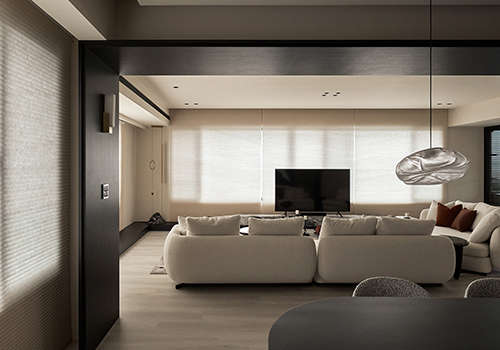
When I first took on this project, the space conditions were far from straightforward. The floor plan was trapezoidal, with numerous partitions, turns, and beams that initially made it feel fragmented. The challenge was how to create a space that was both fluid and clearly divided between public and private areas.
Instead of covering up these structural elements, I embraced them as natural boundaries. For example, beams and turns became markers that helped differentiate zones. This allowed the living room and the adjacent study, though connected, to maintain distinct atmospheres through subtle structural divisions and thoughtful circulation design.
9. How do you recharge your creativity when you hit a creative block?
One of the most important ways I regain inspiration is by experiencing life. Travelling and observing the architecture and colours of different cultures, or even appreciating the layers and presentation of a meal, can all translate into design vocabulary.
Design is a reflection of life itself. When I immerse myself in daily experiences, whether through travel, cuisine, or conversations with clients, I often rediscover connections between people and space. Even simple details, like watching natural light shift throughout the day, can spark fresh ideas. These moments help me overcome creative blocks and find design solutions that feel authentic and human-centred.
10. What personal values or experiences do you infuse into your designs?
Whether in residential or commercial projects, I firmly believe design should not exist in isolation but must closely integrate with the user’s needs. Only then can it strike the right balance between beauty and functionality.
For me, the core values are authenticity and livability. I place great importance on material textures and light details because they create emotional warmth in a space. I also infuse my personal experiences into my work; my observations of nature during travel and my reflections on culture in everyday life often serve as nutrients for my design.
Every project is a reinterpretation of life itself. It’s not simply about completing a work but about translating my understanding of how people interact with space into environments that genuinely accompany and enrich their lives.
11. What is an advice that you would you give to aspiring designers aiming for success?
My advice to aspiring designers is this: don’t rush to chase a “style.” Instead, focus on developing your ability to observe. Design doesn’t begin with elaborate expressions but with small details: how light enters a room, how materials influence emotions, how people move through a space. These seemingly ordinary observations are the true foundation of design.
Also, maintain an experimental mindset. Many breakthroughs are born from trial and error. Don’t fear mistakes, as they are part of the journey. Most importantly, be courageous in communicating with users. Design is not just self-expression but also listening and transforming; only by understanding people can you create spaces with genuine warmth.
Lastly, never forget to enjoy life. Inspiration often comes from travel, food, art, music, or even the scenery on a casual walk. When you truly embrace life, you naturally bring that authenticity into your design.
12. If you could collaborate with any designer, past or present, who would it be and why?
If I could collaborate with any designer, it would be Kelly Wearstler. Her design language skillfully juxtaposes rawness with refinement, using eclectic material and colour combinations to create unique and bold atmospheres. This resonates deeply with me.
Her creative tension aligns with our recent focus on “bringing the landscape inside," integrating the tones and textures of mountains and rivers into the home, then complementing them with weathered stone and metal to capture the interplay of light throughout the day.
We also prioritise circulation and the cultural sensibilities of users, ensuring beauty and functionality coexist. I would love to collaborate with her to weave together architecture, nature, art, and daily life into a living canvas that breathes.