Xinyun Li
1. Congratulations on winning the London Design Awards! Can you introduce yourself and share about what inspired you to pursue design as a career?
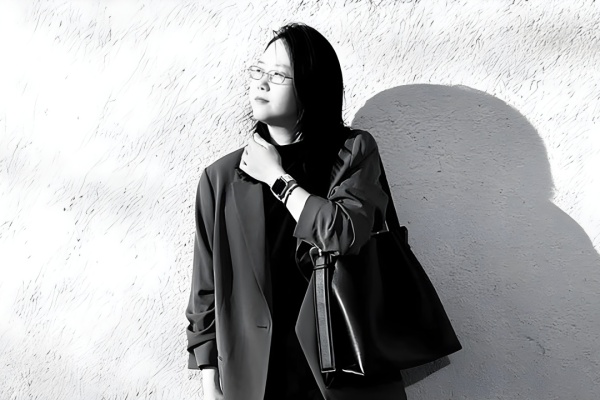
Hello! My name is Xinyun Li. I am an architect working in New York. After graduating from Harvard University Graduate School of Design, I have continued my architectural practice in the city. For me, architecture is a deeply emotional form of expression, a medium through which I explore and convey my understanding of the city, life, and nature.
My work reflects a commitment to thoughtful design that resonates with both people and place, capturing the nuanced relationships between buildings, their users, and the natural surroundings. Design carries the weight of history while imagining what lies ahead.
2. What does being recognised in the London Design Awards mean to you?
Receiving recognition from the London Design Awards is a profound privilege. It validates my pursuit of design that not only innovates but also builds cultural bridges, advances sustainability, and speaks to the human experience.
3. How has this achievement impacted your career, team, or agency, and what opportunities has it brought so far?
Receiving this award has been a turning point in my career, strengthening my credibility, widening my circle of collaborators, and opening doors to new possibilities. It motivates me to keep stretching creative boundaries and to create work that speaks more powerfully to both culture and emotion.
4. What role does experimentation play in your creative process? Can you share an example?
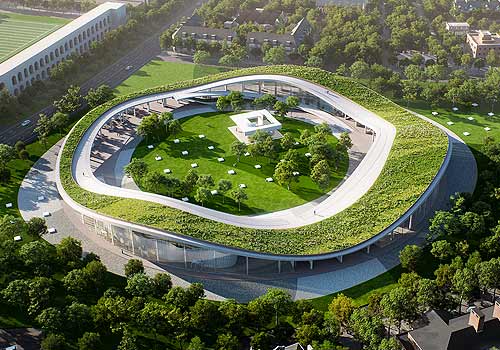
Experimentation is central to my creative process, helping me test ideas and push beyond conventions. For instance, in the project Aero Grove, I explored unconventional massing to express the relationship between building and city, which resulted in a more meaningful and resonant design.
5. What's the most unusual source of inspiration you've ever drawn from for a project?
Architecture has the power to resonate deeply with human experience when designers embrace users as co-creators. The architect’s intent, enriched by people’s everyday actions, transforms a static structure into a living, evolving design.
6. What’s one thing you wish more people understood about the design process?
One thing I wish more people understood is that design is an iterative process. Inspiration can arise at any moment, from an observation, a conversation, or even a fleeting experience, and each insight helps refine and advance the design. This continuous cycle of reflection and iteration ultimately shapes meaningful, resonant spaces.
7. How do you navigate the balance between meeting client expectations and staying true to your ideas?
My approach is rooted in attentive listening and transparent communication. By engaging in open dialogue, I align the client’s aspirations with innovative design opportunities, ensuring the outcome fulfils practical requirements while preserving authenticity and depth.
8. What were the challenges you faced while working on your award-winning design, and how did you overcome them?
Aero Grove: How to infuse vitality into a community through a humble design approach, while respecting users’ existing habits and functions and serving the broader urban context.
$2,500 Vernacular Home: How to make full use of local materials through design to respond to specific climatic and functional needs while keeping the budget under control.
9. How do you recharge your creativity when you hit a creative block?
I will reconnect with the world, whether wandering the city, experiencing nature, or connecting with art and culture. Each encounter sparks inspiration and fuels my return to design with greater clarity and imagination.
10. What personal values or experiences do you infuse into your designs?
My work is rooted in green building principles, guided by respect for the environment and for those who use the space. Beyond functionality and sustainability, I seek to design places that carry emotional depth and foster meaningful human connections.
11. What is an advice that you would you give to aspiring designers aiming for success?
My advice would be to stay curious, embrace experimentation, and remain open to learning from every experience.
12. If you could collaborate with any designer, past or present, who would it be and why?
I would love to collaborate with Junya Ishigami because of his innovative approach to blurring the boundaries between architecture, nature, and human experience. His work inspires me to explore fluidity, lightness, and poetic experimentation in design.
13. What's one question you wish people would ask you about your work, and what's your answer?
I wish people asked more about how I navigate the balance between creativity and technical demands. For me, architecture reaches its fullest potential when imagination and precision converge, creating spaces that uplift while remaining practical and achievable.