Serra Semi
1. Congratulations on winning the London Design Awards! Can you introduce yourself and share about what inspired you to pursue design as a career?
Thank you! I’m a creative director and founder of an independent design studio working at the intersection of brand, visual systems, and strategy. Most of my work supports mission-driven organisations, cultural institutions, and science- and technology-led companies that need to translate complex ideas into clear, compelling narratives. I also co-create and co-host a podcast on creative living, Gatsby Fridays.
I’ve always been drawn to creative work and to beauty, especially the way visual experiences influence how we feel, what we notice, and how we make decisions. Design brings those interests together in a very direct way.
Through colour, form, composition, and structure, it shapes perception and creates meaning. I’m motivated by the ability to use visual language not only to make things compelling, but to make them clearer, more intuitive, and more human.
2. What does being recognised in the London Design Awards mean to you?
Being recognised by the London Design Awards is deeply meaningful because of the program’s emphasis on originality, rigour, and intentional design thinking. Winning two gold awards feels especially affirming of a broader approach to the work.
For me, this recognition validates the belief that design should be treated as core infrastructure rather than surface-level polish. These projects required strategic thinking, patience, and a willingness to push beyond conventional solutions.
To see that work acknowledged on an international stage makes me proud to be part of the creative community, that there is real value in design that is thoughtful and grounded in purpose.
3. How has this achievement impacted your career, team, or agency, and what opportunities has it brought so far?
The impact has been both internal and external. Internally, it reinforces confidence in the way I approach projects. It’s a reminder that investing in depth and clarity in design thinking and the long view pays off.
Externally, the recognition has elevated conversations with clients and collaborators. It has helped position me and my practice as a strategic partner rather than a vendor, opening the door to more complex, high-trust engagements. It’s also brought visibility that attracts clients who value design.
4. What role does experimentation play in your creative process? Can you share an example?
Experimentation is how I think. It’s through exploring multiple possibilities in parallel that I arrive at the strongest solution. When developing a brand identity, I begin with three distinct directions, because the contrast between them is what surfaces what truly works.
Each direction tests a different visual approach, structure, tone, and expression, and it’s in the push and pull between those options that the project’s real visual language reveals itself. By seeing ideas side by side, the final direction becomes clearer, more intentional, and successfully carries the brand forward.
5. What's the most unusual source of inspiration you've ever drawn from for a project?
My cooking methodology. When I cook, I start with a single recipe and then research as many variations as possible before deciding which elements work best together. I approach design in much the same way. I study multiple interpretations of an idea, understand the logic behind each one, and then synthesise the strongest aspects into something cohesive and intentional.
6. What’s one thing you wish more people understood about the design process?
Design is integral to the success of any business, and it’s not optional. It’s essential to exist in the world and connect with your audience. Treating it as a nice-to-have results in missed business opportunities.
Design is integral to the success of any business, and it’s not optional. It’s essential to exist in the world, to communicate value, and to connect with audiences. Design has to be treated as core infrastructure rather than a finishing touch.
Approaching design as a “nice-to-have” often leads to missed opportunities, because design shapes how people understand, engage with, and ultimately choose a brand. When it’s given the same level of intention as strategy or operations, its impact is measurable and lasting.
7. How do you navigate the balance between meeting client expectations and staying true to your ideas?
My role is to bring clarity and impact to a client’s vision. That starts with listening carefully, understanding what they’re trying to achieve, and then translating those goals into a cohesive visual direction. I also see it as my responsibility to challenge assumptions when it helps strengthen the work and lead to a more effective outcome.
It’s never a matter of choosing between client expectations and my ideas. We’re partners, equally invested in achieving the strongest result. That partnership can involve debate and differing perspectives, but ultimately, the goal is always alignment to serve the client’s objectives while maintaining the integrity and effectiveness of the design.
The success of this philosophy is evident in my long-term and repeat client relationships and new clients who seek out Lumens due to their recommendations.
8. What were the challenges you faced while working on your award-winning design, and how did you overcome them?
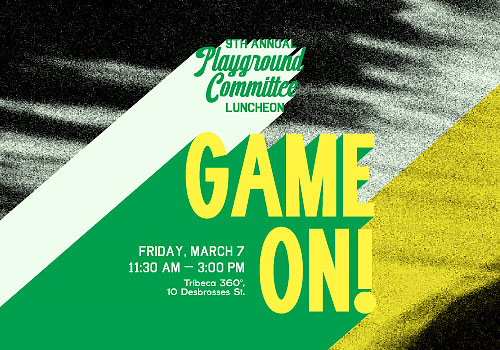
For Hudson River Park Friends’ Game On! event, the challenge was translating the idea of sports play into a visual identity that felt true to the park itself, without defaulting to familiar high-energy sports aesthetics. The work needed to convey motion and vitality while remaining grounded in a shared public landscape. I approached this by working through abstraction rather than literal symbolism.
The graphic language paired movement captured through photography with vintage-inspired sports graphics, creating a balance between energy and place. The result aligned naturally with the spirit of the park’s youth programs and the Playground Committee’s mission.
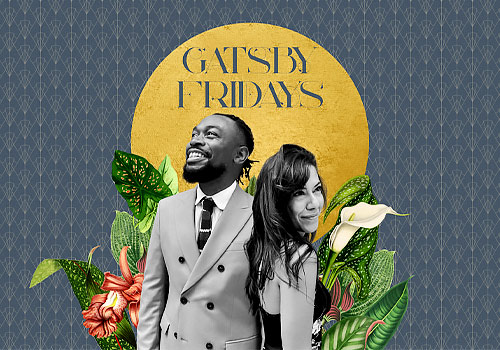
For Gatsby Fridays, the challenge was more conceptual. The podcast sits at the intersection of design, culture, and conversation, shaped by the distinct voices and perspectives of its co-hosts. The identity needed to reflect our personalities and resonate with our shared philosophy around creative living.
I developed a visual system that draws on familiar references to Art Deco and the Gatsby era, layered with expressive botanicals that suggest openness, curiosity, and growth. The resulting system is expansive and flexible, capable of evolving across seasons and platforms while remaining cohesive and recognisable.
9. How do you recharge your creativity when you hit a creative block?
Creative blocks are usually a signal that perspective needs to shift. I step away from the challenge and keep my body in motion. I go for a walk in McCarren Park right here, take a yoga class, or cook a new recipe. Disconnecting my brain from the challenge while keeping busy is what refreshes my mind.
10. What personal values or experiences do you infuse into your designs?
Design is not a 9-5 job that you can turn off when the laptop is slammed shut. The spaces we move through, the music we listen to, the cultural moments we participate in, and even the small details of everyday life all inform creative output. Nothing exists in isolation, and I believe strong design comes from understanding how a piece of work fits into a broader cultural continuum.
Because of that, my process always begins with multidisciplinary cultural research. I’m interested in drawing connections between past and present, between disciplines, and between ideas. The strength of my work is rooted in the context and the relationships established through careful observation and understanding.
I also believe that making a living through the creative process is a privilege, and I approach it with a deep sense of integrity. Every project, deliverable, and creative decision receives my full attention and commitment to excellence. That standard extends to my collaborators as well. I value shared responsibility, mutual respect, and a collective investment in doing the work well.
11. What is an advice that you would you give to aspiring designers aiming for success?
Develop your ability to think critically and articulate your decisions. Technical skill is essential, but what sets designers apart is their ability to ask better questions, connect ideas, and explain why a solution works. Equally important: always ask. If you don’t ask, the answer will already be no.
And if the answer is no, ask again, ask someone else, ask a different question. There’s always a way. Success comes from curiosity, discipline, and a willingness to always keep learning.
12. If you could collaborate with any designer, past or present, who would it be and why?
Gerhard Steidl! I love books, and if I had the space, I’d be surrounded by even more of them. Books are intimate and tactile objects, and they can be deeply personal. Steidl treats each project with an extraordinary level of respect for both the subject and the medium. His commitment to craft and the respect he brings to the act of making is awe-inspiring. It would be an honour to work on a book with him.
13. What's one question you wish people would ask you about your work, and what's your answer?
Question: Why do you do it? Why do you care so much?
Answer: Because this work is both a calling and a privilege. My contribution to the universe is adding beauty and purpose through what I create. Design isn’t something I do just to earn a living. It’s how I show up, how I stay engaged, and how I participate in living.