John Shen
1. Congratulations on winning the London Design Awards! Can you introduce yourself and share about what inspired you to pursue design as a career?
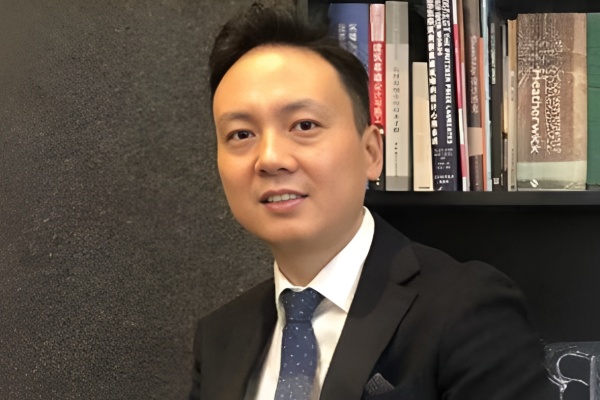
I'm John Shen, an architect and interior designer from Shanghai. I think the reasons that inspire or guide me to become a designer might have gradually formed through several stages.
Firstly, I have loved drawing and beautiful architecture since childhood, when I first entered this discipline. At the beginning of my career as a junior designer, I was interested in transforming abstract concepts or graphics into intuitive experiences.
Gradually, I noted that design could help meet the needs of users and even change people's life and work experiences; these experiences of design value drive me to have more passion for design.
2. What does being recognised in the London Design Awards mean to you?
As an architect, continuous learning and communication are crucial. I have been engaged in practical work for many years and have also completed numerous projects. Then, at a certain stage, I would like to have more opportunities to communicate and explore with more possibilities on a larger scale.
London Design Awards for me is a very professional medium to gather and promote lots of good projects, and then it's also very interesting, as you can see different categories worldwide.
3. How has this achievement impacted your career, team, or agency, and what opportunities has it brought so far?
Currently, it has been promoted to our existing client, and they are happier and confident about our work; We hope to have more makes promote to some potential and new clients.
4. What role does experimentation play in your creative process? Can you share an example?
We are very open-minded when it comes to experiments. But also very cautious when applying these new concepts or products to our client projects. Because new things do not necessarily mean they are all good. We are careful in selecting mature and valuable parts to apply in our projects. So experiments are like a pool, and the final applied elements are like some of the refined parts selected from this pool.
For instance, we have been recently studying the application of the RGB light film system in our projects. We found that while the lighting effect is spectacular, it also causes visual fatigue if one is exposed to this for a long period of time every day, it would be problematic.
Therefore, we need to further explore what positions and angles are more suitable for the placement of these digital products. We want to ensure that they can achieve the desired effect in the space while not causing visual fatigue to the user.
5. What's the most unusual source of inspiration you've ever drawn from for a project?
“Design is about solution”.
The inspiration for many of our project designs often stems from the project's own requirements or specific on-site conditions, or even some issues. Therefore, the starting point and source of our design inspiration often begins with solving these thorny problems. Some call it “Passive design”.
6. What’s one thing you wish more people understood about the design process?
Before starting, it is essential to first think clearly about the main thread of the design. The design process is merely a step-by-step implementation or partial adjustment along this main thread. Don't rush to develop the details before the main thread is clear.
7. How do you navigate the balance between meeting client expectations and staying true to your ideas?
First of all, when conceiving, try to consider the design language and the client's expectations in parallel. If sometimes the client's expectation itself is problematic, the best solution is to go on with one more option.
One is what you think is right, and the other is to do it according to the customer's requirements. Then put them together, tell the customer where the problem lies and why we should suggest doing it this way. In this case, most customers will accept the advice.
8. What were the challenges you faced while working on your award-winning design, and how did you overcome them?
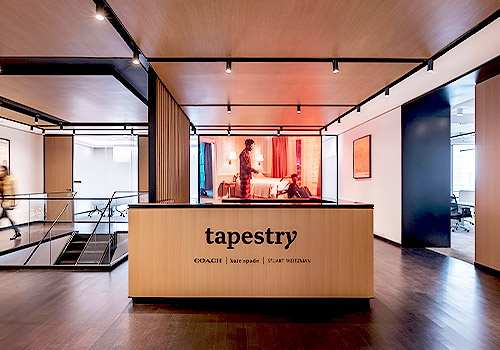
The biggest challenge of this project is that the client hopes to connect the two floors to create a vertical circulation line, enabling the public areas on the upper and lower floors to interact and connect. But the problem is that the allowed openings in the building are very small, only enough for a narrow staircase with a basic function, which looks very stingy visually.
The challenge we faced at that time was that we had to resolve the contradiction between these practical problems and the effect we wanted to achieve. We have made a lot of explorations, such as adjusting the proportion. If there is no room for horizontal expansion, then we will try to add a sense of thickness in the vertical direction to balance the overall scale and sense of scale.
This is the inspiration for why we created a platform below, as if a very light glass house were placed on a stone base, creating a contrast between lightness and weightiness.
In addition, there are many other detailed designs related to this staircase space. The final effect was that everyone loved this multi-functional public space very much. The seats and artworks on the platform also became the highlights of the space, but no one felt that the staircase was narrow. This is actually like a small magic trick our design has performed between the actual scale and the sense of scale.
9. How do you recharge your creativity when you hit a creative block?
Travel or take a short break and relax. Go to my favourite cafe and listen to music.
10. What personal values or experiences do you infuse into your designs?
An individual's values will definitely influence the design style. Personally, I'm a rather pragmatic person. I don't like things that are overly exaggerated or artificial, so such elements are also unlikely to appear in my designs.
I usually pay more attention to structures such as "Light," the beauty generated by the proportion itself, combined with the functional requirements of the customers. In our designs, we don't often actively seek out some fashionable or so-called youthful elements. Good design, not so-called fashionable design.
11. What is an advice that you would you give to aspiring designers aiming for success?
All-round development is very important. The ability and vision of design are undoubtedly the most important, but knowing how to promote on social media and let more people know about you is equally important.
12. If you could collaborate with any designer, past or present, who would it be and why?
Renzo Piano!
His design is not only good-looking or a landmark in the usual sense, but also very diverse. And this diversity is not merely the change of design style, but more of the changes that arise according to the terrain, climate, culture or people's needs of the project location. I think this change is advanced, in line with human nature and sustainable
13. What's one question you wish people would ask you about your work, and what's your answer?
"How can you make better use of the Spaces you have designed, and what kind of impact will these Spaces have on users?"
When we design any space, we do not merely consider the shape, proportion, function and other relationships of the space itself, but also take into account the feelings of the users within this space. For instance, why is there a mirror-like material in the coffee area?
Perhaps the real reason is that in a certain area, there is no light and no view from the seats, while this mirror can bring in light and a view through the right Angle.