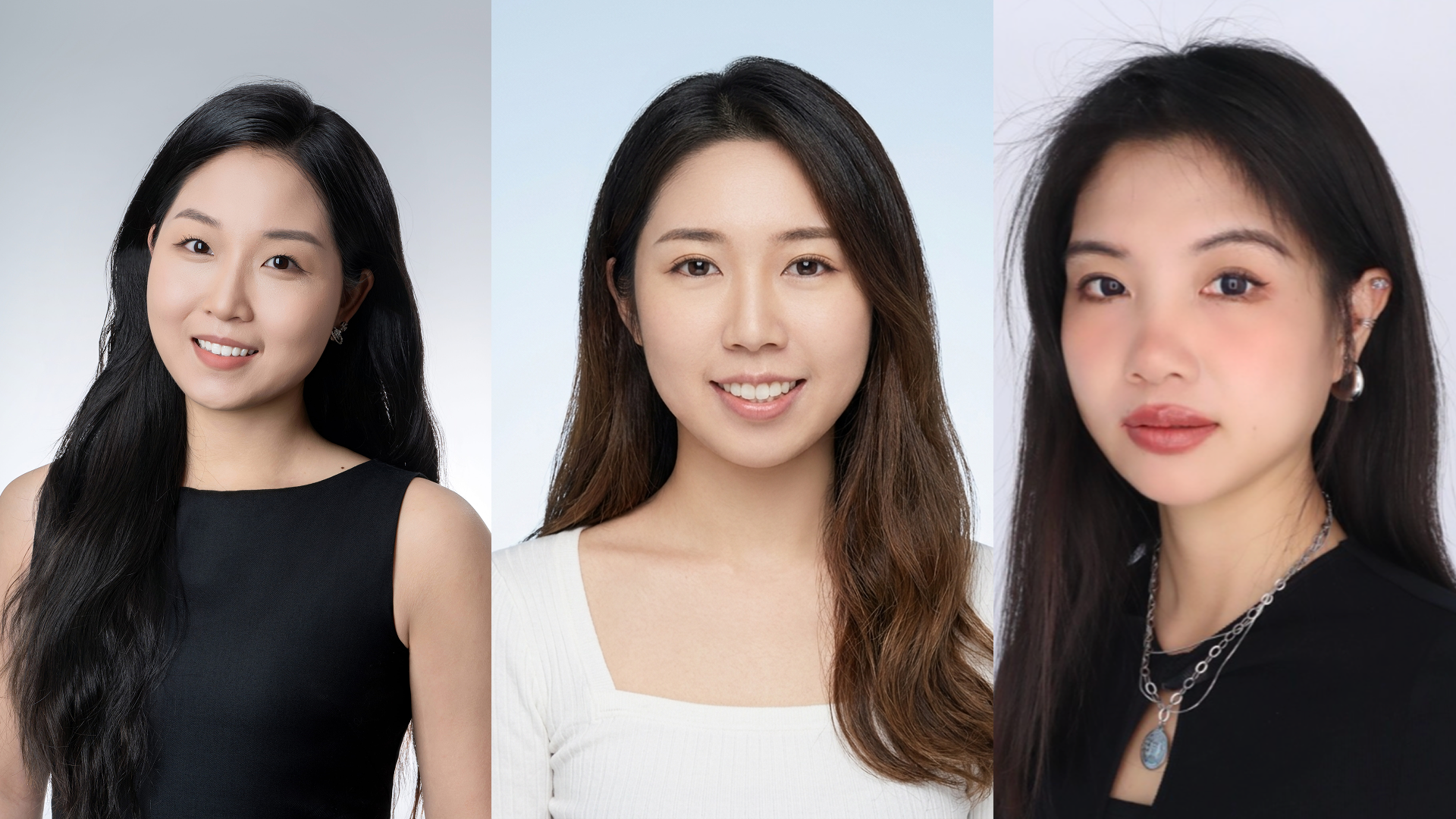
Yijun Huang, Jinghan Cao and Mingru Qi
1. Congratulations on winning the London Design Awards! Can you introduce yourself and share about what inspired you to pursue design as a career?
Yijun Huang: My name is Yijun Huang. I am a UX Designer with around 4 years of experience. I hold an M.S. in HCI from Georgia Tech and have a proven track record of delivering high-impact designs. My expertise lies in translating complex hardware and AI capabilities into accessible, unified user experiences.
Jinghan Cao: My name is Jinghan Cao, a UX designer based in Atlanta with a background in user-centred design and human-computer interaction. I’m passionate about applying design and technology to healthcare, creating solutions that enhance patient experiences and support more effective, empathetic care.
Mingru Qi: My name is Mingru Qi, and I’m a Product Designer with a background in Human-Computer Interaction. I specialise in bridging the gap between physical hardware and digital software, using strategic thinking to solve complex problems and strong visual storytelling to create intuitive, AI-driven experiences.
2. What does being recognised in the London Design Awards mean to you?
Being recognised in the London Design Awards validates that inclusive, culturally competent design is not just a niche empathy exercise, but an industry-standard benchmark for excellence. It shines a crucial spotlight on the systematic gaps immigrant communities face when trying to navigate Western healthcare and dietary frameworks.
3. How has this achievement impacted your career, team, or agency, and what opportunities has it brought so far?
This achievement has solidified our team's reputation as leaders in "phygital" healthcare design, proving we can seamlessly bridge digital interfaces with physical hardware. It has opened up exciting conversations with healthcare providers and inclusive wellness organisations eager to scale culturally adaptive service models.
4. What role does experimentation play in your creative process? Can you share an example?
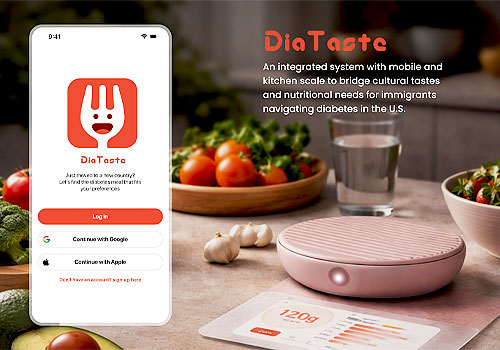
Experimentation allows us to test how digital data lives in the real world to solve hidden daily frictions. For example, we experimented with a Bluetooth-connected kitchen scale that projects recipes directly onto countertops, ensuring a hands-free cooking experience that completely bypasses unfamiliarity with Western measurement units.
5. What's the most unusual source of inspiration you've ever drawn from for a project?
For this project, the most unusual source was analysing dense, raw online community forum posts alongside traditional medical dietary guidelines. Seeing the deep cultural disparity and confusion discussed in informal digital spaces directly inspired us to build a service that honours, rather than replaces, an immigrant’s food heritage.
6. What’s one thing you wish more people understood about the design process?
I wish more people understood that great design doesn't force vulnerable users to adapt to a rigid system; instead, it forces the system to adapt to them. True innovation starts with rigorous qualitative research—like our insights from 15 immigrant participants—to uncover the exact friction points standard frameworks miss.
7. How do you navigate the balance between meeting client expectations and staying true to your ideas?
I ground every design decision in undeniable user data and evidence-based briefs so that the core idea naturally aligns with project goals. When you prove that meeting equitable healthcare needs directly correlates with a superior, frictionless user experience, client expectations and creative vision merge seamlessly.
8. What were the challenges you faced while working on your award-winning design, and how did you overcome them?
The primary challenge was translating complex, Western glycemic index and medical data into intuitive, culturally familiar culinary recommendations. We overcame this by designing an onboarding profile that establishes personal cuisine preferences and maps metric-to-US unit toggles across the entire shopping and cooking experience.
9. How do you recharge your creativity when you hit a creative block?
I step away from the screen and immerse myself in the diverse, real-world environments of the people we are designing for, like local markets or community spaces. Watching how people naturally interact with their physical surroundings quickly reframes the problem and sparks new tactile solutions.
10. What personal values or experiences do you infuse into your designs?
I infuse a deep commitment to cultural equity and accessibility, believing that no one should have to choose between their health and their heritage. This project reflects the core value that healthcare design should meet people exactly where they are, inside the comfort of their own traditions.
11. What is an advice that you would you give to aspiring designers aiming for success?
Look for the invisible exclusions in everyday systems and use rigorous research to give those marginalised users a voice. Success comes when you master both the digital interface and the physical touchpoints of a service to solve deep, real-world inequities.
12. If you could collaborate with any designer, past or present, who would it be and why?
I would choose to collaborate with Patricia Moore, a pioneer of universal and empathetic design who famously immersed herself in her users' lived experiences. Her blueprint for radical empathy would be invaluable as we continue to push the boundaries of inclusive, phygital healthcare solutions.
13. What's one question you wish people would ask you about your work, and what's your answer?
I wish people would ask, "Why focus on a physical kitchen scale instead of just building an app?" My answer is that true accessibility is hands-free; projecting recipe steps directly onto the countertop means users don't have to juggle a phone with messy hands while navigating unfamiliar cooking metrics.