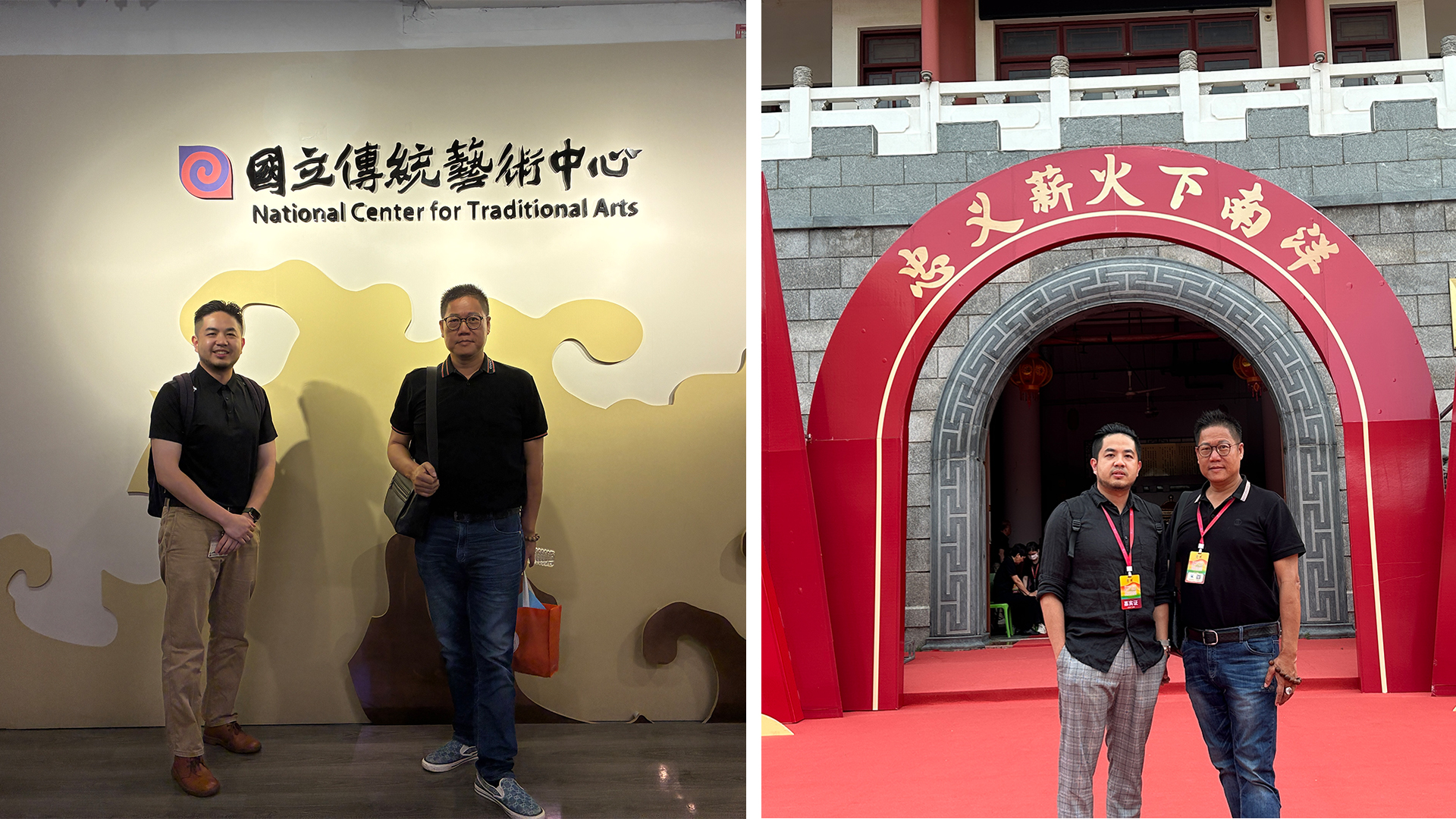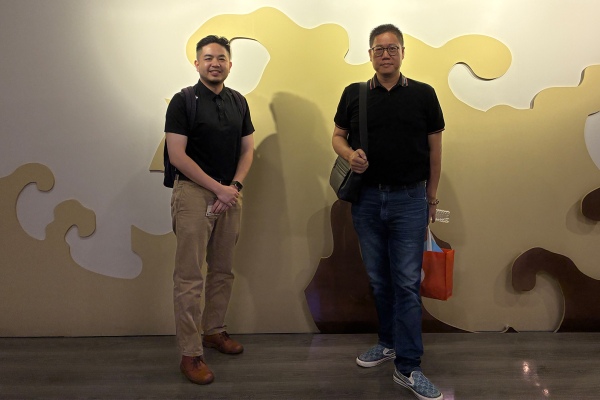
Po Jui Huang and Ching-Ho Hsiao
1. Congratulations on winning the London Design Awards! Can you introduce yourself and share about what inspired you to pursue design as a career?
Po Jui Huang and Ching-Ho Hsiao, based in Taiwan. We are a team deeply passionate about the development of traditional culture and folk beliefs. Our journey into design was inspired by a strong cultural identity and a profound connection to faith.
For us, design is not just about form-making, but a process of cultural translation. We work within the context of Taiwanese traditions and religious practices, reinterpreting them through a contemporary lens so they can be understood, experienced, and shared with a wider audience globally.
2. What does being recognised in the London Design Awards mean to you?
This recognition means a great deal to us. It is not only an acknowledgment of our work, but also a sign that Taiwan’s traditional culture and beliefs are being seen and understood internationally. It reinforces our belief that this path is meaningful and worth continuing.
3. How has this achievement impacted your career, team, or agency, and what opportunities has it brought so far?
We are an emerging team driven by passion for culture and faith. This award marks an important milestone for us. It has strengthened our confidence and brought greater visibility to our work, while also opening up new opportunities for cross-disciplinary collaborations and cultural projects.
4. What role does experimentation play in your creative process? Can you share an example?
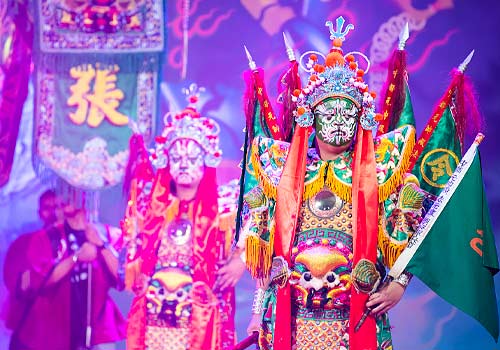
Experimentation plays a crucial role in our creative process. We attempted to bring traditional Taiwanese ritual performances (Yi-Zhen) onto the stage, presenting them in a theatrical format. This was a significant breakthrough, as these traditions carry many taboos and cultural boundaries. Finding ways to innovate while maintaining respect made the process both challenging and exciting.
5. What's the most unusual source of inspiration you've ever drawn from for a project?
Our inspiration comes from everyday cultural memories. Watching Yi-Zhen performances in front of temples is a shared childhood experience in Taiwan. However, these traditions are often misunderstood. We aim to reinterpret their value through design and shift these perceptions.
6. What’s one thing you wish more people understood about the design process?
I hope more people understand that design is not just about visual output, but a process of cultural understanding. Especially in traditional culture and belief systems, every detail carries meaning and context.
7. How do you navigate the balance between meeting client expectations and staying true to your ideas?
Balancing innovation with tradition was one of the biggest challenges in this project. While the organiser encouraged innovation, Yi-Zhen carries strong cultural constraints. Through continuous dialogue, we found a balance that respects tradition while allowing new interpretations.
8. What were the challenges you faced while working on your award-winning design, and how did you overcome them?
The biggest challenge was shifting the context of Yi-Zhen. Traditionally, it serves religious purposes, but we needed to bring it onto the stage for audiences. Cross-disciplinary collaboration also added complexity. We overcame these challenges through ongoing communication and trust-building.
9. How do you recharge your creativity when you hit a creative block?
When I face creative blocks, I return to temple spaces and watch Yi-Zhen performances to reconnect with the original inspiration.
10. What personal values or experiences do you infuse into your designs?
I value “respect” and “translation” the most. While respecting the essence of culture, I focus on how it can be understood in a contemporary context. Design, to me, is a way of communicating across generations and cultures.
11. What is an advice that you would you give to aspiring designers aiming for success?
Belief is essential. Stay committed to what you believe in, and over time, that persistence will become your value.
12. If you could collaborate with any designer, past or present, who would it be and why?
I would choose to collaborate with legendary Broadway director Harold Prince. He was known for integrating storytelling with stage language. I would love to bring Taiwanese Yi-Zhen to a Broadway stage.
13. What's one question you wish people would ask you about your work, and what's your answer?
I wish someone would ask, “What has this work changed?”
My answer would be: it encourages more people to approach culture, and allows those already familiar with it to see new possibilities.