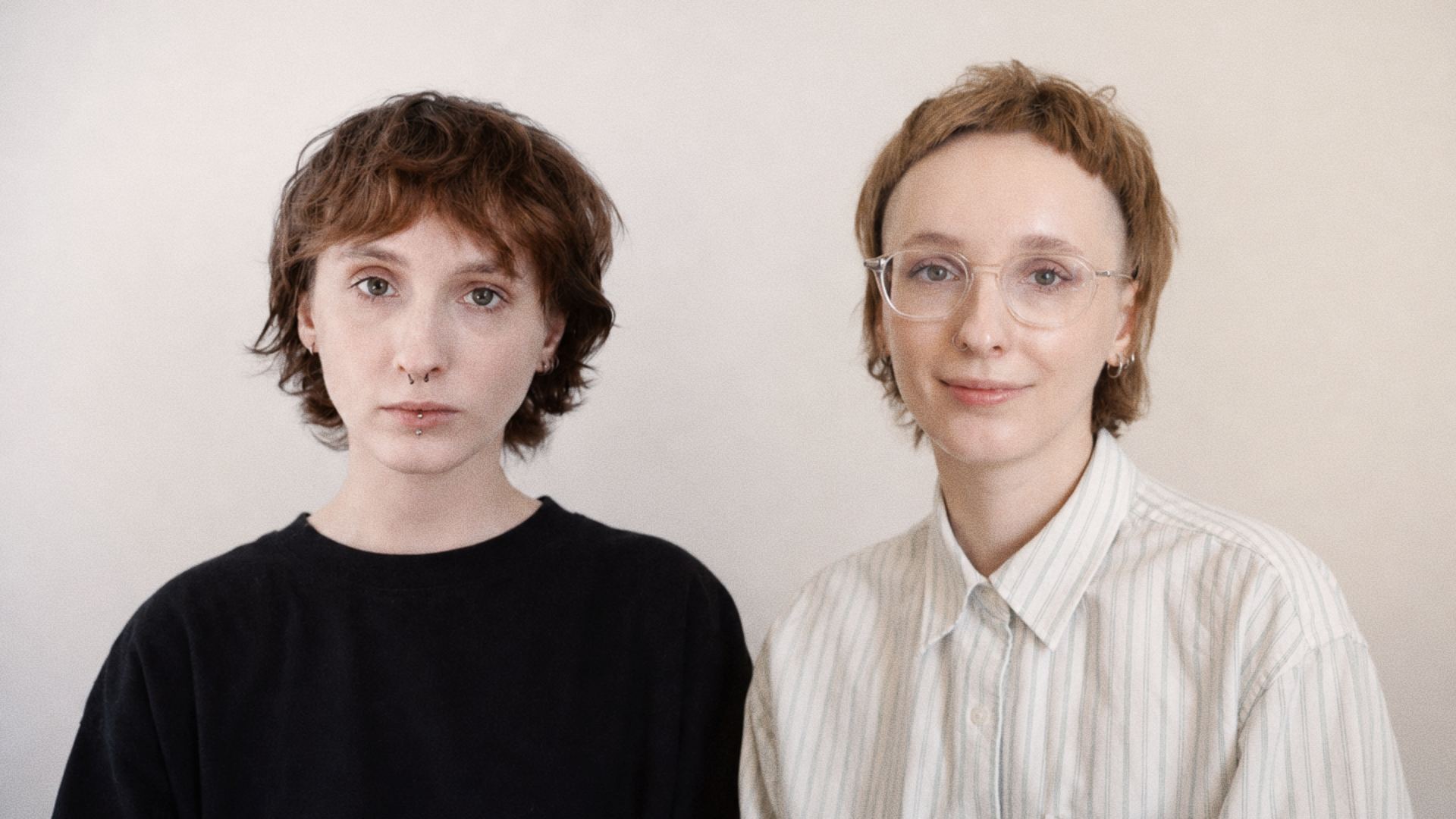
Olia and Alina Chupakhina
1. Congratulations on winning the London Design Awards! Can you introduce yourself and share about what inspired you to pursue design as a career?
We're twin sisters, Olia and Alina. Olia is the UI Designer, and Alina is the Developer. What brought us to this project was a personal story. In May 2025, Olia had complex neurosurgery. When she woke up, the right half of her visual field was gone in both eyes.
The first thing we started building wasn't an app. At first, we were simply trying to understand where her blind zone was: marking dots on a Figma board, then a prototype in Unity, then a whole app. Design became the language we could use to take care of each other.
2. What does being recognised in the London Design Awards mean to you?
More than anything, being recognised at the London Design Awards means our product found resonance on an international level. The award tells us that care and inclusivity can be a strength, not a compromise.
3. How has this achievement impacted your career, team, or agency, and what opportunities has it brought so far?
The main thing recognition gives us is the chance to reach the people who genuinely need the app, through communities and specialists. The award became a push to keep bringing the product to those who really need it.
4. What role does experimentation play in your creative process? Can you share an example?
Experimentation played a huge role across the board, from AI-generated texts to figuring out how to translate game mechanics into such a complex product so that they wouldn't create tension or irritation, but instead bring positive emotion and motivation.
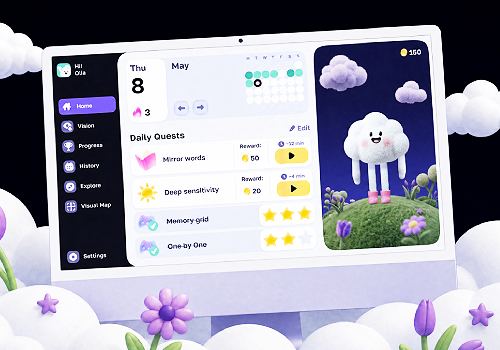
For example, the main screen where a person builds their vision map – we rebuilt it dozens of times and tested it on Olia herself, because she could feel an element was in the wrong place before she could put it into words.
5. What's the most unusual source of inspiration you've ever drawn from for a project?
Olia's tired eyes at the end of the day. That turned out to be our most reliable instrument: if a screen caused strain by evening, it didn't make it into the next build. It became inclusive design in the most literal sense – the designer and the user were the same person at the same time.
6. What’s one thing you wish more people understood about the design process?
That accessibility isn't a final layer you add at the end. Our whole product exists because of a changed way of seeing, so the centre of the screen, the contrast, and the "one task per screen" principle aren't decorations or options; they're the foundation. When you design for a specific, real person rather than an "average user," the interface stops being decoration and becomes support.
7. How do you navigate the balance between meeting client expectations and staying true to your ideas?
We don't have clients in the classic sense: our client is a person living with a changed visual field. The biggest temptation comes from the market, which expects a loud promise like "improve your vision in 30 days." We deliberately turned that down, because the only honest promise we can keep is this: you can practice, you can grow more confident, you can adapt to a new life.
8. What were the challenges you faced while working on your award-winning design, and how did you overcome them?
The hardest part wasn't technical, it was human: we were building the app while Olia was still living with a large loss of her visual field, and every screen was tested under real fatigue and anxiety. We also always keep in mind that the trust of this audience has to be earned, and we're actively working on that now.
9. How do you recharge your creativity when you hit a creative block?
We step away from the screen and go to the people we're making all of this for, the Reddit threads where people with similar vision changes share their experience. One review said the app "cares more about my day to day life than my ophthalmologist." A sentence like that pulls us out of any block faster than anything. And we also just go for a walk!
10. What personal values or experiences do you infuse into your designs?
Dignity instead of diagnosis. The belief that a person who quite literally sees the world differently isn't “broken”, they need support and a reminder of that. And tenderness: a cloud companion that reacts to you, a new text to read every day, and small reasons to come back tomorrow.
11. What is an advice that you would you give to aspiring designers aiming for success?
Design for one real person, not for everyone at once. Our strongest decisions came from a single user we knew completely. And be honest about what your product can and can't do: the very limits you accept are what people come to trust.
12. If you could collaborate with any designer, past or present, who would it be and why?
With Patricia Moore, one of the pioneers of empathic and universal design. In the late 1970s, she spent years going “into the field”, living the world the way older people live it, in order to design from inside their experience. That feels endlessly close to us: our project, too, was born from experience lived from the inside, not studied from the outside.
13. What's one question you wish people would ask you about your work, and what's your answer?
Question: "Will it bring my vision back?"
Answer: "Your vision won't necessarily come back, but we promise to be there every day while you learn to live with this."