Jing Yang
1. Congratulations on winning the London Design Awards! Can you introduce yourself and share about what inspired you to pursue design as a career?
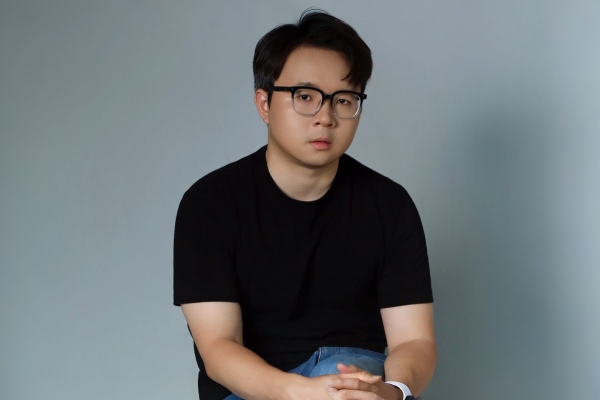
Thank you! I am Jing Yang, a toy designer dedicated to early childhood enlightenment and parent-child companionship. In my work, I prioritise the educational value and emotional resonance of early educational toys, using them as a medium to convey the foundational virtues of human society.
To me, the essence of design is not merely aesthetic enhancement but communication and empathy. It is the ability to use visual and interactive language to make complex information intuitive and to breathe deep emotion into ordinary things.
2. What does being recognised in the London Design Awards mean to you?
This recognition is not just a prestigious honour, but a validation from the global professional design community. The London Design Awards is renowned for its rigorous judging criteria and emphasis on innovation.
Winning this award proves that my core design philosophy—"Companionship is the best enlightenment for a child"—transcends cultural differences and resonates on a global scale. It serves as a powerful reminder to stay true to my creative intuition and continue deepening my practice in this field.
3. How has this achievement impacted your career, team, or agency, and what opportunities has it brought so far?
For an independent studio like mine, this award brings tremendous encouragement and invaluable exposure, including interviews with international design media. More importantly, it has significantly enhanced our clients' trust, granting us stronger credibility and authority in the commercial landscape.
4. What role does experimentation play in your creative process? Can you share an example?
Since I manage the entire execution and realisation of a project, experimentation manifests as a hands-on, iterative loop. I dive deep into crafting the story illustrations, developing initial concept sketches for other illustrators and graphic designers, writing and refining the narrative text, and ultimately working directly with factories to test materials for production.
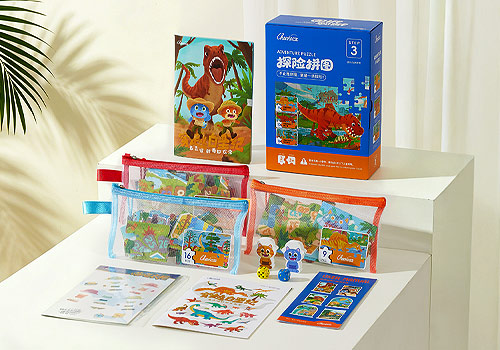
For Cheeriocat, this entire closed-loop process was an ongoing experiment in balancing tactile feedback, narrative pacing, and interactive safety to achieve the perfect user experience.
5. What's the most unusual source of inspiration you've ever drawn from for a project?
My most profound inspiration comes from having an ongoing dialogue with my childhood self. Possessing a vivid memory of my youth, I can easily recall the exact mindset and psychological state I had when interacting with peers as a child. This acute sense of empathy allows me to step back into a child's shoes during playtests with parents and children, viewing the product entirely through their eyes. It reinforces my conviction that companionship is, indeed, the ultimate form of enlightenment.
6. What’s one thing you wish more people understood about the design process?
I wish more people understood the core value underlying my designs. As a designer focusing on toys for children aged 3 to 6, one must realise that development shouldn't cater solely to parents' desires for "social currency." Instead, we must uncover what children truly need. At this pivotal stage, what children need most is meaningful companionship, and every product I create revolves strictly around this theme.
7. How do you navigate the balance between meeting client expectations and staying true to your ideas?
Currently, our studio independently develops its own products, allowing us to explore freely and build strictly around our core values. However, reflecting on my past experience as an employed designer, I know this balance can be incredibly difficult to strike—especially early in a career when one lacks the leverage to fully defend an original vision, often leading to compromises for the client's sake.
Ultimately, I believe the wisest approach is to discover and embed your own unique value proposition while seamlessly fulfilling the client's fundamental requirements.
8. What were the challenges you faced while working on your award-winning design, and how did you overcome them?
The greatest challenge was assessing the market's readiness for our concept. Companionship-oriented children's products are often undervalued in a market dominated by toys designed to "babysit" children and free up parents' personal time.
However, we noticed that no matter the toy, parents almost always spend a few minutes playing with their child during the initial unboxing. We seized this golden window by simplifying the gameplay mechanics to the absolute minimum, ensuring instant onboarding. By providing immediate positive feedback, we encourage parents to accept their child's invitation and embark on a shared parent-child adventure.
9. How do you recharge your creativity when you hit a creative block?
When hitting a creative block, I usually turn to philosophy and psychology literature or immerse myself in video games. Philosophy and child psychology form the bedrock of my design values, allowing me to infuse deep humanistic care into my toys. When playing video games, I am not merely emptying my head mindlessly; exceptional games provoke profound reflection, and their ingenious level mechanics often spark fresh design inspiration.
10. What personal values or experiences do you infuse into your designs?
As a child, I was deeply obsessed with dinosaurs and tabletop games. I constantly cross-reference my current designs with how my younger self would have reacted. This is complemented by my active observation of children today; in fact, I have a 3-year-old friend, and interacting with him consistently reveals fascinating insights, allowing us to communicate as equals.
I have come to realise that meaningful companionship during these brief early years can shape a child's lifelong resilience and cognitive patterns. Therefore, the narrative design in my games is deliberately structured to guide children through cause-and-effect reasoning.
11. What is an advice that you would you give to aspiring designers aiming for success?
First, a robust reservoir of knowledge is the most critical asset for a young designer; creative inspiration and design value are directly born from your active exploration of the world. Second, cultivate deep empathy and look at the world through the user's eyes—never create designs that only end up moving yourself.
12. If you could collaborate with any designer, past or present, who would it be and why?
It would be Taku Hibino. Although his expertise lies in architectural spaces for children, I deeply admire his philosophy that "children do not need colourful plastic toys, but rather the genuine touch of nature."
He possesses a unique intuition for children's open-ended exploration. Given the opportunity, I would be thrilled to collaborate with him and explore the endless possibilities of childhood development.
13. What's one question you wish people would ask you about your work, and what's your answer?
I wish people would ask: "Since you believe companionship is the best enlightenment, do parents even need the toys you design?"
My answer would be: "In nature, almost every species guides their offspring's exploration and survival wisdom through pure companionship—it is an innate, biological responsibility.
Yet, modern human society increasingly seeks to offload this duty. My goal is to use my designs as a bridge for parents who simply do not know how or where to begin. What truly makes the joy ferment is never the toy itself, but the equal dialogue and emotional connection it sparks."