Dong Yi-Liang
1. Congratulations on winning the London Design Awards! Can you introduce yourself and share about what inspired you to pursue design as a career?
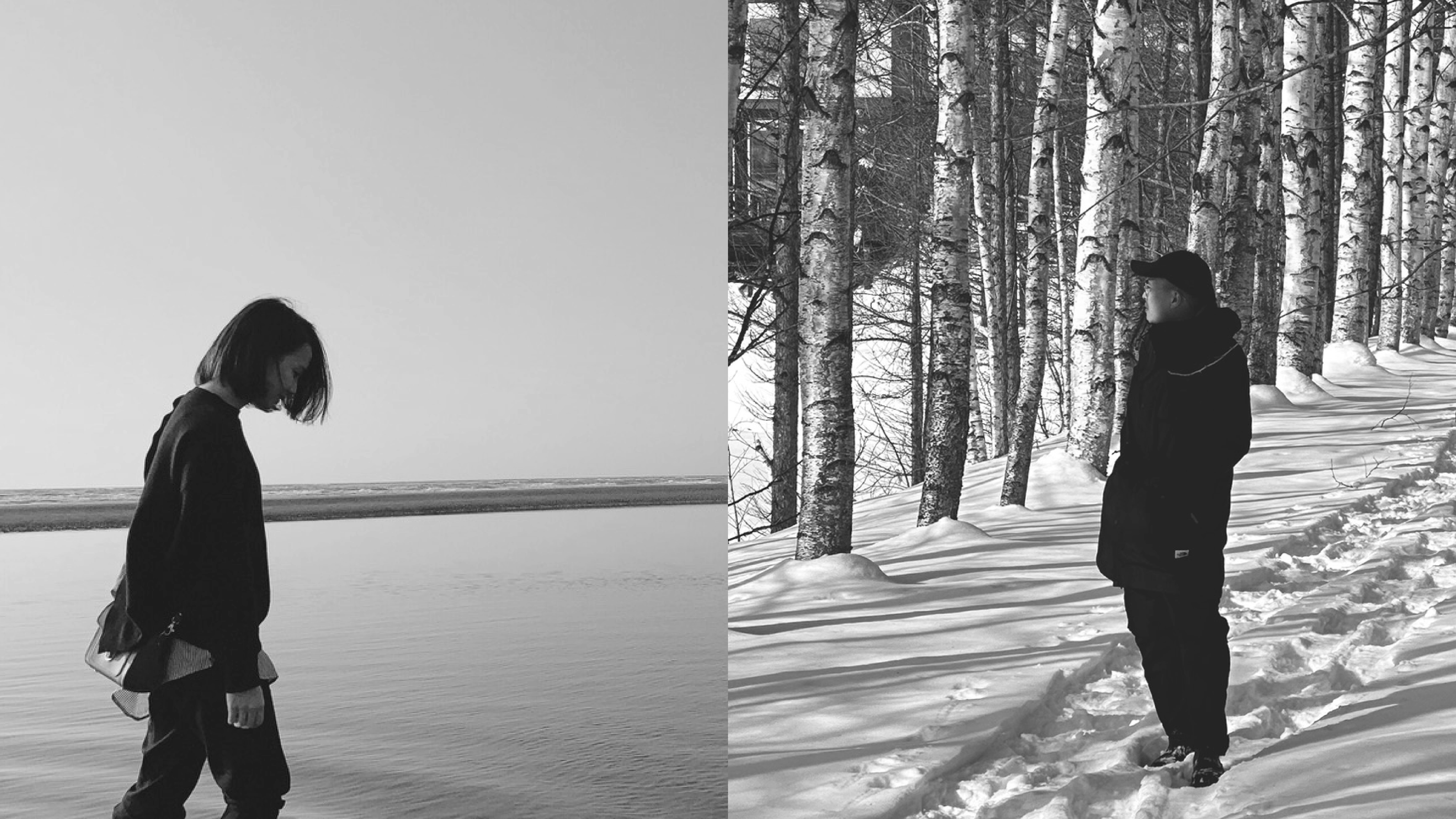
Thank you, it is truly our honour. We are Dong Yi-Liang and Wen Yi-Jou from Naked Project Interior Design.
The greatest difference between design and art lies in the fact that design is a creation constrained by specific conditions. Beyond aesthetics, it must simultaneously solve functional problems.
Everyone is immersed in a space at every single moment. Sometimes these spaces make us uncomfortable; other times, they heal us. These experiences—both good and bad—have nourished us, driving us to work toward a specific goal throughout our growth and learning process: how to establish a space that untangles the chaos of daily life and brings about a profound shift in one’s state of mind.
The original intention behind establishing Naked Project was the hope that, through rational spatial organisation and deep dialogues with users, we could define a design language that uniquely belongs to them. By stripping away superfluous decoration and materials, we aim to create a meaningful connection between the space and its inhabitant, thereby crafting a serene, joyful sanctuary where one can truly feel at ease.
2. What does being recognised in the London Design Awards mean to you?
In an era of information and sensory overload, adhering to a philosophy that returns to the very essence of space is a genuine challenge. Receiving this recognition from the London Design Awards shows us that this perseverance transcends cultures and geographies, resonating on an international stage. It also serves as a beautiful reminder to stay true to our original intention, encouraging us to continue persisting, pursuing, and putting our philosophy into practice.
3. How has this achievement impacted your career, team, or agency, and what opportunities has it brought so far?
It has given us more opportunities to be discovered and contacted by clients who need our expertise—especially those who share the same wavelength. Design is never just a one-way output; it is an "ideal" co-created with the client. Just as our clients’ love for and emotional connection to a space always heals us, the validation from the London Design Awards provides us with further nourishment to keep moving forward.
4. What role does experimentation play in your creative process? Can you share an example?
For Naked Project, experimentation is the very first step in our creative process—an essential and mandatory presence. Within given constraints, we try to uncover the unique essence of a site, explore creation from different dimensions, and experiment with the application and transformation of materials. All of this is done to spark a resonance between the environment and its users.
Take the "Grace Garden Guesthouse" project as an example. Most Guesthouse owners look for highly eye-catching, unconventional decor, and more importantly, the budget must strictly align with their operational cost planning.
Our proposal, however, positioned the space as a supporting character—designed and sculpted with a minimalist and clean approach. Instead of heavy decor, we selected a timeless, classic designer lighting fixture for each room as the central theme, attempting to redefine the Guesthouse experience.
This was a perspective, logic, and challenge the client had never encountered before. We are incredibly grateful for their bold and absolute trust; in the end, we received an abundance of resonance and heartwarming feedback from this space
5. What's the most unusual source of inspiration you've ever drawn from for a project?
A single frame from a movie. Through the viewfinder of a camera, every cinematic frame tells a story, and within those stories lies everyday life. We try to approach design with this exact logic, imagining ourselves watching a movie within the space. If a user sits in a particular spot, what frame will they see, and what emotions will it evoke? It goes beyond a designer simply wondering if a wall looks good. Changing the logic always yields fresh perspectives and solutions.
6. What’s one thing you wish more people understood about the design process?
Interior design is a profession that requires the integration of countless facets: artistic beauty, material characteristics, craftsmanship techniques, the composition of hexahedrons (the six surfaces of a room), scales of use and functionality, the inherent flaws and advantages of a space, budget balance, and timeline management.
Furthermore, minimalism is never about cutting corners; it is a higher level of meticulous refinement. "The invisible design often requires the greatest effort." We hope people can broaden their horizons to understand, experience, and feel design. When built on a foundation of trust and open perspectives, we believe both parties can achieve beautiful communication and resonance, ultimately creating a space that truly resonates with the client.
7. How do you navigate the balance between meeting client expectations and staying true to your ideas?
As mentioned earlier, design is a creation constrained by conditions. For interior design, these conditions encompass not only the space itself but also the client's expectations—their living habits, aesthetic preferences, budget costs, and so on—rather than just the designer's creative vision.
Before the design begins, we engage in deep, open-ended communication with our clients. We try to think from the user's perspective, and then, through proposals from diverse angles, we invite the client to explore with us and find our shared frequency within the space.
8. What were the challenges you faced while working on your award-winning design, and how did you overcome them?
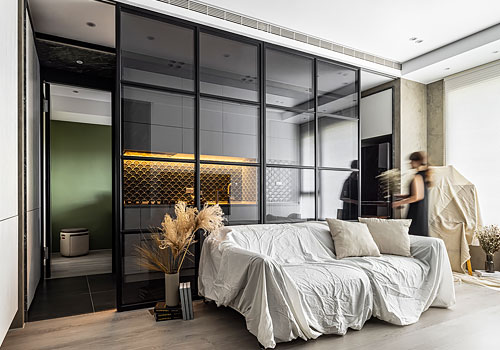
The actual floor area of the residential project "EUCALYPTUS" was quite limited. Deliberating over every centimetre and millimetre to perfect both the immediate functionality and future adjustments of the space required meticulous simulations of various living scenarios to define every scale and flow.
By overlapping and integrating the circulation paths, we succeeded in creating greater spatial efficiency and functionality within the limited footprint.
9. How do you recharge your creativity when you hit a creative block?
The world is infinitely vast. As long as you are willing to step outside, you can always learn, observe, and feel within different cultures. Traveling provides us with a broader vision, which in turn sparks more ideas and creations.
10. What personal values or experiences do you infuse into your designs?
We believe that good design can bring about a transformation in one’s state of mind, rather than being just a combination of visuals and functions. That fleeting moment of joy and peace every time you return home or walk into a certain shop is precisely the experience we hope to deliver to every client through our designs.
11. What is an advice that you would you give to aspiring designers aiming for success?
As mentioned in the answer to the sixth question, interior design is a profession that requires the integration of many different facets. It is not just the clients who need to broaden their horizons; designers, even more so, need to feel, understand, and create without limitations.
Do not get trapped by the definition of a specific "style" or the constraints of materials and construction methods. Maintain a spirit of learning and experimentation at all times, and discover your own convictions and philosophy regarding space.
12. If you could collaborate with any designer, past or present, who would it be and why?
After visiting Moerenuma Park during a trip to Hokkaido, I think we would love to collaborate with the artist Isamu Noguchi. In what appears to be pure nature, you can find his meticulously sculpted details everywhere. How to operate and think within such a grand scale is an approach we deeply admire and aspire to learn from.
13. What's one question you wish people would ask you about your work, and what's your answer?
If they don't know who the designer is, I hope the first question that comes to their mind upon seeing the work is, "Who designed this?" When someone wants to know who created a space, it means the design is quietly forging a connection and resonance.
Of course, my answer wouldn't be about how much the project cost or what materials were used. Instead, I would tell them a story—a story about the user’s experience and the resonance felt within that space.