Xinran Ma
1. Congratulations on winning the London Design Awards! Can you introduce yourself and share about what inspired you to pursue design as a career?
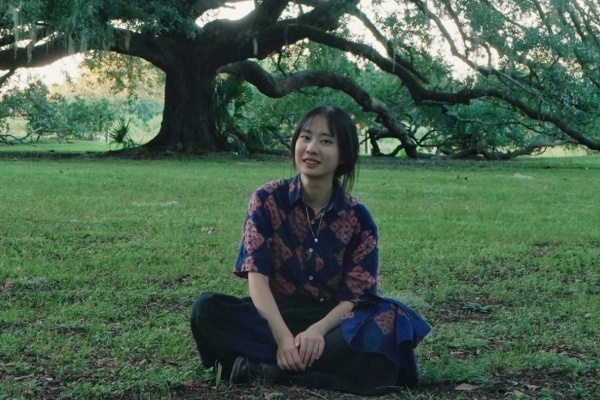
Thank you! My name is Xinran Ma, and I’m a landscape designer currently practising in the United States. I hold a Master of Landscape Architecture from the Harvard Graduate School of Design and a Bachelor’s degree in Landscape Architecture from Sichuan University.
My interest in design began with a long-standing curiosity about plants, natural systems, and the relationship between people and their environments. Growing up in Kunming, a city known for its rich plant diversity and close connection to nature, I developed an early appreciation for landscapes and the ways they shape everyday experiences.
Over time, I became increasingly interested in landscape architecture as a discipline that brings together ecology, culture, storytelling, and design. I’m particularly drawn to landscapes that are dynamic and constantly evolving—places where natural processes are not simply controlled, but are given space to participate in shaping the environment. This curiosity continues to influence both my design thinking and the way I observe the world around me.
2. What does being recognised in the London Design Awards mean to you?
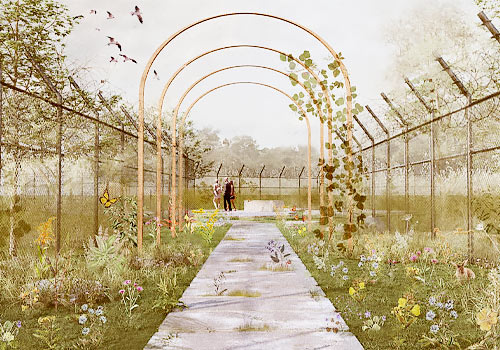
Being recognised by the London Design Awards is incredibly meaningful to me because it validates not only the final design, but also the ideas and questions behind the project. Reimagining South Bronx through Urban Entropy Rewilding explores an alternative way of thinking about post-industrial urban landscapes—one that embraces ecological succession, uncertainty, and transformation rather than pursuing a completely controlled or finished condition.
Having this work recognised gives me confidence that experimental approaches to landscape architecture can resonate with a broader design audience. It also encourages me to continue exploring how landscape design can respond to complex urban and environmental conditions through both ecological thinking and creative speculation.
3. How has this achievement impacted your career, team, or agency, and what opportunities has it brought so far?
This recognition represents an important milestone in my development as a landscape designer. It has given greater visibility to a project that reflects many of the ideas I care deeply about, particularly urban ecology, rewilding, and the relationship between designed and spontaneous landscapes.
At this stage of my career, I see the award less as a destination and more as encouragement to continue developing my own design perspective. It has also given me an opportunity to share my work with a broader international audience and to connect my academic explorations with the questions I continue to encounter in professional practice.
4. What role does experimentation play in your creative process? Can you share an example?
Experimentation plays an important role in my design process because I often begin with a question rather than a predetermined solution. I like to test different scenarios and allow unexpected relationships to emerge through drawing, mapping, modelling, and research.
In Reimagining South Bronx through Urban Entropy Rewilding, experimentation was central to imagining how an industrial landscape could transform over time. Rather than designing a fixed final condition, I explored how ecological succession and spontaneous vegetation could gradually interact with existing industrial structures and infrastructure.
The project became an experiment in designing processes rather than objects—considering how a landscape might change, adapt, and become increasingly complex over time.
5. What's the most unusual source of inspiration you've ever drawn from for a project?
One of the more unusual sources of inspiration for me is weeds. I’m fascinated by plants that appear in places where they were never intentionally planted—along railroad tracks, through cracks in pavement, or within abandoned industrial sites.
These plants are often considered undesirable, but I see them as evidence of resilience and adaptation. In my work, particularly in Reimagining South Bronx through Urban Entropy Rewilding, spontaneous vegetation became a way to rethink the relationship between nature and the city.
Instead of treating these plants as something that needs to be removed, I became interested in what might happen if design allowed these ecological processes to become active participants in transforming urban space.
6. What’s one thing you wish more people understood about the design process?
For me, the most interesting moments often happen when something unexpected appears during the process. Design is as much about learning how to observe and respond as it is about creating. Being comfortable with uncertainty can sometimes lead to ideas that would never emerge from following a predetermined path.
7. How do you navigate the balance between meeting client expectations and staying true to your ideas?
I try to identify the underlying goals behind a client’s expectations and then explore how design can meet those goals in ways that may not have been initially considered. Staying true to an idea does not necessarily mean protecting a specific form or solution. Often, it means staying committed to the core values behind the design while remaining flexible about how those values are expressed.
8. What were the challenges you faced while working on your award-winning design, and how did you overcome them?
One of the main challenges was working with the complexity of the South Bronx as both an ecological and industrial landscape. The site is shaped by layers of infrastructure, industry, environmental pressures, and community life, so it was important not to oversimplify these conditions.
Another challenge was representing a design that is fundamentally about change over time. Traditional landscape drawings often present a relatively fixed future condition, while this project proposes a landscape that continues to evolve through ecological succession and urban entropy.
I addressed this by thinking across multiple scales and timeframes, using research, mapping, and speculative representation to explore how different systems might interact. Instead of trying to resolve every condition, I began to see uncertainty itself as part of the design strategy.
9. How do you recharge your creativity when you hit a creative block?
I usually step away from the design itself and return to observation. I enjoy spending time outdoors, looking at plants, photographing landscapes, visiting new places, or simply walking through the city without a specific destination.
I also find inspiration in activities outside of landscape architecture, including drawing, painting, photography, reading, and exploring different forms of visual storytelling. Creative blocks often happen when I become too focused on solving a problem directly. Changing the scale of attention—from a large design problem to something as small as the structure of a leaf or an unexpected plant growing through concrete—often helps me see the project differently.
10. What personal values or experiences do you infuse into your designs?
Curiosity is probably one of the most important values I bring to my work. I’m interested in things that are often overlooked: spontaneous plants, transitional spaces, ecological processes, and landscapes that do not fit conventional ideas of beauty.
My lifelong interest in plants has also strongly influenced the way I think about design. I tend to see landscapes not as static compositions, but as living systems that grow, decline, migrate, and change over time. I value complexity and diversity, and I’m interested in creating landscapes that leave room for both human experience and non-human life.
11. What is an advice that you would you give to aspiring designers aiming for success?
Stay curious and develop your own way of seeing the world. Technical skills and design knowledge are important, but what ultimately makes your work distinctive is the perspective you bring to it.
Pay attention to what genuinely interests you, even if it seems unrelated to what everyone else is doing. Those interests often become the foundation of your design voice over time. I would also encourage young designers to be comfortable with not knowing the answer immediately. Some of the most meaningful ideas emerge through exploration, persistence, and the willingness to question your own assumptions.
12. If you could collaborate with any designer, past or present, who would it be and why?
I would love to collaborate with Gilles Clément because his ideas about the “Third Landscape” and landscapes in motion have deeply influenced the way designers think about spontaneous ecology and spaces that exist outside traditional systems of control.
I’m particularly interested in his recognition of neglected and unmanaged landscapes as valuable reservoirs of biodiversity rather than empty or wasted spaces. This perspective resonates strongly with my own interest in weeds, rewilding, and urban ecological succession.
A collaboration would be an opportunity to explore how these ideas could be interpreted within dense, highly infrastructural urban environments and translated into new forms of landscape practice.
13. What's one question you wish people would ask you about your work, and what's your answer?
I wish people would ask, “What happens to your design when you stop trying to control everything?”
My answer would be that this is where landscape architecture becomes especially interesting. Landscapes are alive, and they will always change beyond what a designer can fully predict. Plants migrate, materials weather, communities evolve, and ecological systems respond in unexpected ways.
Rather than seeing this loss of control as a failure of design, I’m interested in how designers can create frameworks that allow change to happen productively. For me, the role of the landscape architect is not always to determine exactly what a place will become, but sometimes to establish the conditions that allow new possibilities to emerge over time.