Qi Zhen
1. Congratulations on winning the London Design Awards! Can you introduce yourself and share about what inspired you to pursue design as a career?
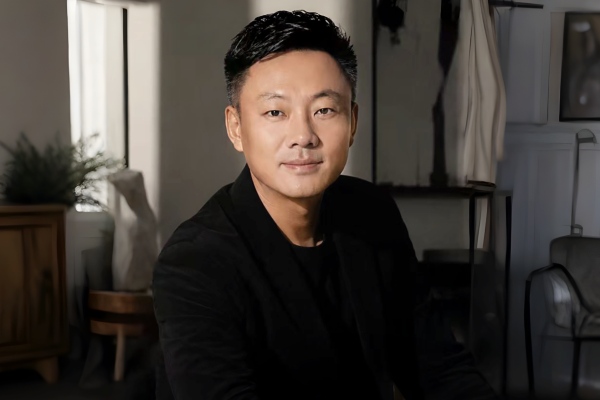
Thank you. I am Qi Zhen, a designer specialising in premium commercial, boutique hospitality, and wellness spaces. For me, design has never been just about assembling steel and concrete; it is about creating emotional and cultural vessels.
I was originally drawn to this career by a fascination with how light, shadow, texture, and spatial flow can engage a person’s five senses, transforming a physical environment into an immersive psychological experience that allows the soul to slow down.
2. What does being recognised in the London Design Awards mean to you?
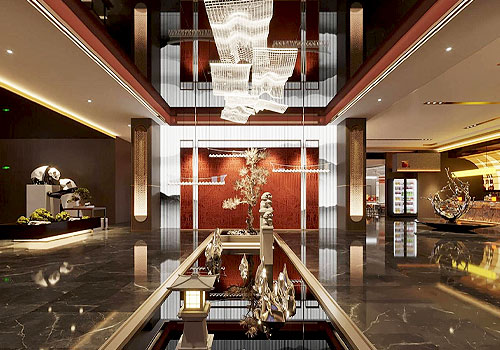
It is an incredible honour and a profound validation of our team’s dedication to microscopic detail. The London Design Awards represent the pinnacle of global aesthetic standards and rigorous evaluation. Winning the Platinum Award proves that the Eastern healing aesthetics and sustainable design philosophies we embedded into this hot spring hotel project have transcended regional boundaries to resonate with a global audience.
3. How has this achievement impacted your career, team, or agency, and what opportunities has it brought so far?
This Platinum Award has significantly elevated our professional reputation in the boutique hospitality and cultural tourism sectors. It has opened doors to high-trust relationships with visionary property owners and brought invitations for highly challenging international projects. For my team, it serves as a powerful catalyst, reinforcing our commitment to original design and uncompromising delivery standards.
4. What role does experimentation play in your creative process? Can you share an example?
Experimentation is the core engine that drives us past the traps of design homogenization. In this award-winning hot spring hotel, we experimented extensively with the acoustic reverberation and light refraction of water against various micro-textured surfaces. To achieve the perfect, therapeutic diffusion of mist in the spa area, we collaborated with engineers to test over a dozen custom porous materials and climate-control settings. This empirical process ensured the final sensory experience is completely irreplaceable.
5. What's the most unusual source of inspiration you've ever drawn from for a project?
The inspiration actually came from the traditional artisan process of paper-making, specifically the way raw fibers float, drift, and eventually settle in water. That sense of organic order within chaos inspired the conceptual design of the main lobby's artistic screens. We utilized semi-transparent textural gradients to mimic the ethereal movement of rising mist, giving the otherwise solid architecture a fluid, breathing quality.
6. What’s one thing you wish more people understood about the design process?
I wish more people understood that exceptional design is never just about superficial luxury or "making things look good." A truly successful space is a massive, invisible system of engineering beneath the surface—balancing complex HVAC systems, humidity control, acoustics, and human-centric ergonomics. The more minimal and pure a space looks on the surface, the more rigorous the hidden engineering and structural restraint behind it.
7. How do you navigate the balance between meeting client expectations and staying true to your ideas?
I don't view client requirements or budgets as shackles; they define the creative boundaries. We never try to blindly impose our aesthetic on a client. Instead, we approach the project simultaneously through the lenses of commercial viability and user experience. When a creative idea clear-cut demonstrates how it enhances operational longevity while giving the space an irreplaceable soul, the perfect balance is naturally achieved.
8. What were the challenges you faced while working on your award-winning design, and how did you overcome them?
The primary challenge was resolving the conflict between a minimalist visual aesthetic and the extreme technical demands of a high-humidity hot spring environment. Hot springs require aggressive moisture and corrosion protection, which usually entails bulky, unsightly equipment. We collaborated with materials scientists to develop a new type of natural mineral coating and designed a completely concealed active ventilation system within the architectural framework. This allowed us to preserve the raw, tactile beauty of natural stone and wood while elegantly hiding the technical infrastructure.
9. How do you recharge your creativity when you hit a creative block?
I rarely force myself to keep designing when I feel creatively stuck. Instead, I step away from the project and spend time observing nature, visiting traditional villages, museums, or simply watching how people interact with spaces in their everyday lives. I believe creativity is not something you squeeze out—it comes from continuous observation and reflection. Many of my best ideas have appeared when I wasn't actively trying to design at all.
10. What personal values or experiences do you infuse into your designs?
At the heart of every project is my belief that design should improve the quality of life rather than simply impress people visually. I value authenticity, cultural continuity, and emotional comfort. Growing up surrounded by traditional Eastern aesthetics taught me to appreciate restraint, natural materials, and the beauty of imperfection. These values continue to influence my work, allowing me to create spaces that feel timeless, calming, and deeply connected to their surroundings.
11. What is an advice that you would you give to aspiring designers aiming for success?
Don't chase trends—build your own perspective. Technology and software can be learned relatively quickly, but independent thinking takes years to develop. Read beyond design, study history, psychology, business, and culture. The most influential designers are not simply good at creating beautiful spaces; they understand people, society, and how design can shape human behaviour. Success comes from creating work that remains meaningful long after trends have faded.
12. If you could collaborate with any designer, past or present, who would it be and why?
I would choose Tadao Ando. His work demonstrates an extraordinary ability to create powerful emotional experiences through simplicity, proportion, light, and material. I admire how he allows architecture to speak quietly rather than loudly. Collaborating with him would be an opportunity to further explore how contemporary design can evoke tranquility, contemplation, and a profound connection between people and nature.
13. What's one question you wish people would ask you about your work, and what's your answer?
I wish more people would ask, "How do you want people to feel after they leave one of your spaces?" Rather than asking what style I used or which materials were selected.
My answer would be that I hope they leave feeling calmer than when they arrived. If a space can slow someone's breathing, encourage meaningful conversation, or create a lasting emotional memory, then the design has truly succeeded. Awards are valuable recognition, but ultimately, the most meaningful achievement is creating places that quietly improve people's lives every day.