
2026
Zuohai · Elegant Jade
Entrant
Shanghai Huanyi Landscape Design Co. Ltd.
Category
Landscape Design - Mix-Use Landscape
Client's Name
Fuzhou Industrial Park Development Group Co., Ltd.
Country / Region
China
Gallery

About The Entry
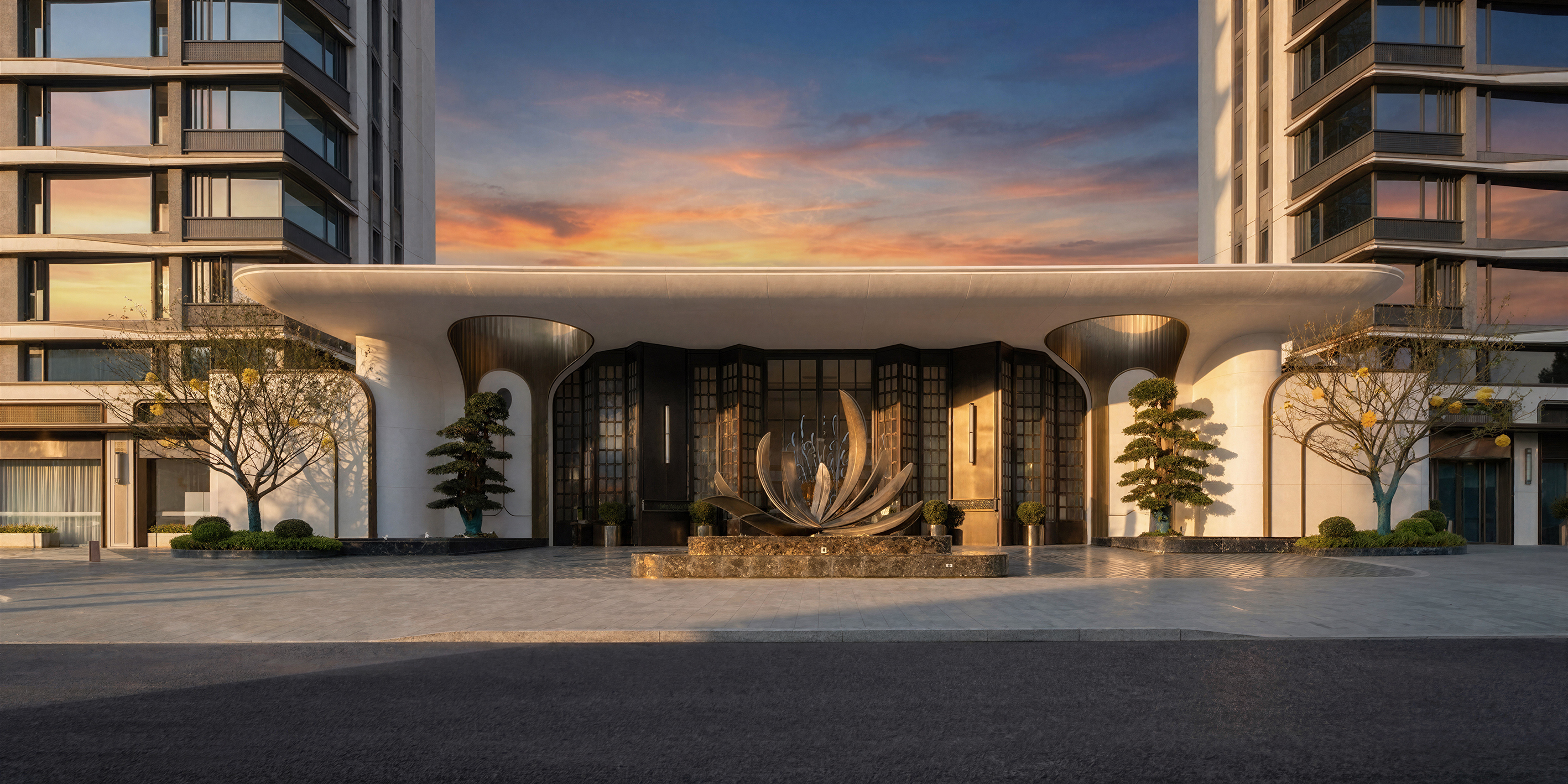
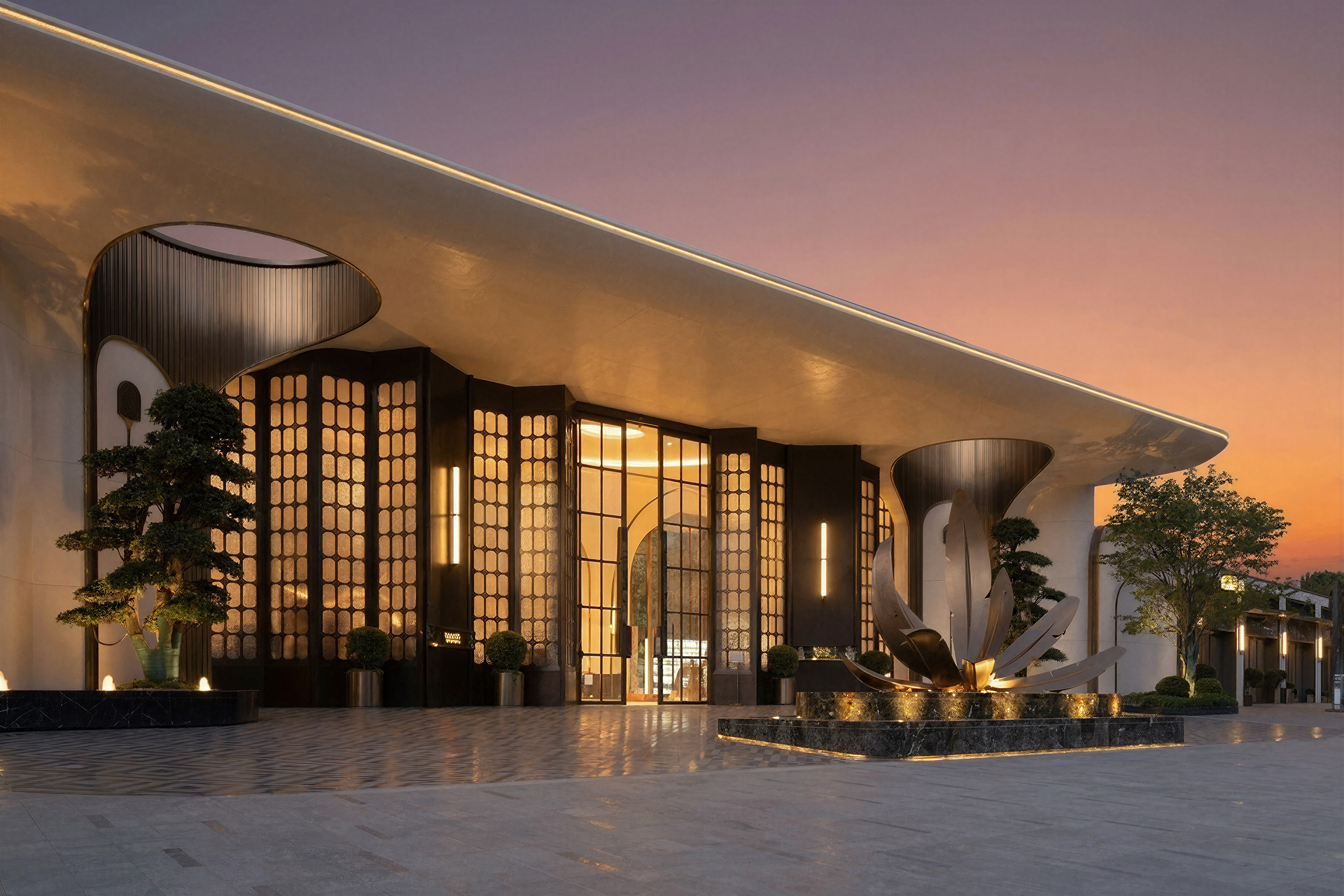
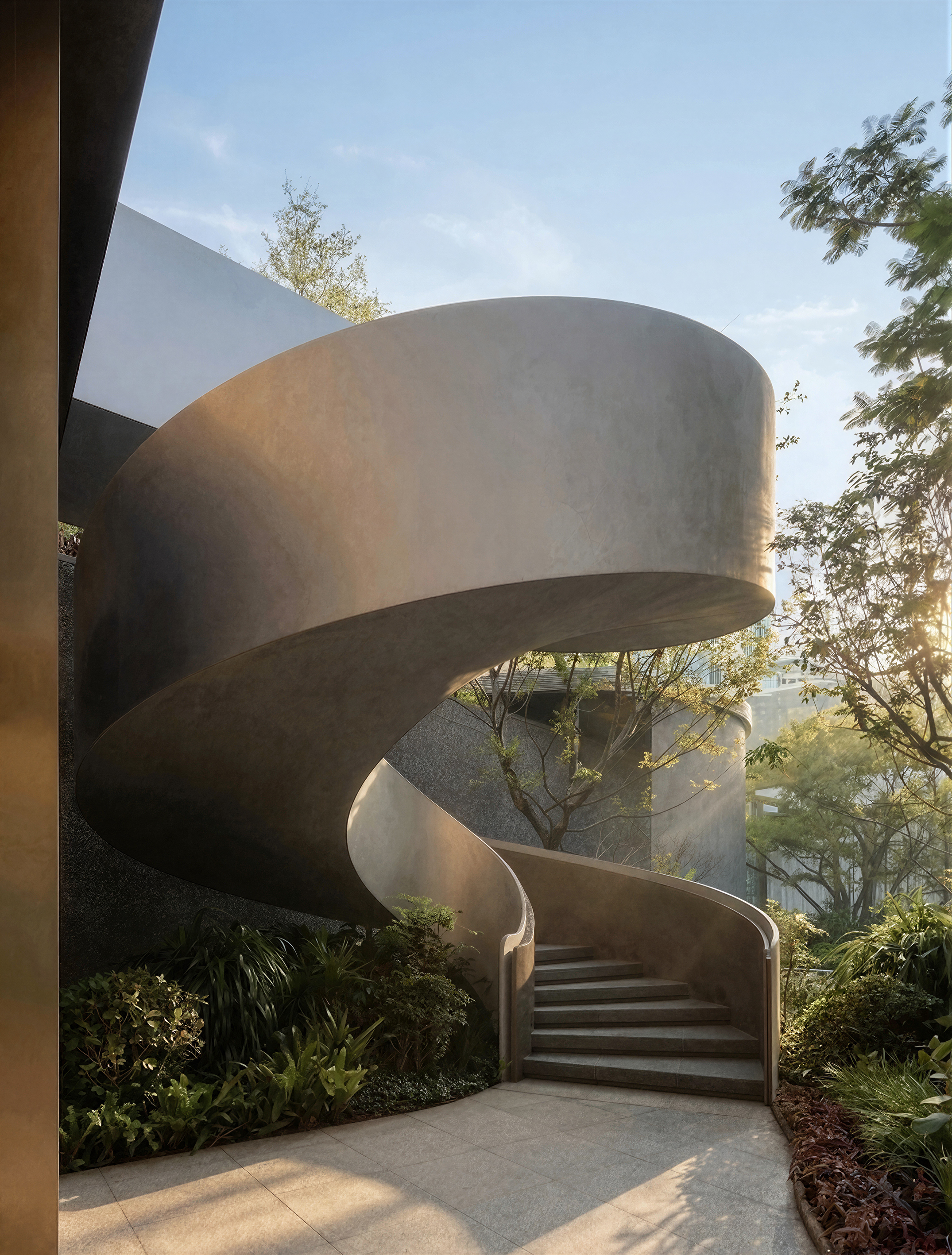
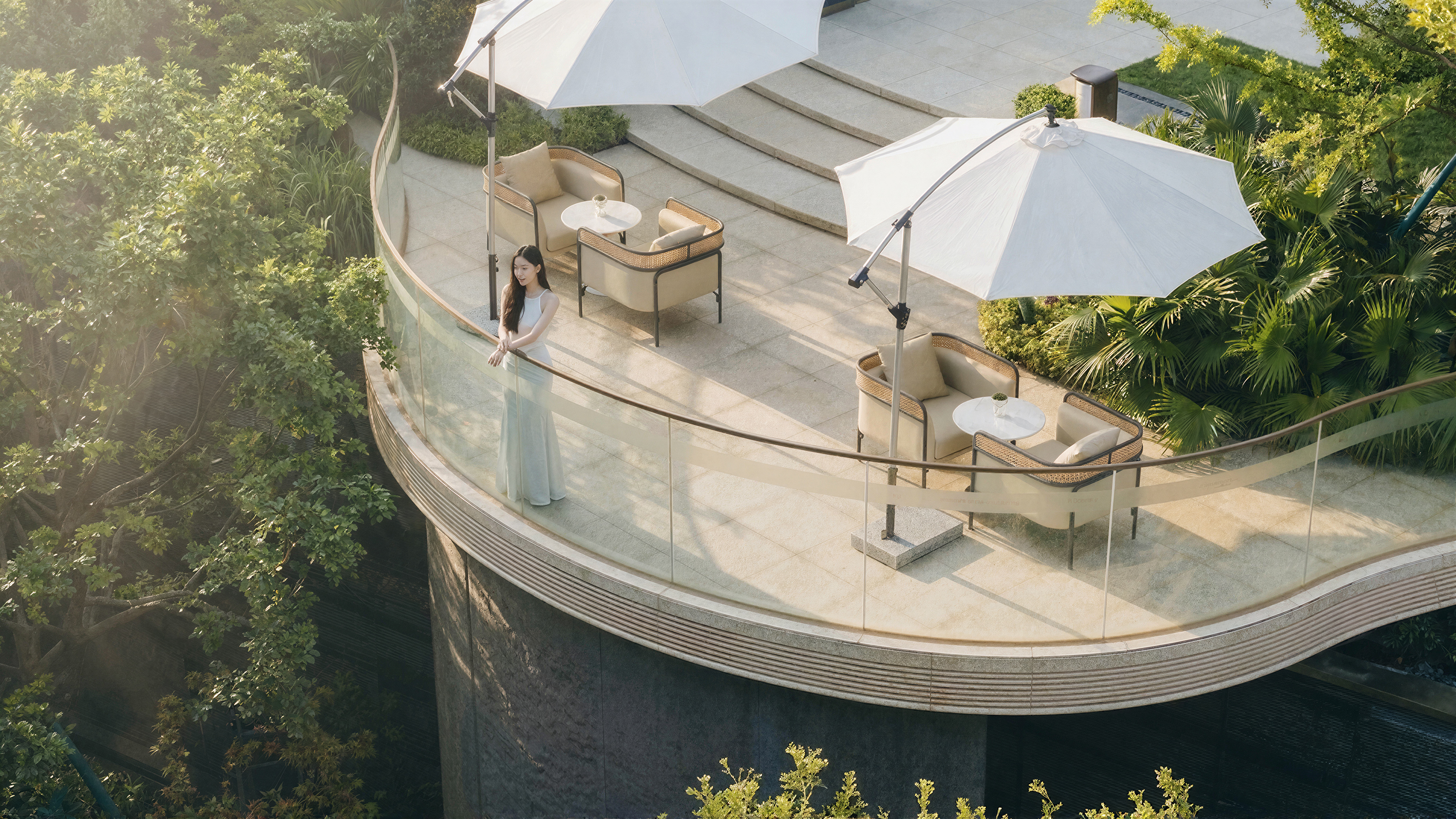
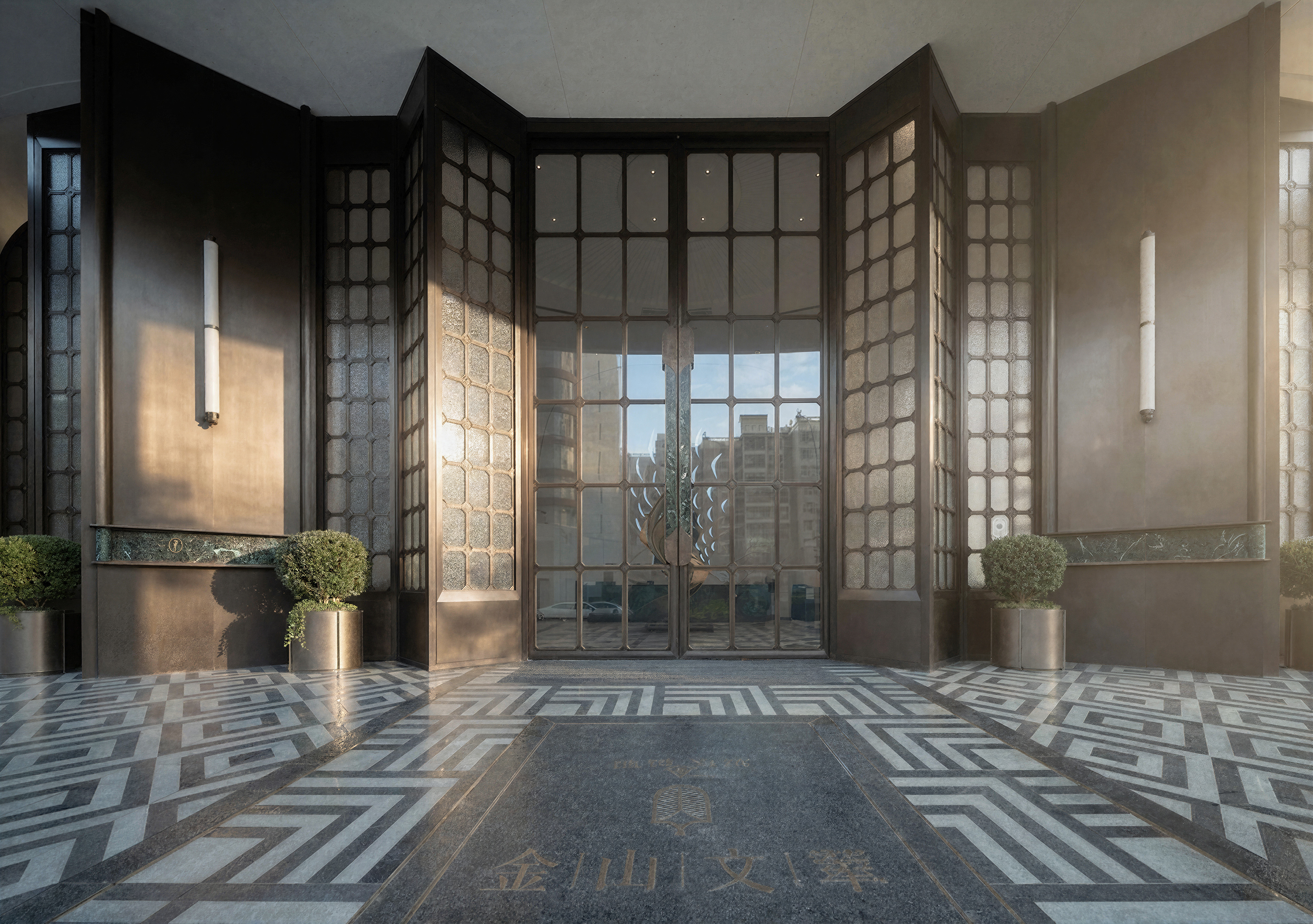
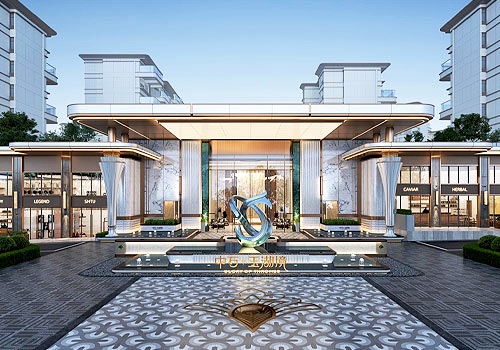
This project is situated in the prime Jinshan Core Area of Fuzhou’s Cangshan District, anchored by the dual foundation of the Minjiang River’s ecological endowment and well-established urban amenities. Responding to the building’s core identity—a refined “Shanghai‑style elegance with understated luxury”—the landscape unfolds as an elegant, heritage‑inspired courtyard that integrates regional cultural DNA, contemporary quality, and hotel‑style experiential living.
Taking spiritual inspiration from Fuzhou’s oceanic culture—“embracing all rivers”—and its scholarly lineage as the “Coastal Region of Classical Learning,” the design deeply engages the interior’s “sailing through a sea of books” narrative. The core design lexicon is drawn from the linear texture of phoenix feathers, reinterpreted as a contemporary translation of the eastern ideal: a gathering of talents, a threshold of distinction. This motif infuses the site with an auspicious vision of human‑centric dwelling, reimagined for the present.
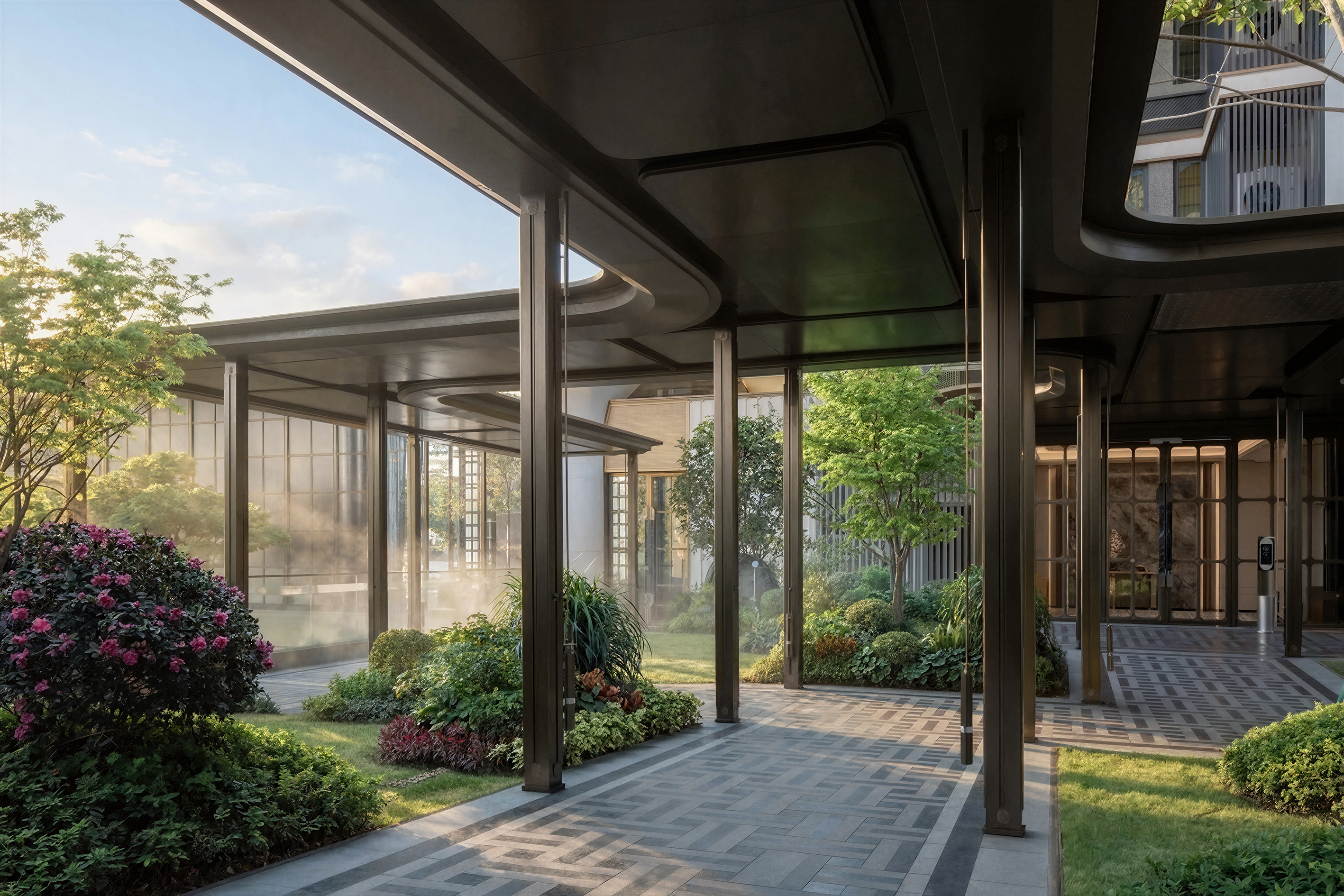
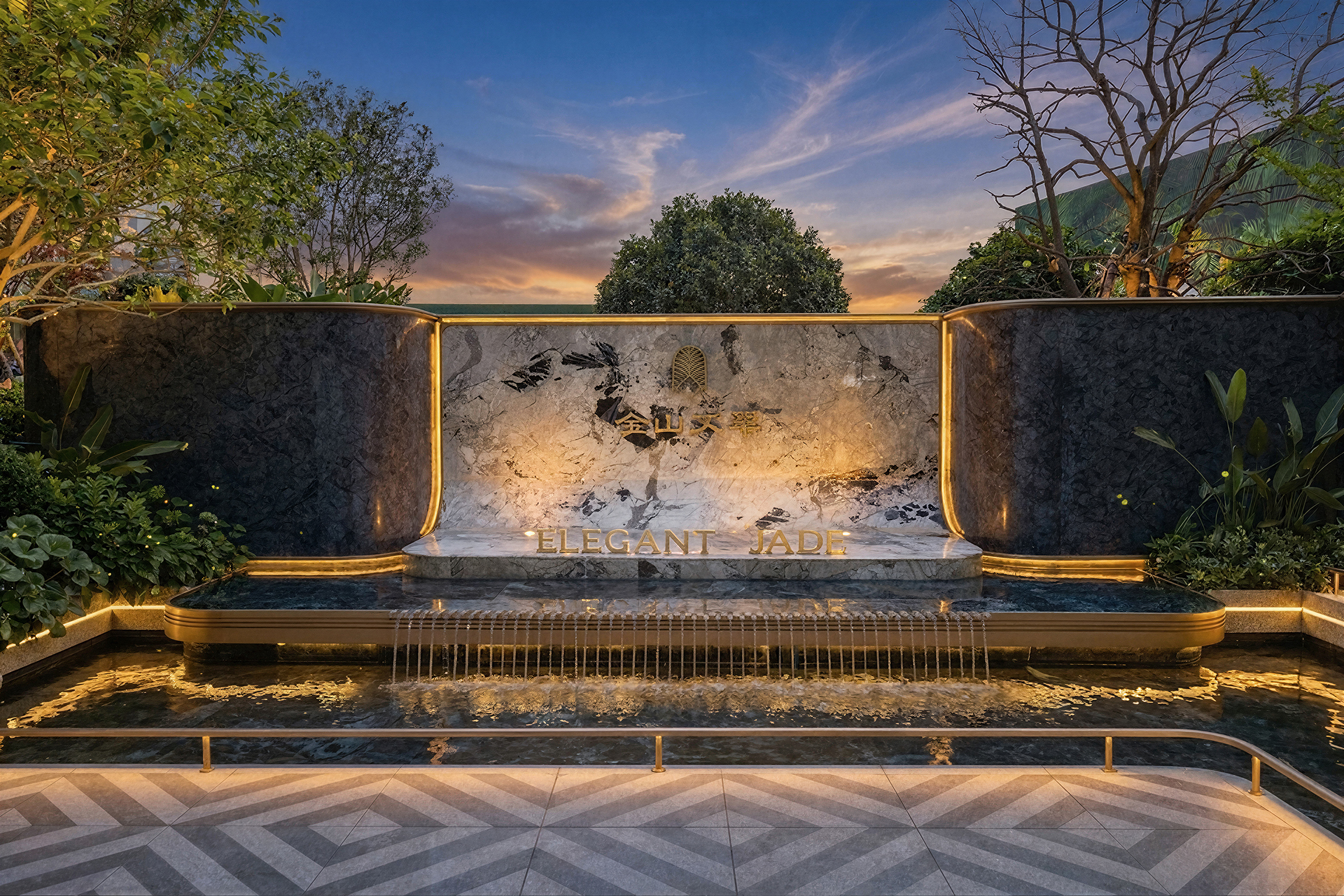
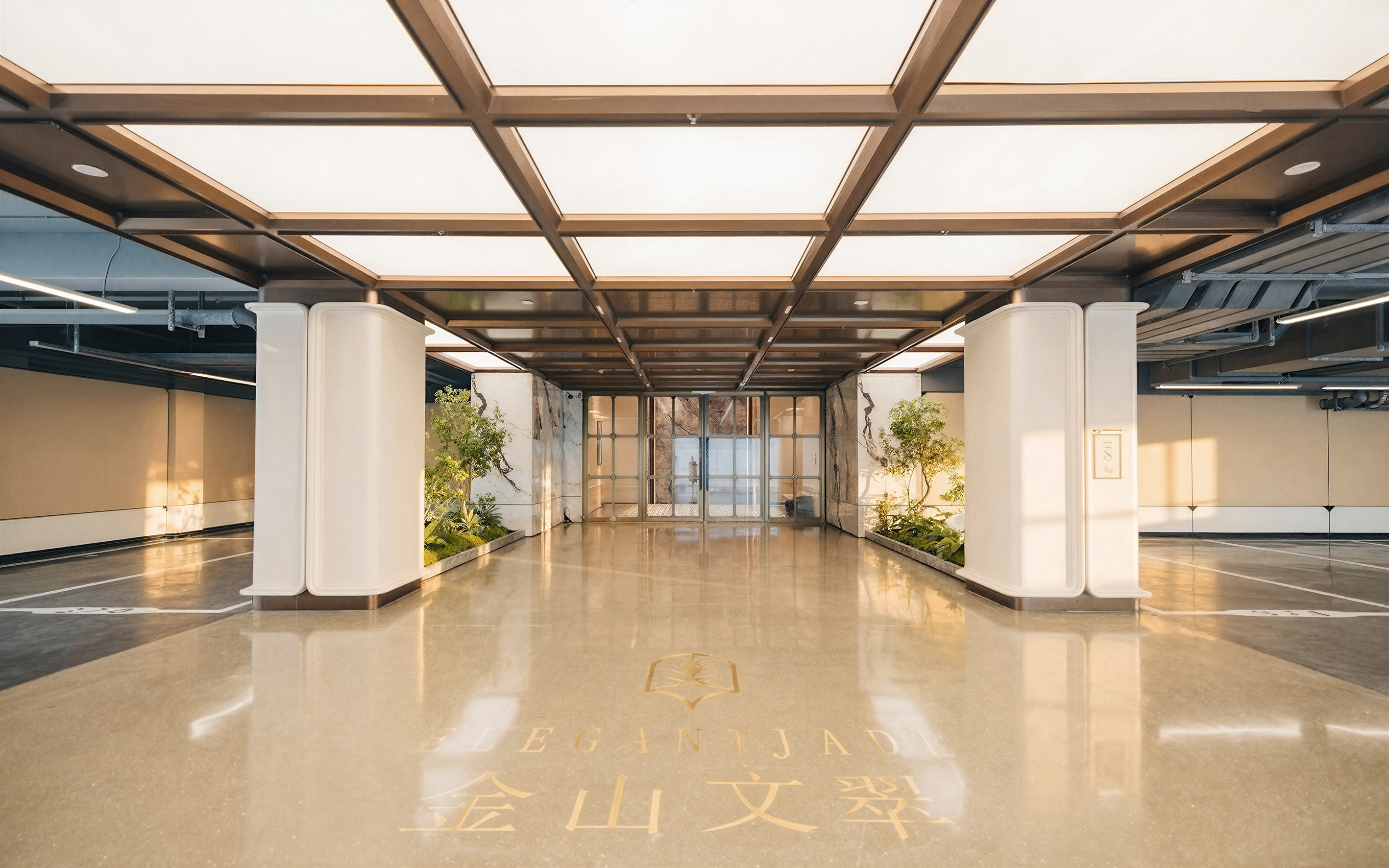
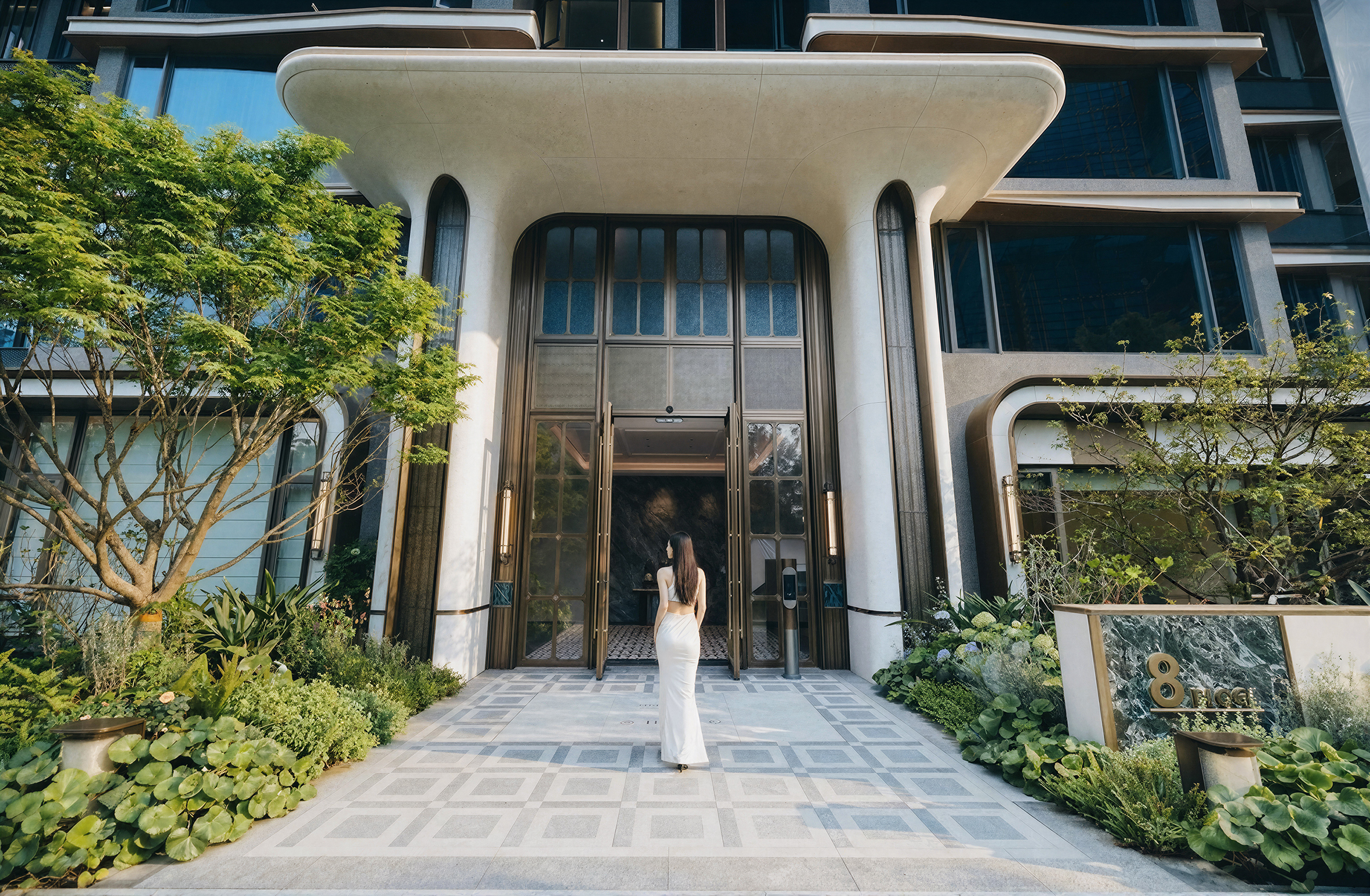
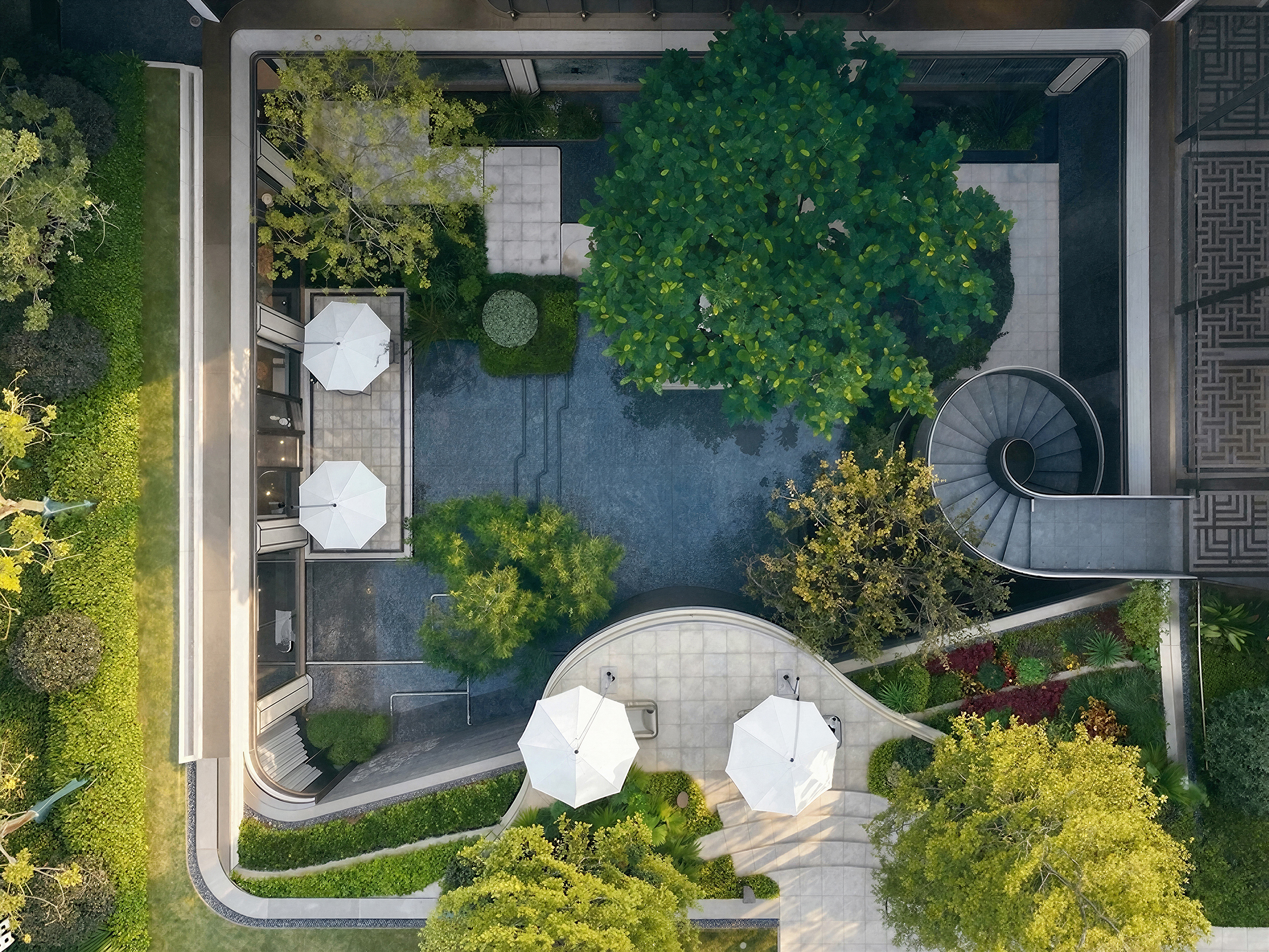
Following the building’s enclosed layout, the landscape orchestrates four key spatial scenes: the ceremonial entrance, the sunken courtyard, the show villa garden, and the model pedestrian street. Axial alignments and framed vistas establish spatial hierarchy and ritual. Layered cascading water features and sheltered rain‑proof colonnades construct a progressively immersive spatial narrative, enabling a seamless transition—both scenographic and emotional—from the urban public realm into the private sanctum of the courtyard. The design reinterprets traditional Eastern elements through contemporary materials, fostering a harmonious dialogue and symbiosis between Eastern and Western aesthetics.
The ecological dimension adheres to a low‑intervention, sustainable approach:
· Topography: Existing site contours are preserved, using gentle grading to resolve elevation changes while strictly minimizing earthwork volumes.
· Water & Sponge City: The sunken courtyard and water feature systems integrate Sponge City technologies, enabling on‑site rainwater harvesting and reuse.
· Planting: Native and adapted species—such as Delonix regia (flame tree) and Celtis sinensis—form multi‑layered, resilient plant communities.
· Materials: Primary materials prioritize recycled metals and sustainably sourced stone, significantly reducing non‑renewable resource consumption and embodying a low‑carbon design ethic.
Credits
Entrant
Dalian Neusoft University of Information
Category
Architectural Design - Office Building
Entrant
JING DIRECTOR STUDIO
Category
Conceptual Design - Exhibition & Events
Entrant
Shenzhen Zhonghai Century Architectural Design Co., Ltd. Southwest Branch
Category
Architectural Design - Residential

Entrant
Dreame Technology (Suzhou) Co., Ltd.
Category
Product Design - Home Appliances