
2025
Community Center: Into the Castelfranco Town
Entrant
Xueying Wang
Category
Architectural Design - Mix Use Architectural Designs
Client's Name
-
Country / Region
United Kingdom
Gallery



About The Entry
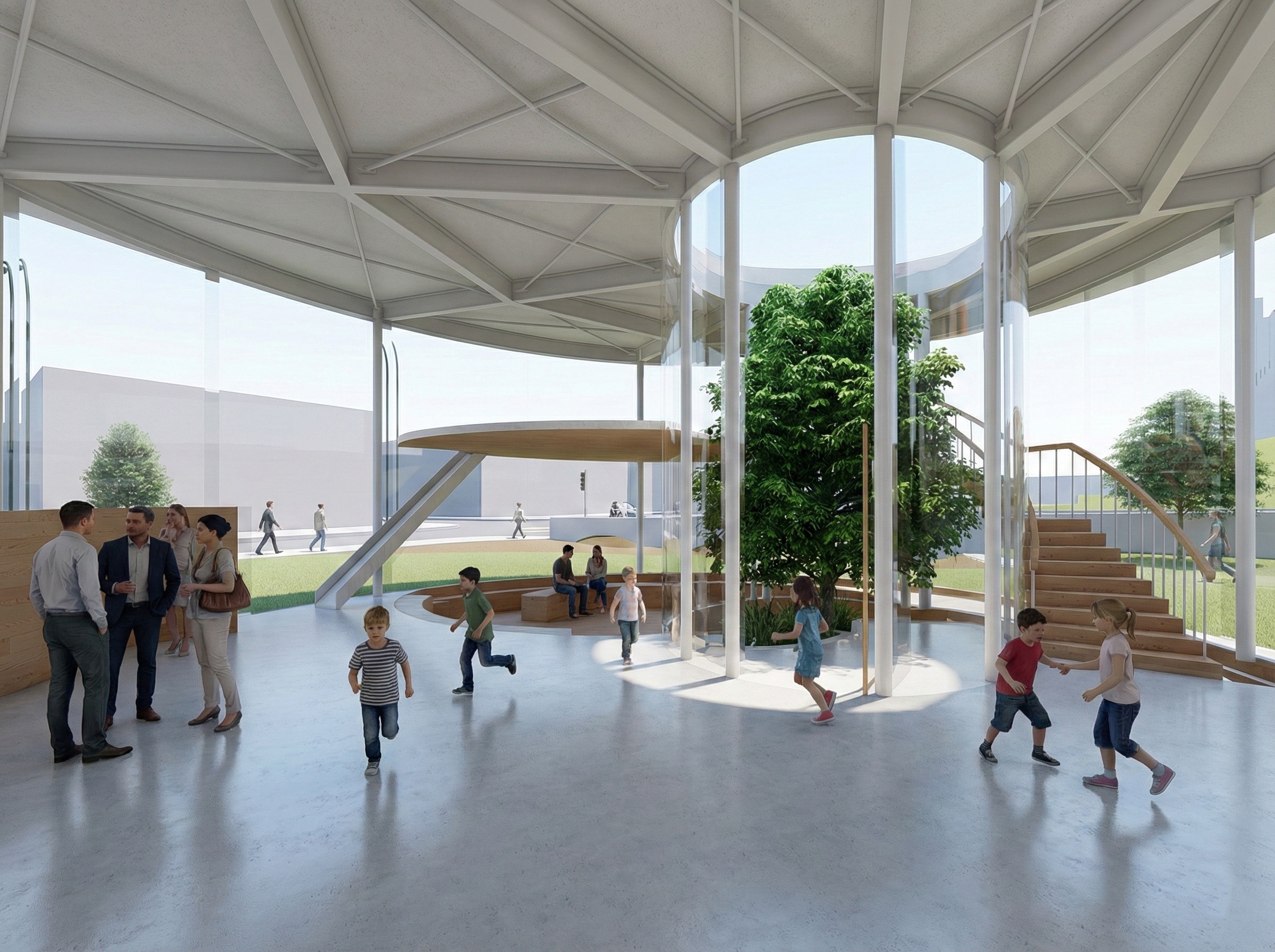
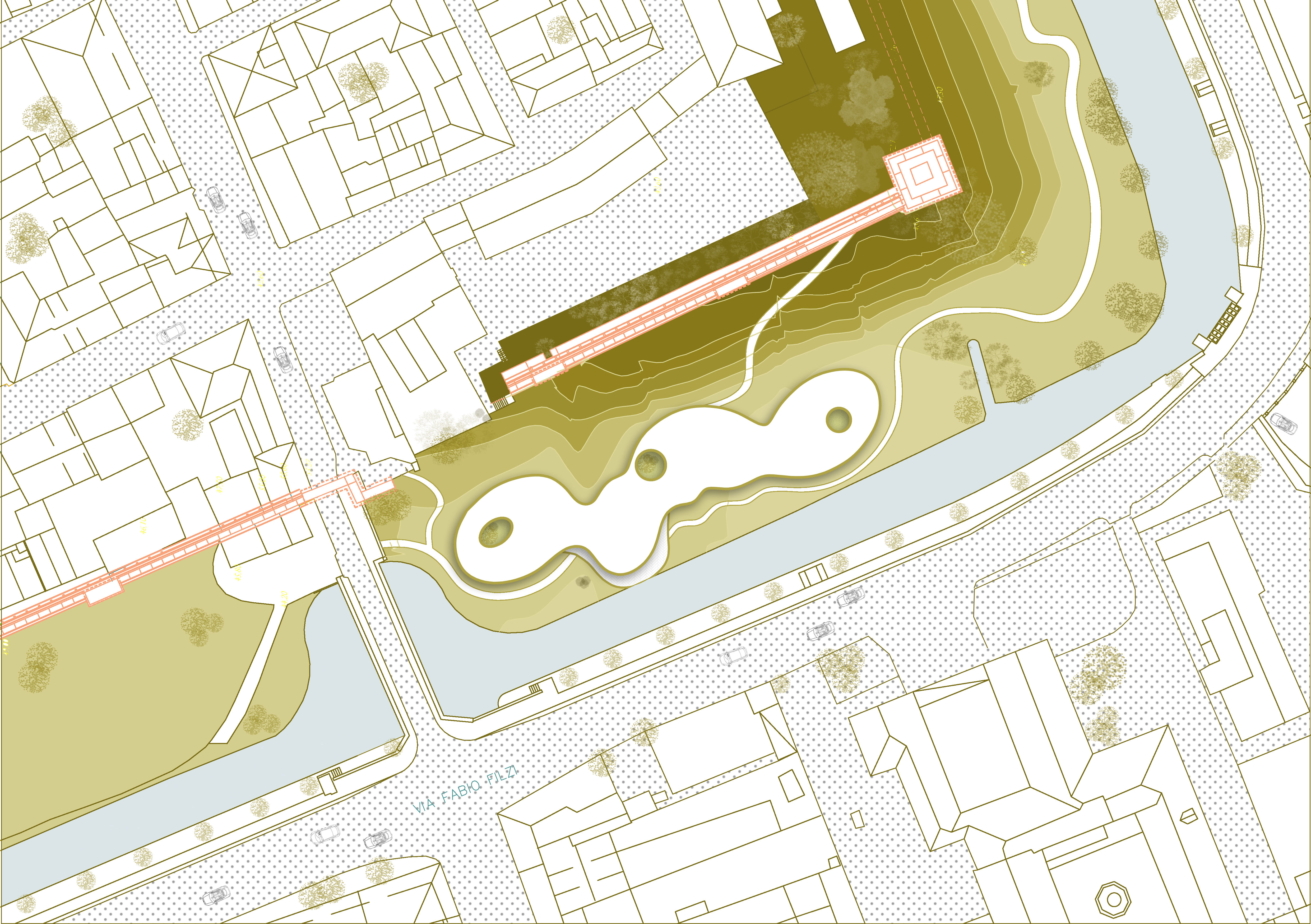
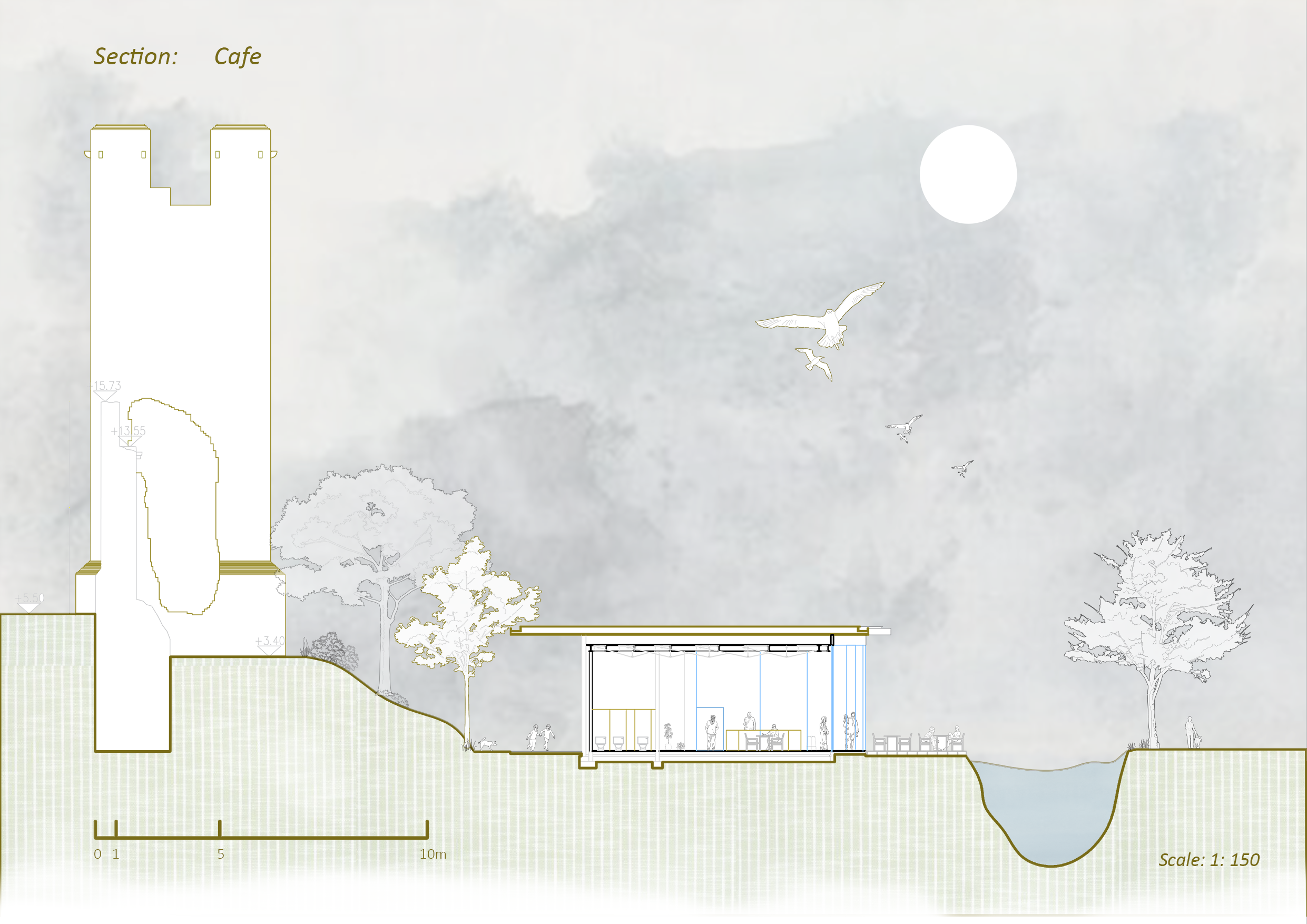
The Castelfranco Community Center is conceived as a humble, context-sensitive civic building for a small medieval town in Veneto, Italy. Nestled along the gently sloping terrain beside the ancient town walls, the center embraces the landscape — the building’s curve follows the natural contours of the hill, creating a low-profile silhouette that respects the historic environment and avoids visual intrusion.
Constructed using a hybrid of modern and traditional materials, the design employs CLT (cross-laminated timber) cladding and a glazed steel-frame structure; these materials articulate a balance of warmth and clarity, allowing the building to read as both part of the landscape and as a contemporary community facility. Originally envisaged with a turf roof to maximize ecological integration, the final design opts for a green copper-plate roof — a pragmatic yet aesthetic solution that resolves structural load and waterproofing challenges while preserving a subtle, natural tone in harmony with the surrounding greenery.
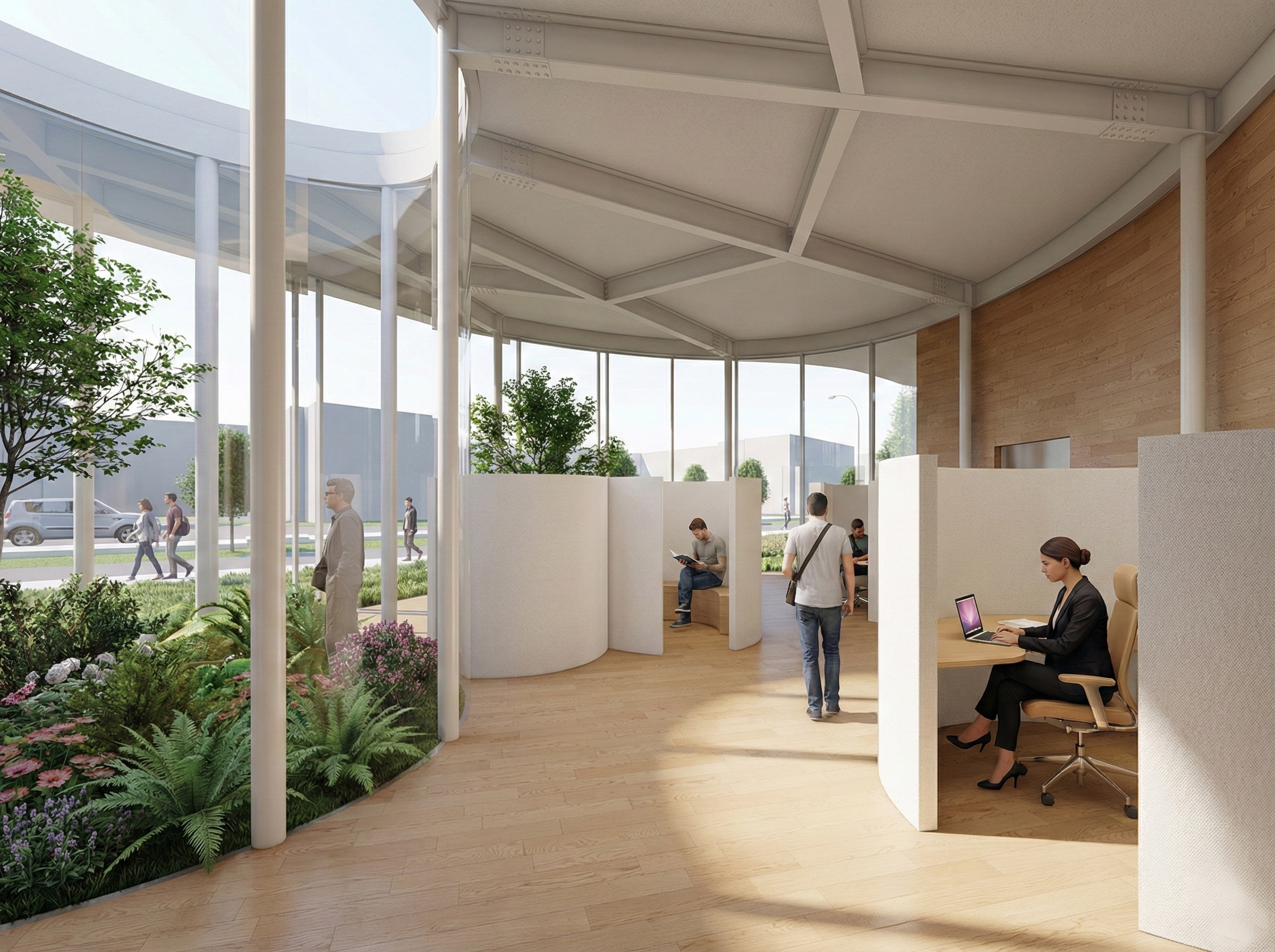
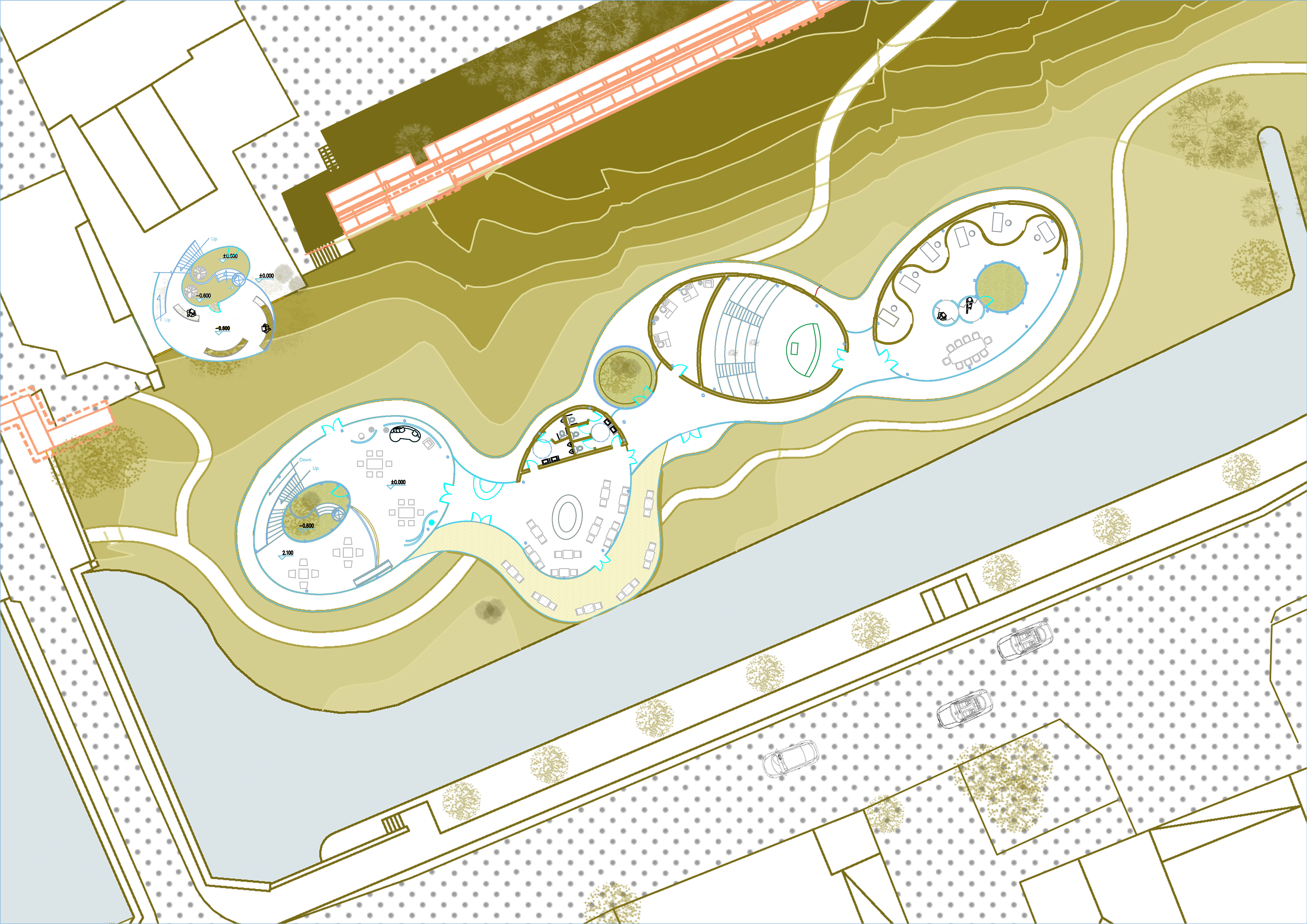
Functionally, the center responds directly to demographic and social-economic analyses of local needs. It comprises four main programmatic zones: (1) an Activity Room designed primarily for elderly residents and children, offering a safe and accessible space for everyday socializing and light activities; (2) a Lecture Hall and secondary Activity Room for community events, workshops, and gatherings; (3) a centrally located Café, providing residents with a relaxed, informal social hub; and (4) a Job Hub—an adult-oriented workspace and resource centre aimed at tackling local employment shortages and fostering small-scale entrepreneurship or telework. Through this mix of social, recreational, cultural and economic functions, the Community Center is intended as a new “heart” for the town — a place where all generations can convene, connect, and build resilience together.
In essence, this project is not just a building, but a social infrastructure: it revitalizes under-served community life, anchors small-town identity, and exemplifies how sensitive architecture can reconcile heritage, landscape, sustainability and social purpose.
Credits

Entrant
Shenzhen USEER Robotics Co., Ltd / ShenZhen Lohas Technology Co.,Ltd
Category
Product Design - Home Appliances

Entrant
CayKnight.AI
Category
User Experience Design (UX) - Health / Fitness / Wellness
Entrant
Unusual Art Design Studio
Category
Interior Design - Residential