
2026
The Strauch Hypercube
Entrant
Narduli Studio
Category
Architectural Design - Public Art & Public Art Installation
Client's Name
The Mosse Foundation
Country / Region
United States
Gallery





About The Entry
The Forum at the University of the California Berkeley’s newly opened Grimes Engineering Center was conceived as a hub for learning, collaboration and innovation. Its open, transparent architecture and the building’s state of the art engineering is an expression of that innovation and a testament to resilient design.
The Strauch Hypercube was conceived as an extension of this vision, a visual representation of the relationship between exploration, invention and community.
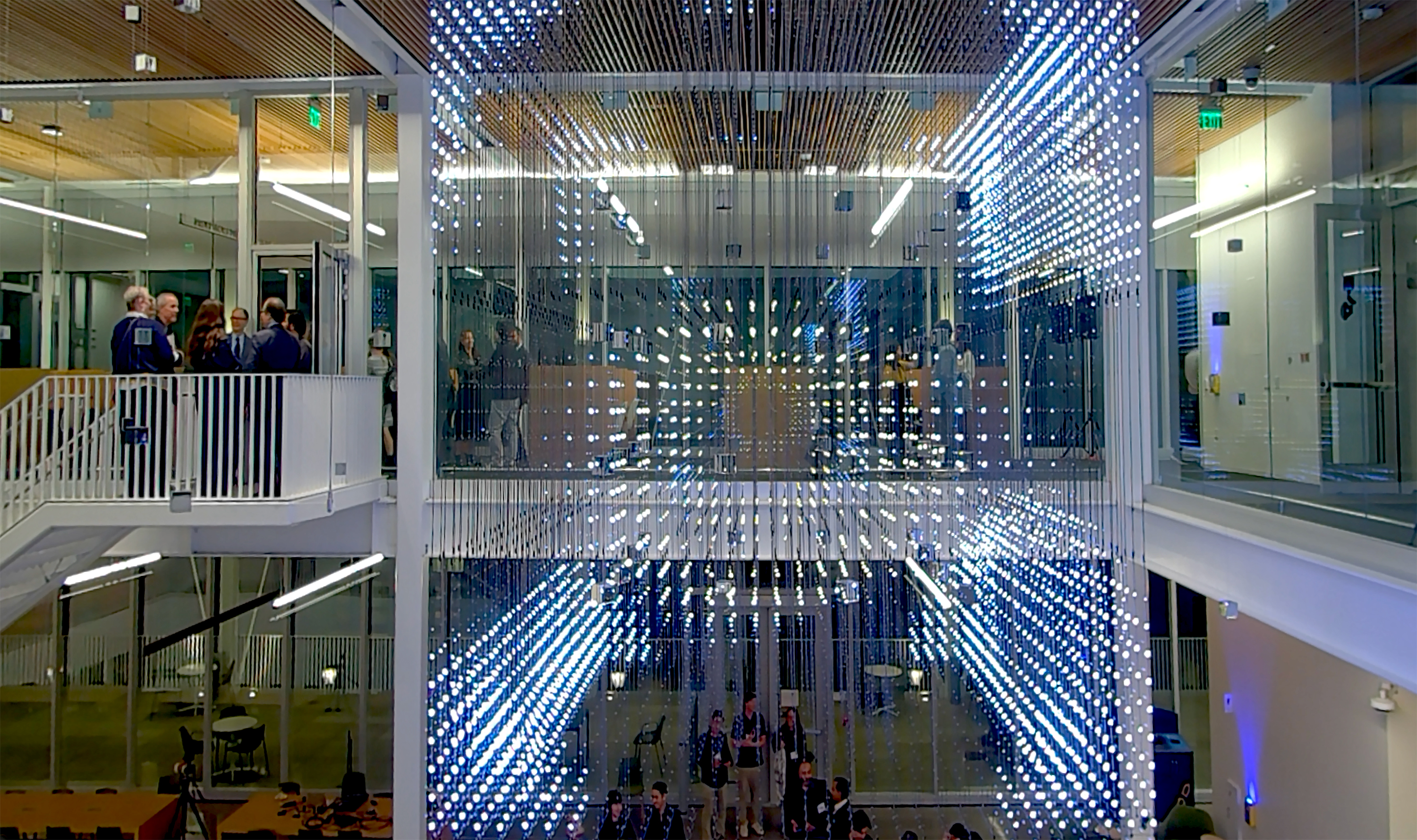
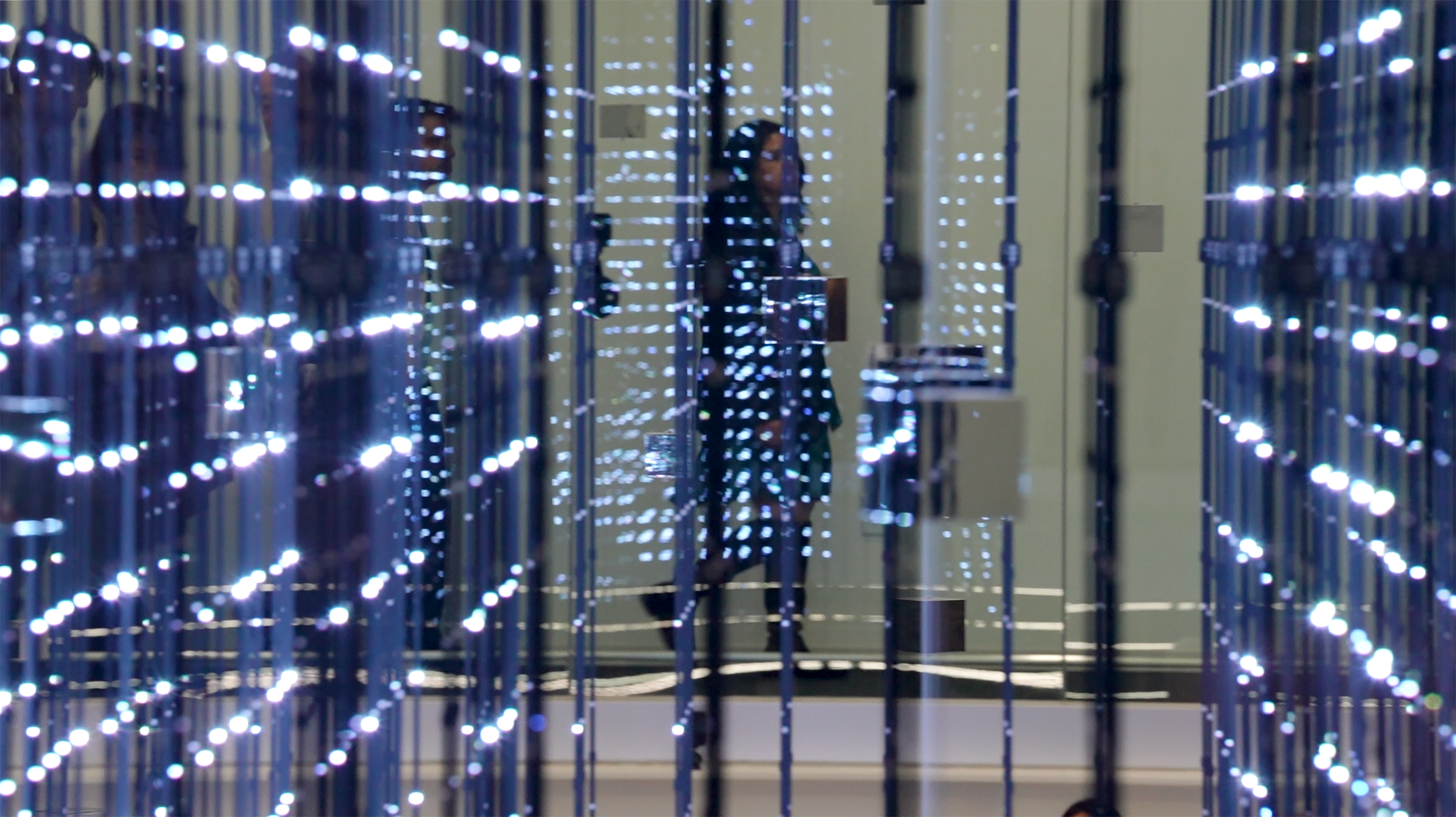
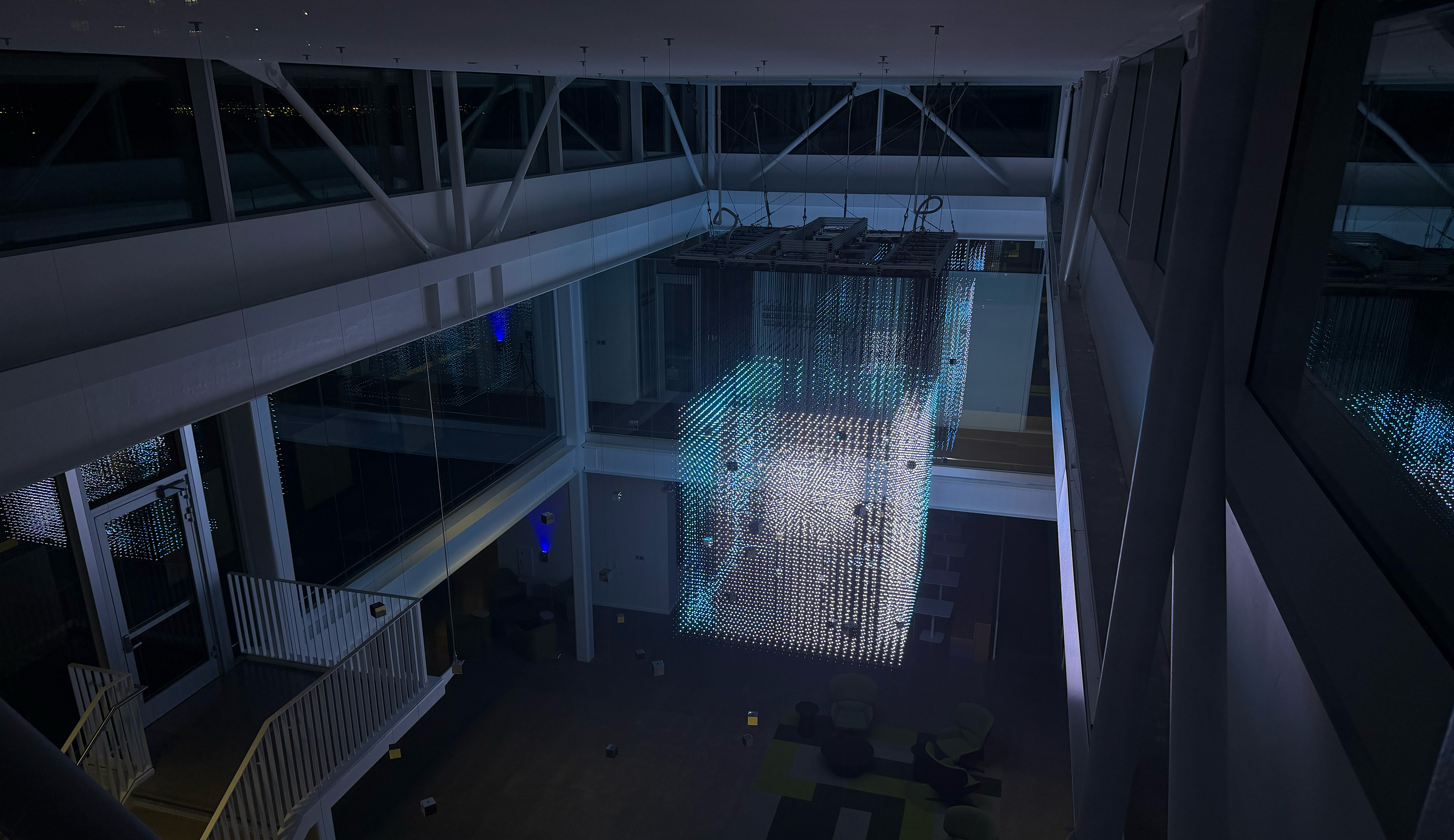
The artwork is centered within the inner volume of the three story glass-walled atrium framed within the formal rhythm of its architectural bays. Visible from all levels of the building, the transparent ephemeral structure appears to float, reinforcing the drama of the large open space. Fleeting reflections captured in the glass walls appear and disappear with time of day and season, extending the artwork beyond its precise physical form in an ethereal play between structure and chance, a metaphor for the collaboration and invention happening within this building.
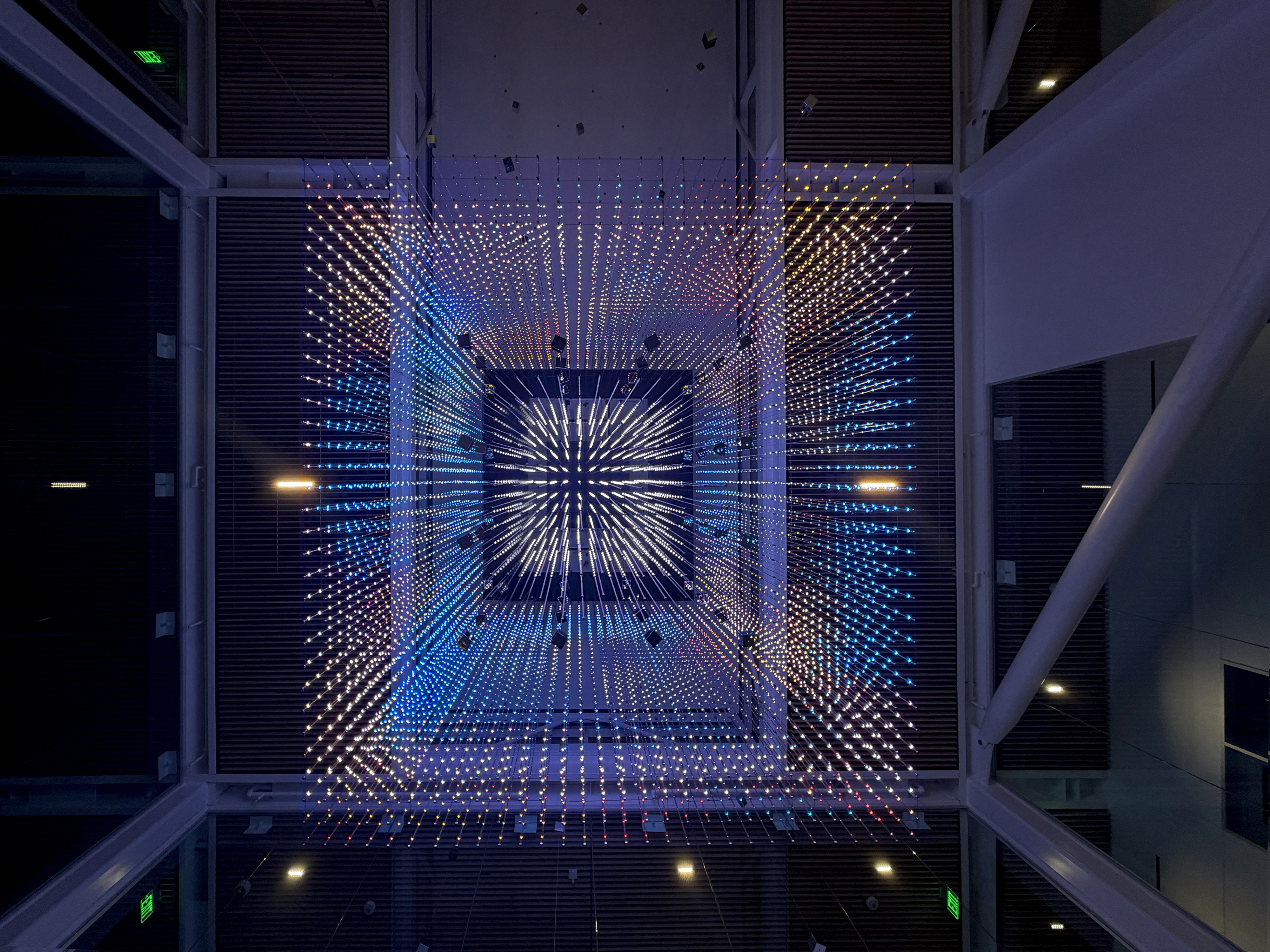
It is composed of two nested cubes, defined by 46,000 points of light arranged in a Cartesian grid. Formally, it recalls the hypercube, a theoretical object that cannot be visualized in the traditional sense, but its properties can be explored and understood through mathematical formulas and equations. Conceptually, it is a generative construct, driven by algorithms tied to mathematical systems, engineering dynamics and systems in nature that bring an ever-changing visual narrative of slowly shifting content to the space. An explosion of reflective pixel-like cubes emanate from its core to catch bits of the light. Together, they create a dynamic sculptural environment that symbolizes the transformative nature of discovery and the ever-changing landscape of research.
The artwork is conceived as a collaborative piece, always new, always being created. It builds on technology’s ability to handle large amounts of unstructured data simultaneously and parse multiple layers of abstraction using non-linear cognitive computing to create an interactive art experience. Developed with an open platform for experimentation, students and faculty are invited to explore.
Credits
Entrant
RoarcRenew Architects
Category
Interior Design - Retails, Shops, Department Stores & Mall


Entrant
Shenzhen Root Innovation Technology Co., Ltd.
Category
Product Design - Baby, Kids & Children Products