Eunjin Hong
1. Congratulations on winning the London Design Awards! Can you introduce yourself and share about what inspired you to pursue design as a career?
I'm Eunjin Hong, a Product Designer based in San Francisco. Growing up across different countries, I experienced a diverse tapestry of cultures and languages and saw firsthand how differently people interact with the world. This sparked my curiosity in finding a universal way to connect us all.
I saw design as a visual language that could bring people closer, and this inspired me to pursue design, not just to craft aesthetics, but to build scalable, impactful experiences that transcend barriers. With a background spanning Visual Communication Design and Design Engineering, I sit at the intersection of beautiful storytelling and technical feasibility.
2. What does being recognised in the London Design Awards mean to you?
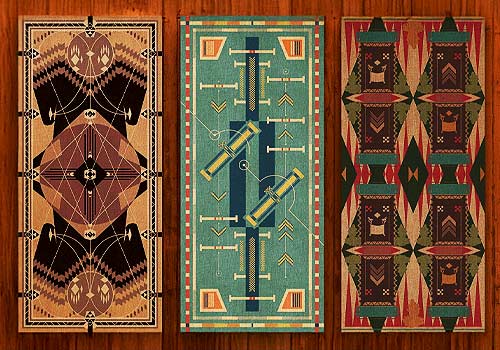
It feels particularly meaningful for a brand identity project because brand design lives or dies by whether it resonates emotionally. "totemio" was about shifting a cultural perception, making horseback riding feel accessible and warm rather than distant and elite. Having that concept recognised internationally tells me the emotional intent behind the visual language came through. That kind of validation is rare and genuinely matters to me.
3. How has this achievement impacted your career, team, or agency, and what opportunities has it brought so far?
It's been a useful confirmation of something I was already exploring, that my strength lies in visual interpretation, in translating an idea or feeling into a cohesive identity. This award gave me a clearer lens to evaluate my own work and a stronger foundation to build on as I take on more brand-led projects.
4. What role does experimentation play in your creative process? Can you share an example?
For totemio, experimentation was essentially the refinement process itself. Once the brand story was clear, the work became about finding the visual language that truly matched that feeling. I explored many different compositions and modes of expression before landing on something that felt right. Experimentation isn't separate from the outcome; it's how the outcome earns its conviction.
5. What's the most unusual source of inspiration you've ever drawn from for a project?
I would say memory. I archive a lot of references and return to them when needed, but the most unusual source is honestly my own lived experiences. When I need something intuitive and visceral, I go inward rather than outward. A texture I once touched, a light I remember from somewhere specific, an emotional tone from a particular moment. Those impressions surface unexpectedly and often become the most honest part of the work.
6. What’s one thing you wish more people understood about the design process?
That knowing when to stop is just as hard as knowing where to start. Designers can fall into rabbit holes chasing the perfect detail, and sometimes that obsession is exactly what elevates the work. But other times, you have to make the call to move on. Walking that line, being disciplined enough to let go while caring enough to push further, is genuinely one of the most difficult parts of the craft, and it never fully gets easier.
7. How do you navigate the balance between meeting client expectations and staying true to your ideas?
It depends on the project. When the answer lives with the client or the user, when their context, habits, and needs are the core of the problem, I lean heavily toward listening. But on a project like totemio, where the goal was creative interpretation, I gave more weight to my own instincts and pushed the boundaries of expression further. Working that way is also how the range of what I can do expands.
8. What were the challenges you faced while working on your award-winning design, and how did you overcome them?
The hardest part was the gap between personal conviction and shared resonance. I had a clear intuition about the emotional territory totemio should occupy, but a feeling that's vivid internally doesn't automatically translate into something others can sense. A lot of early directions were too inward-looking. It took honest questioning of whether each choice was truly communicating before the identity started to feel like it belonged to more than just me.
9. How do you recharge your creativity when you hit a creative block?
I change my environment. Travelling, walking, stepping away from screens. The shift in surroundings consistently unlocks something. I also pay attention to nature, where the logic and patterns in natural systems eventually resurface as design ideas in ways I never would have planned. And I stay connected to the design community by following people who document their process openly. Seeing how others think, not just what they make, is one of the best daily inputs I've found.
10. What personal values or experiences do you infuse into your designs?
Empathy first. For design to communicate, it has to resonate. And resonance requires genuinely understanding who you're speaking to. With totemio, that meant understanding what emotional shift needed to happen. Beyond that, I care about tailoring. Accessibility as a broad goal is important, but the work I find most satisfying is deeply specific. Designing for a particular subject, a particular feeling, a particular moment.
11. What is an advice that you would you give to aspiring designers aiming for success?
Stay curious about things that aren't design. The strongest work I've done has always drawn from psychology, culture, memory, or business context, not from design references alone. And learn to read the whole ecosystem of whatever you're building. Who it touches, how it lives in the world, what it means to the people who encounter it. The most valuable thing a designer can develop is not a style, but a way of seeing.
12. If you could collaborate with any designer, past or present, who would it be and why?
I've always admired Tim Burton for his absolute commitment to his own visual world. What I find myself wondering is what that kind of unwavering creative conviction would look like translated into brand or digital design today, especially with AI influencing our ecosystem and changing what's possible. How do you build something that idiosyncratic and that coherent in a medium that moves this fast? I'd love to find out alongside him.
13. What's one question you wish people would ask you about your work, and what's your answer?
"How do you design for a feeling that people don't yet know they're missing?"
Because that's what totemio was, at its core. Most people in Korea hadn't considered horseback riding as something for them. Not because they'd tried it and rejected it, but because the cultural framing had never invited them in. The design had to do something before any product experience could. It had to make someone feel seen by something they'd never encountered. That's the most invisible and most important part of brand design, and it's rarely what people ask about.