Toto G.
1. Congratulations on winning the London Design Awards! Can you introduce yourself and share about what inspired you to pursue design as a career?
I'm Toto Gong, Co-Founder and Chief Creative Officer of NATO STUDIO and Executive Director of our Singapore arm, NT GOMETA. I studied Visual Communication Design at the Accademia di Belle Arti in Italy, with a minor in Consumer Psychology — that combination shaped how I've approached creative work ever since: design isn't just about how something looks; it's about understanding why people feel the way they do about it.
Over 18 years, from Guangdong Advertising Group to McCann Worldgroup and Saatchi & Saatchi, and now building NATO STUDIO, what's stayed constant is that I've always been more interested in the human on the other side of the screen than the brief on my desk.
2. What does being recognised in the London Design Awards mean to you?
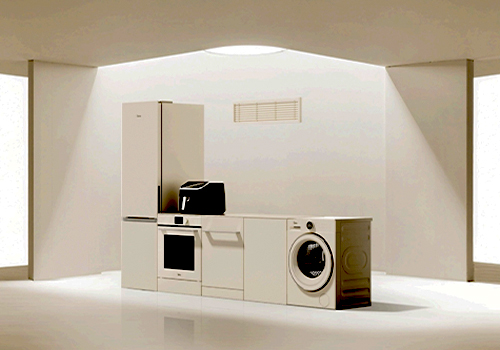
It means a huge amount, especially because both projects — Spacemaster and Raynor — were built around a very specific belief: that there's no single "European aesthetic," and respecting that difference is what actually makes a brand feel local, not foreign.
Winning Platinum for a campaign built around European living and Gold for a Nordic-specific one, in the same year, from the same studio, felt like validation of that whole approach — not just of one execution, but of how NATO STUDIO thinks.
3. How has this achievement impacted your career, team, or agency, and what opportunities has it brought so far?
It's accelerated something we were already building toward. NATO STUDIO actually started in Italy and has since grown into a team with studios in Guangzhou, Shanghai, and most recently Singapore — so this recognition, coming from London, feels like it closes a loop back to where we began.
This kind of achievement has opened doors with clients who want a partner that can genuinely localise across very different markets — not just translate one idea everywhere. For the team, it's been a real confidence boost — a reminder that the work we do quietly, market by market, gets seen on a global stage.
4. What role does experimentation play in your creative process? Can you share an example?
Experimentation is where the real ideas live — the brief only ever tells you the destination, not the road. A good example is our Toshiba "Japandi Style" campaign: we didn't want to just describe a design trend, so we experimented with reframing a Japanese aesthetic concept — "Ma," the idea of meaningful empty space — as Toshiba's own brand language, then tested how that translated across seven very different Southeast Asian markets. That kind of cross-cultural experimentation is risky, but it's also exactly what turned a design vocabulary into a brand story that grew sales 35% year-on-year.
5. What's the most unusual source of inspiration you've ever drawn from for a project?
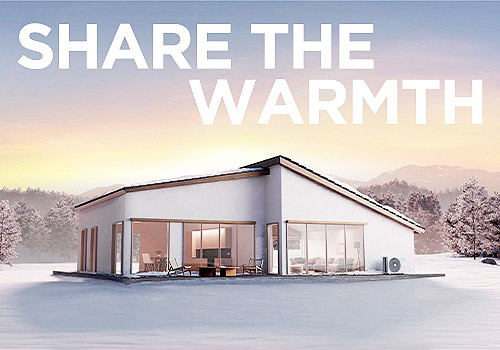
For Raynor, our Nordic air conditioner campaign, the inspiration didn't come from other advertising at all — it came from actually going there. My team and I travelled to Copenhagen, Adelgatan in Sweden, and Stockholm, and it was a local person who first properly introduced us to what Hygge really means — not the aesthetic Instagram version, but the lived feeling of it.
Spending that time in the Nordic region let us understand the thinking, the quiet concerns, and the idea of an "ideal home" the way Nordic people actually experience it — not how we imagined it from a brief. That trip shaped almost every visual and emotional decision in the campaign afterwards.
6. What’s one thing you wish more people understood about the design process?
The best design decisions are rarely the loudest ones. With Spacemaster, our headline idea was simply "Same Size, Big Surprise" — deceptively modest, but it took an enormous amount of research into how Europeans actually live in constrained spaces to earn that simplicity. People see the final, clean idea and assume it arrived quickly. It almost never does.
7. How do you navigate the balance between meeting client expectations and staying true to your ideas?
I don't see it as a balance to negotiate — I see respecting the client's business goals as part of the creative discipline itself, not a constraint on it. My job is to take what a client genuinely needs and find the version of it that's also honest, humane, and true to the audience. When we pushed Midea to lead with lifestyle and emotion instead of specs for Raynor, that wasn't us overriding the client's goals — it was us finding a better way to hit them.
8. What were the challenges you faced while working on your award-winning design, and how did you overcome them?
The biggest challenge was doing real localisation at scale — Spacemaster and Raynor launched at the same event, for the same parent brand, but had to feel like they belonged to two genuinely different audiences: European living broadly, and the Nordic region specifically. It would have been easier to build one visual system and adapt it lightly for both.
Instead, we did separate deep-dives into each region's aesthetic values, lifestyle pain points, and emotional relationship to home — which meant more work, but it's exactly why both projects resonated locally instead of feeling like a single idea stretched thin.
9. How do you recharge your creativity when you hit a creative block?
Travelling, always — especially to the actual market a project is about, so I can experience it firsthand rather than research it secondhand. And beyond that, being in nature. Stepping away from screens and briefs and just letting everything out lets nature do the inspiring for a while — some of my clearest creative thinking has happened far from a studio, not inside one.
10. What personal values or experiences do you infuse into your designs?
Respect — for the audience's intelligence, for the client's business reality, and for the culture we're designing into. I think a lot of advertising still treats "global" as one aesthetic exported everywhere. My own path — training in Italy, working across Chinese, Southeast Asian, and Western markets — taught me the opposite: that real craft is in the specificity, not the scale.
11. What is an advice that you would you give to aspiring designers aiming for success?
Learn to listen before you learn to impress. The strongest ideas I've been part of never started with "what will look impressive" — they started with genuinely understanding what a specific group of people needs to feel understood. Technique you can build over time; that instinct to listen first is harder to teach, so start practising it early.
12. If you could collaborate with any designer, past or present, who would it be and why?
Two, if I'm allowed to cheat: Antoni Gaudí and Tadao Ando.
When I visited Gaudí's work in Spain, I was completely amazed — every curve, every structure felt like it was born from nature itself, not imposed on top of it. There's so much raw emotion in his work; nothing feels engineered; everything feels grown. That's something I think about constantly in branding — how do you make an idea feel inevitable rather than designed?
Tadao Ando inspires me in a different way — how he brings elements like light, water, concrete, and air into a space with a precision no one else has matched. His work doesn't decorate a space; it becomes the space's emotion.
If I could sit in a room with both of them, I think the conversation would be about the same question I ask on every project: how do you let something as intangible as nature or light become the actual idea, instead of just the mood board behind it?
13. What's one question you wish people would ask you about your work, and what's your answer?
I wish more people asked, "How do you know when a market's aesthetic taste has actually changed, versus just your own assumptions?"
My answer: You don't guess — you build the habit of testing your assumptions against real local behaviour and feedback every single time, even when you think you already know the answer. That discipline is the actual difference between a campaign that performs well in one market and one that performs well everywhere.