Lu Zhenfeng
1. Congratulations on winning the London Design Awards! Can you introduce yourself and share about what inspired you to pursue design as a career?
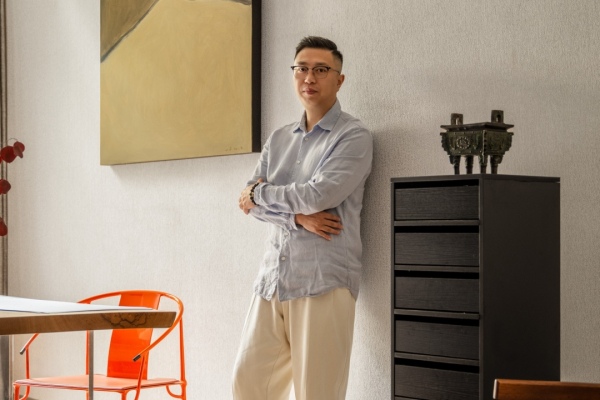
It is a great honour to receive the Platinum Award at the London Design Awards. I am Lu Zhenfeng, founder of P&H Interior Design, where I have been dedicated to the research and practice of contemporary private residential design.
My journey into design began with a long-standing exploration of spatial aesthetics. I believe space is a silent vessel — one that carries the spirit of living. Over the years, through the practice of luxury residential design, I have focused on creating a balance between structure, light, and material, using restraint as the foundation to remove unnecessary ornamentation and shape refined, timeless living environments.
For me, an award represents both recognition and encouragement. Moving forward, I hope to continue exploring design with sincerity, allowing spaces to transcend visual expression and return to a sense of quiet confidence and understated elegance.
2. What does being recognised in the London Design Awards mean to you?
Receiving the Platinum Award from the London Design Awards represents a meaningful resonance between my design philosophy and the international design community.
It is not only an acknowledgement of the work itself, but also an affirmation that my approach to spatial expression can communicate across different cultural contexts.
3. How has this achievement impacted your career, team, or agency, and what opportunities has it brought so far?
The recognition from the London Design Awards confirms that our creative approach aligns with the broader international design dialogue. For me, my team, and P&H Interior Design, it represents an important milestone.
At this stage, we are not seeking rapid expansion. Instead, the opportunities brought by the award are reflected more deeply in professional recognition and meaningful connections.
On one hand, it allows more discerning clients to understand our rigorous design methodology and appreciate our commitment to creating spaces beyond surface-level aesthetics. On the other hand, it provides opportunities for dialogue and exchange with outstanding designers from around the world, allowing us to continuously absorb diverse perspectives.
We remain committed to a boutique, highly curated approach — carefully selecting projects where our design values can be fully expressed.
4. What role does experimentation play in your creative process? Can you share an example?
Experience is the confidence behind every design decision. It allows me to approach creativity with greater rationality and clarity.
Aesthetic vision determines the desired expression of a space, while practical experience ensures that those ideas can truly be realised.
For example, when designing a detached villa, we encountered limitations caused by insufficient basement ceiling height, where mechanical systems could easily compromise the spatial proportion. Based on accumulated experience, we reorganised the equipment layout and integrated the technical requirements into the ceiling design, solving functional challenges while maintaining a refined and spacious atmosphere.
After years of practice, I no longer pursue visual impact alone. Instead, I have learned the importance of balance, restraint, and meaningful emptiness — creating spaces that remain calm and enduring over time.
5. What's the most unusual source of inspiration you've ever drawn from for a project?
My creative process often comes from the dialogue between Western formal aesthetics and Eastern philosophies of nature.
In one of my villa projects, I drew inspiration from the fluid yet restrained proportions of Italian sculpture, combining them with the Eastern landscape philosophy embodied in Taihu stones — where solidity and emptiness coexist.
Through Western rational principles, I established the scale and rhythm of curved forms, while using changing light and shadow to recreate the poetic sense of openness found in traditional landscapes.
By expressing Eastern values through an international design language, I hope to move beyond stylistic labels and create contemporary residences that balance order, serenity, and a relaxed sense of living.
6. What’s one thing you wish more people understood about the design process?
I hope people understand that design is never simply about creating visual effects.
Our process begins with the rational planning of structure, mechanical systems, and proportions based on architectural principles, before introducing the Eastern philosophy of balance, light, and material relationships.
Throughout the process, we constantly make decisions and compromises within real-world constraints, removing unnecessary decoration and focusing on what truly matters.
Rational thinking solves practical challenges, while poetic expression enriches emotional experience. Creating a sense of refinement within limitations is at the heart of our design philosophy.
7. How do you navigate the balance between meeting client expectations and staying true to your ideas?
I do not see these two aspects as opposing forces. Instead, they represent a process of mutual understanding.
I carefully listen to clients’ emotional expectations for their homes and explore the atmosphere they truly desire. At the same time, through architectural knowledge and aesthetic experience, I evaluate whether a design can withstand the test of time.
Rather than directly rejecting a client’s ideas, I guide the conversation through design exploration — helping distinguish between short-lived trends and lasting values.
By preserving the client’s emotional core while refining the method of execution, we are able to achieve a shared vision: using the client’s personal story as the foundation, and professional expertise to define proportion, quality, and long-term value.
8. What were the challenges you faced while working on your award-winning design, and how did you overcome them?
The greatest challenge of this project was transforming the traditional perception of an office environment as cold and purely functional.
An office space inevitably requires rational planning based on Western architectural principles, including functional zoning, circulation, and spatial efficiency. However, I did not want the environment to create a sense of pressure or detachment often associated with workplaces.
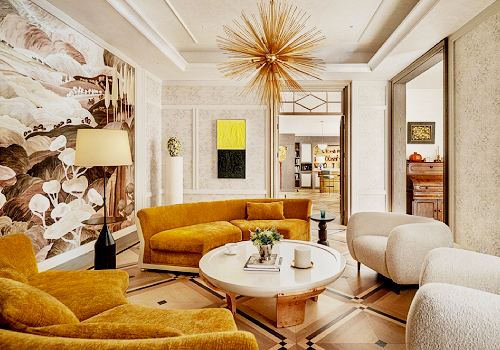
To address this, I introduced the Eastern philosophy of landscape — where presence and absence, solidity and emptiness coexist — into the design. Through gentle curves, layered lighting, and natural materials, the utilitarian atmosphere of the workplace was softened.
While fulfilling the practical needs of daily work, the studio was transformed into a space with an artistic and inspiring atmosphere, allowing the environment itself to continuously nourish creativity and encourage a dialogue between space and design thinking.
9. How do you recharge your creativity when you hit a creative block?
When facing creative challenges, I temporarily step away from drawings and distance myself from established design patterns.
I revisit Western sculptures to refine my understanding of proportion and form, while observing Eastern landscapes to reconnect with the philosophy of balance, restraint, and spatial emptiness.
At the same time, spending time in my carefully designed studio allows me to slow down and regain focus. The interplay of natural materials and soft light creates a calming environment where ideas can naturally emerge.
By combining rational theories with emotional experiences of nature, and moving beyond fixed approaches, new creative possibilities gradually reveal themselves.
10. What personal values or experiences do you infuse into your designs?
Years of experience in high-end residential design have taught me the importance of rationality and practicality.
I rely on architectural principles to resolve challenges related to structure, mechanical systems, and proportion, while rejecting unnecessary forms that exist only for visual impact.
At the same time, my understanding of Eastern landscape culture has shaped my appreciation for restraint, balance, and subtle expression.
I bring these values into every project — avoiding excessive decoration and instead using thoughtful structures, light, and materials to create atmosphere.
Whether designing private residences or creative studios, I always hope spaces can achieve a balance between order and relaxation, allowing people to return to a more peaceful and authentic state of living.
This remains the core value that guides my design practice.
11. What is an advice that you would you give to aspiring designers aiming for success?
I believe young designers should first establish a strong foundation in architectural knowledge, paying attention to structure, mechanical systems, and the realities of implementation, rather than focusing solely on visual expression.
At the same time, they should develop a deeper understanding of Eastern aesthetics and cultural philosophy, learning from international design approaches without simply imitating trends.
Design requires patience, experience, and continuous exploration. By balancing technical rationality with emotional depth, rejecting formulaic approaches driven by attention or popularity, and remaining true to their own values, designers can gradually develop a distinctive and meaningful design language.
12. If you could collaborate with any designer, past or present, who would it be and why?
This is a fascinating question. If I could collaborate with a designer from another era, I would choose the Spanish architect Antoni Gaudí.
Rooted in Europe’s advanced architectural traditions, Gaudí broke away from conventional linear forms and found inspiration in forests, vines, and natural landscapes, creating architectural expressions filled with imagination and poetry.
What makes him truly remarkable is that his extraordinary visions were always supported by structural logic. His creativity never existed separately from engineering reality.
If we were to collaborate, Gaudí’s poetic and organic approach to nature would challenge my established design thinking, while my experience in high-end residential projects could help refine and reinterpret his expressive forms for contemporary living.
Together, we could explore how organic curves, natural inspiration, and Eastern philosophies of balance and emptiness might merge into a softer, more timeless spatial language.
Such a dialogue between rigorous order and poetic imagination would open up new possibilities in design.
13. What's one question you wish people would ask you about your work, and what's your answer?
I hope people would ask me: “Do constraints limit creativity in design?”
My answer would be: No.
Just as Gaudí created extraordinary architectural forms through the discipline of structural principles, real-world conditions are not limitations — they are the foundation that gives creativity direction.
Because design exists within reality, imagination is guided away from abstract ideas and transformed into solutions that are both innovative and meaningful.
True creativity does not come from ignoring constraints, but from discovering possibilities within them.