
2026
Wei-Jin Mural & Stone Art: Immersive Curation
Entrant
Guo Yixuan
Category
Interior Design - Cultural
Client's Name
LEW Bon Hoi, Kang Lili, Liu Lei, Bu Manling, Yuan Chenhong
Country / Region
China
Gallery



About The Entry
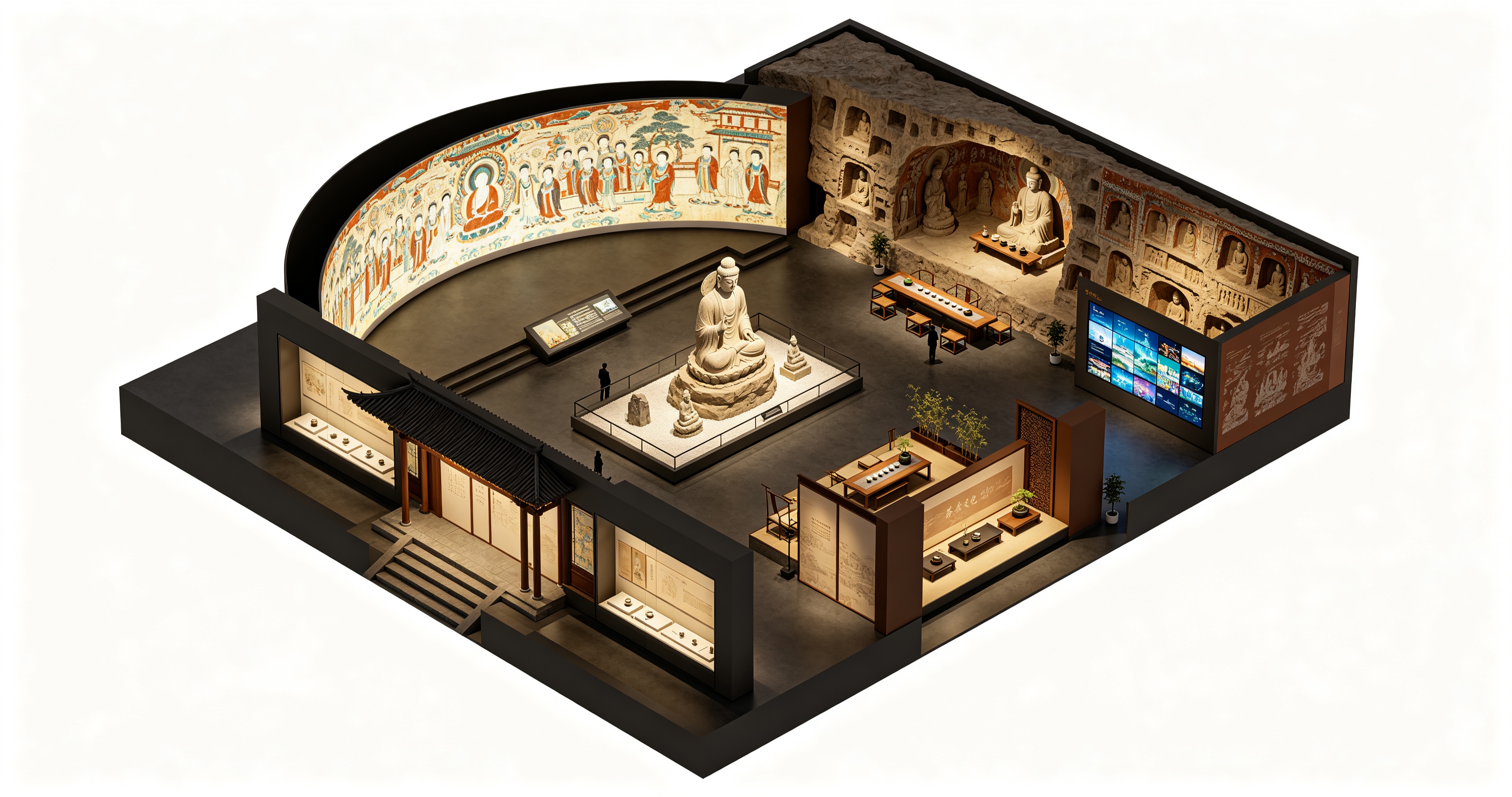
Departing from the mechanical replication and static displays typical of conventional museums, this design is grounded in the triad of “space, iconography, and ritual behavior,” reconstructing the vanished native ritual environments of Wei and Jin dynasty murals and stone carvings. Using “tea customs” as an experiential conduit bridging antiquity and the present, it translates fragmented pictorial contexts—funerary rites, metaphysical discourse (Qingtan), and sacred statuary—into tangible spiritual rituals, achieving a profound paradigm shift from niche iconographic research to a living historical civilization.
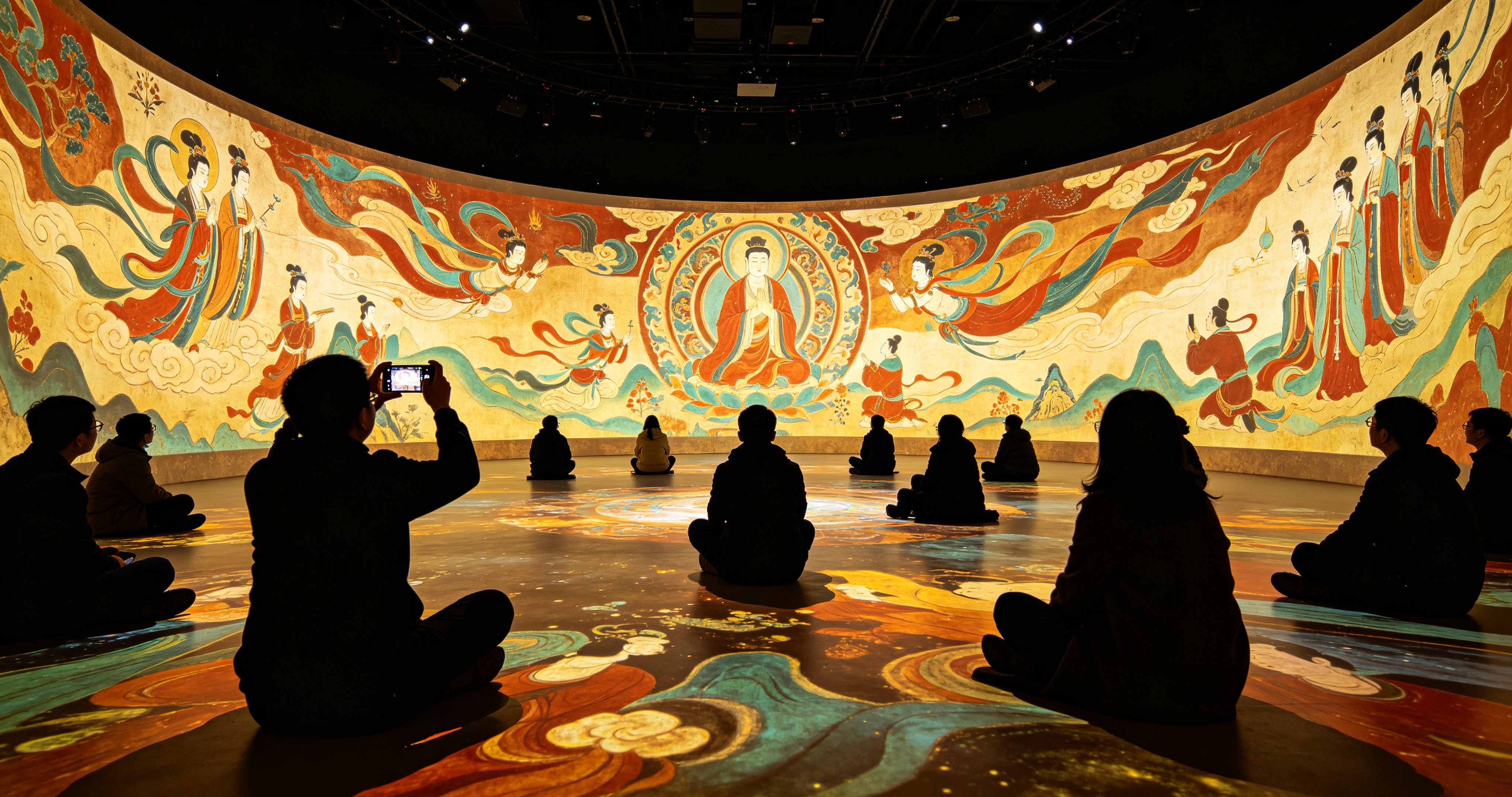
The spatial layout constructs a progressive five-stage narrative circulation: Initiation (Qi), Mourning (Dao), Contemplation (Si), Banquet (Yan), and Integration (Rong). Leveraging infrared gesture tracking and directional acoustic soundscapes, visitors intuitively trigger evolving banquet projections and rising tea mists without complex instructions. This multimodal synergy across vision, sound, and touch significantly lowers the cognitive barrier to traditional Wei-Jin scholarship, guiding the audience from passive spectators into active dialogue partners participating in historical ritual etiquette.
The system is engineered on a four-tier technical architecture: Perception, Transmission, Processing, and Output. Integrating Unreal Engine 5 (Nanite-powered) stone-relief rendering, AI-driven ancient image restoration, and TouchDesigner interaction logic, the setup coordinates micro-airflow tea-mist systems with DMX512 lighting protocols to achieve millisecond-level audiovisual and environmental synchronization. The entire venue employs a fully modular, quick-assembly structure that requires zero structural intervention, enabling agile digital content iteration and scalable reuse for touring exhibitions.
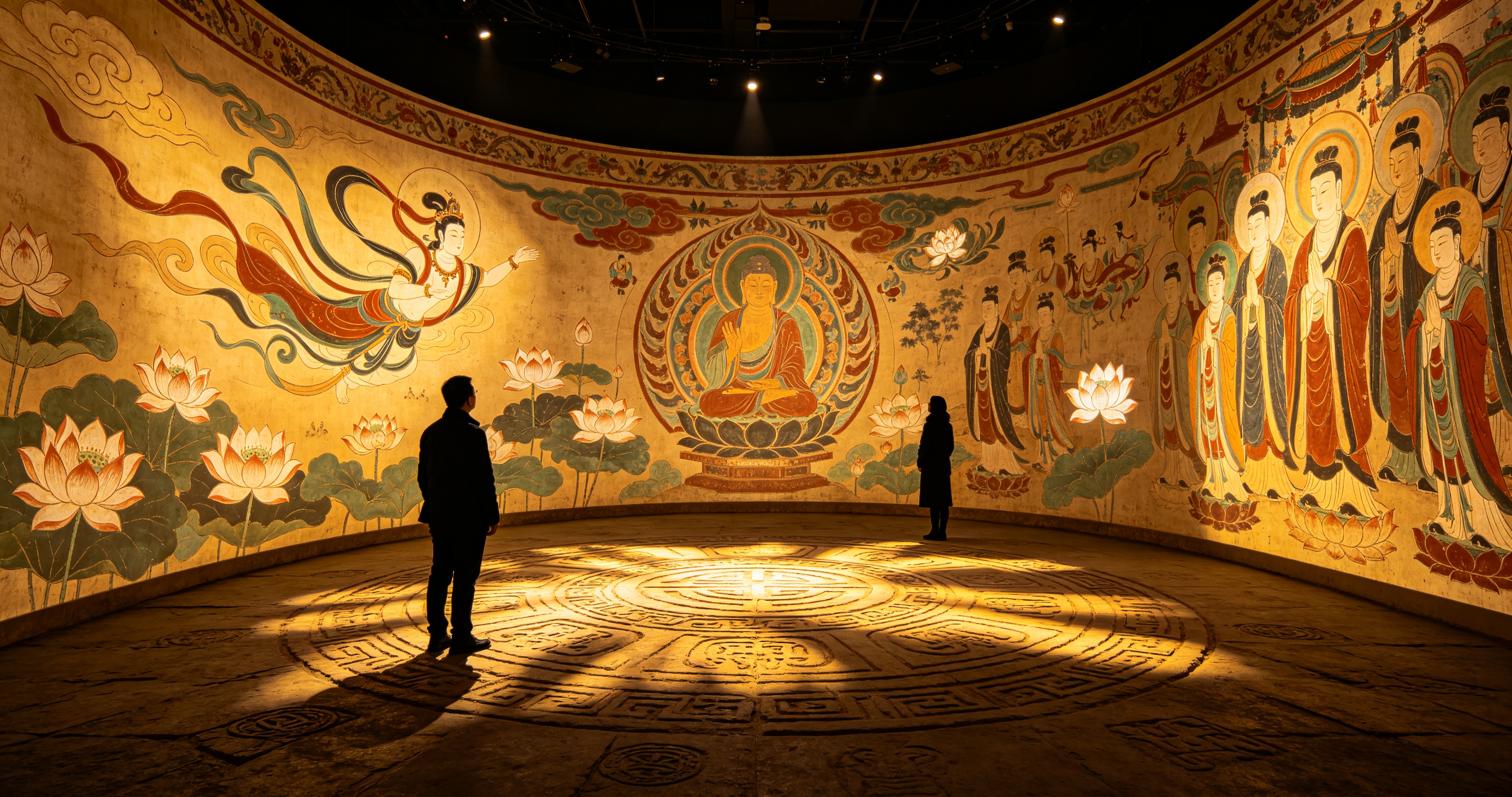
Grounded in deep gray tactile finishes and classical ink-wash tones, the spatial framework is sculpted through semi-enclosed panoramic screens, translucent gauze scrims, and subtly suspended, antique-inspired tea platforms. Dynamic digital luminescence intertwines with gentle tea vapor, dissolving physical boundaries. The austere solemnity of cave grotto sculptures contrasts harmoniously with the lively light and shadow of ancient banquets, culminating in a Neo-Oriental spatial atmosphere that is at once ethereal, classically refined, and charged with futuristic tension.
The design establishes a bidirectional closed loop connecting on-site curation, offline tea-ritual workshops, and online digital IP, effectively resolving the preservation dilemma of semantic rupture when niche stone relics are detached from their native sites.
Credits
Entrant
HuaYi Design
Category
Interior Design - Villas
Entrant
Bio-architecture Formosana
Category
Architectural Design - Office Building

Entrant
Shenzhen Wenhua Design Consultant Co. Ltd.
Category
Interior Design - Residential