
2026
Algae Food Bank: Reactivating Nature
Entrant
Huichao Dong
Category
Architectural Design - Conceptual
Client's Name
-
Country / Region
United States
Gallery
About The Entry
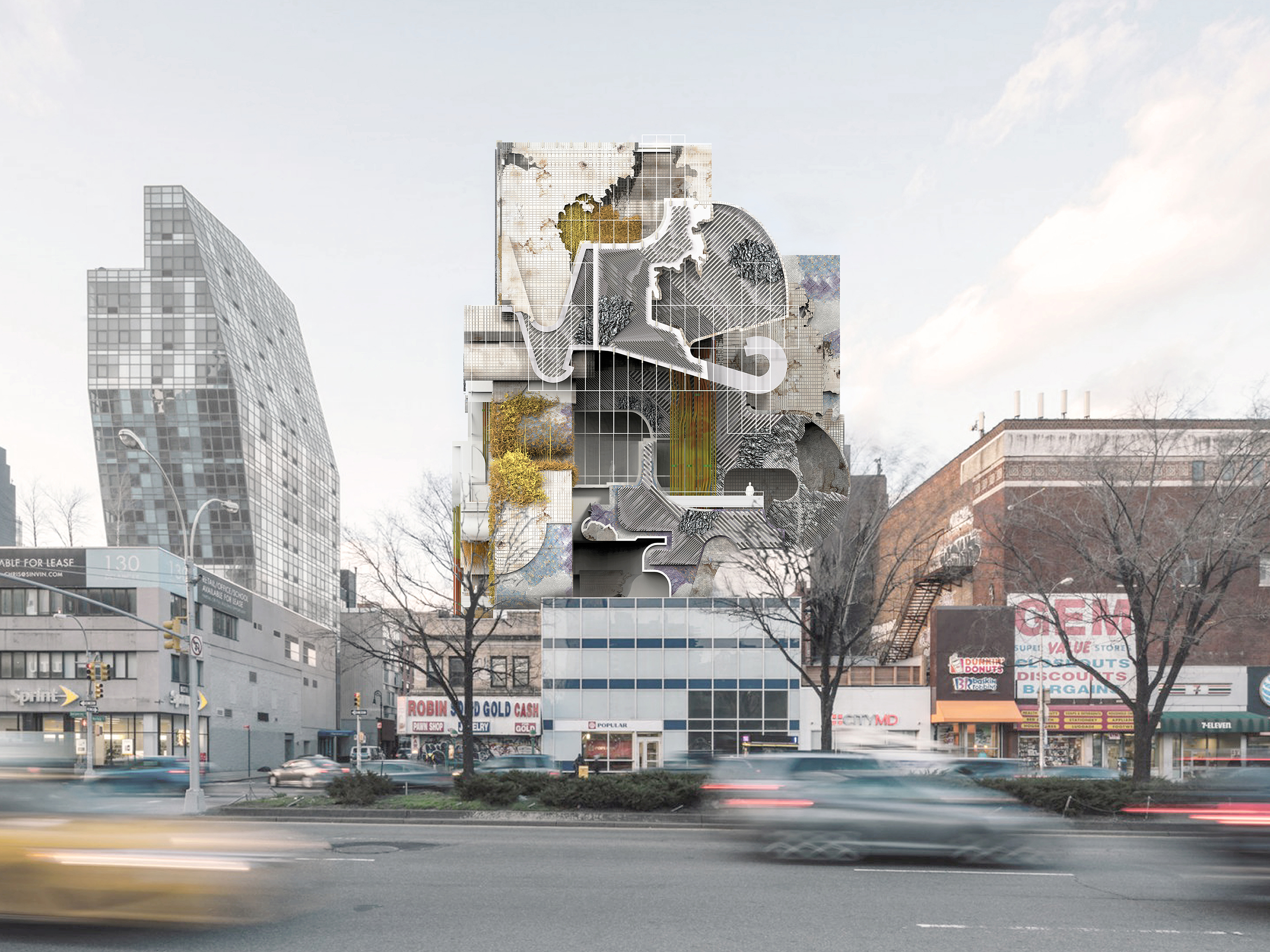
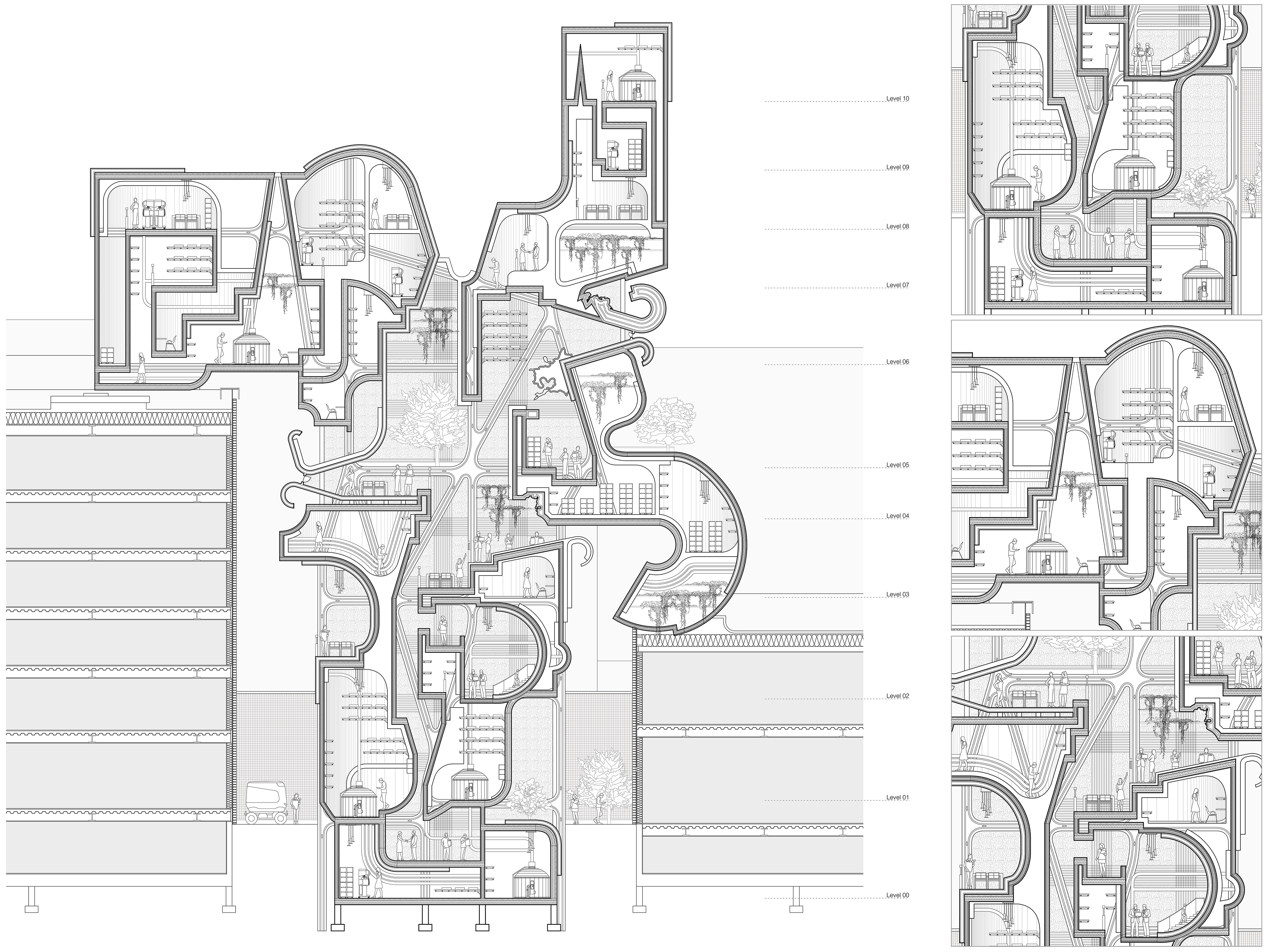
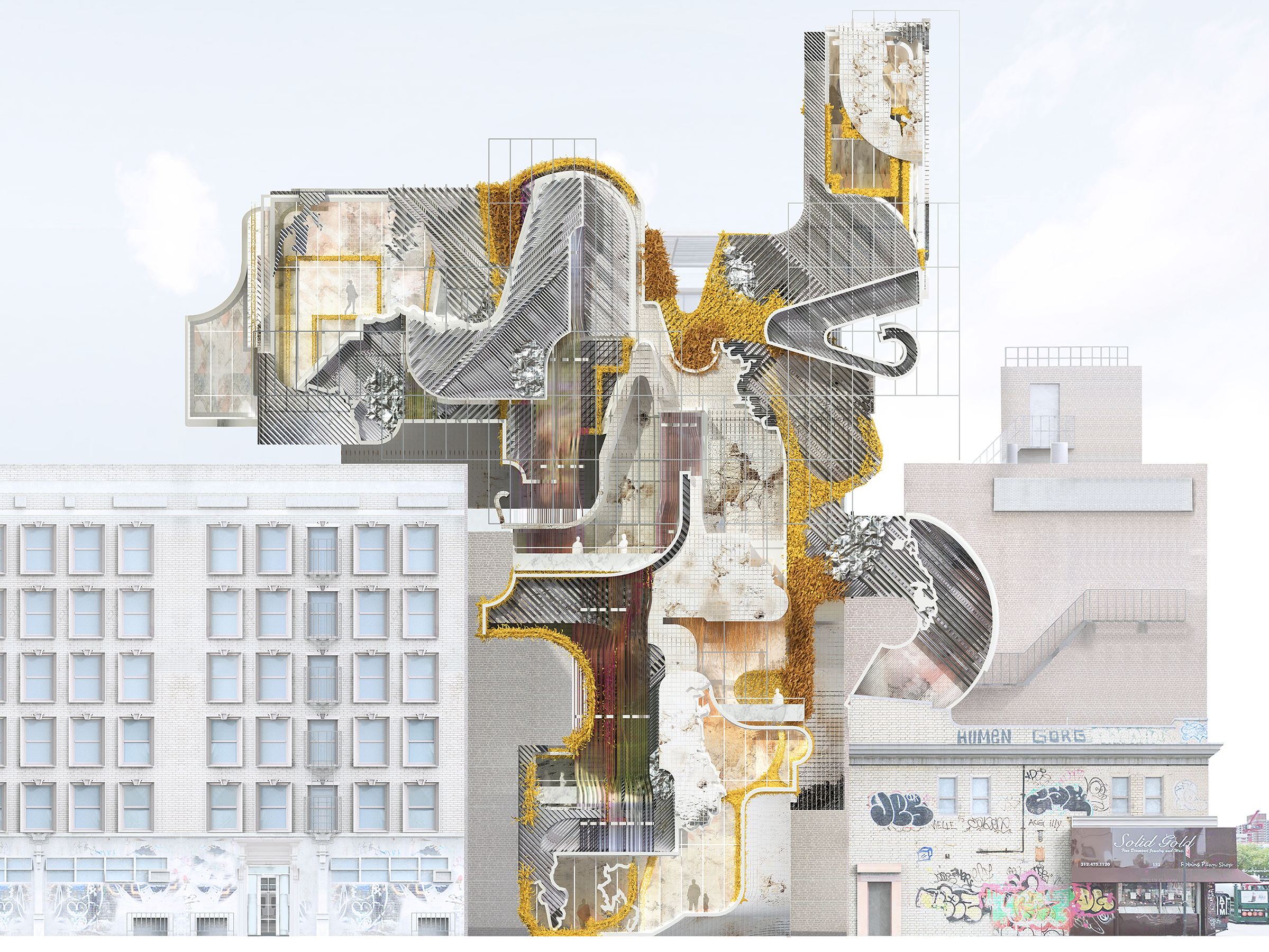
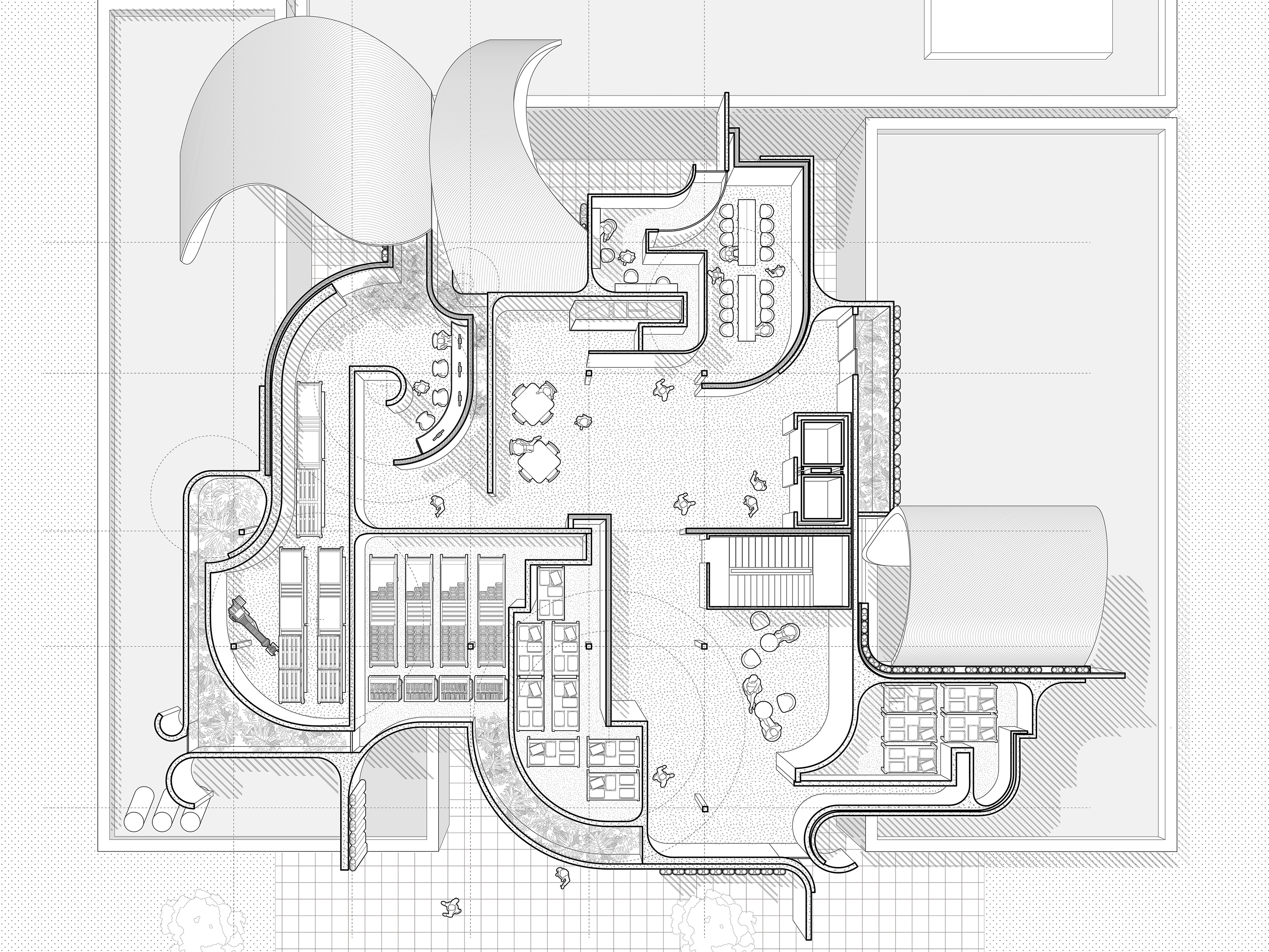
Reactivating Nature is an architectural proposal that integrates algae farming with a food bank, exploring new relationships between natural systems and artificial environments. Rather than treating nature and human intervention as opposing forces, the project investigates “blurred zones” where biological processes and architectural systems coexist and reinforce one another.
Located in the Lower East Side of Manhattan, a neighborhood with a long history of food culture and public-facing culinary spaces, the project engages a dense and highly active urban context. Positioned at a prominent corner near the Williamsburg Bridge, the design leverages high visibility and pedestrian flow to reimagine food production as a public and accessible urban infrastructure.
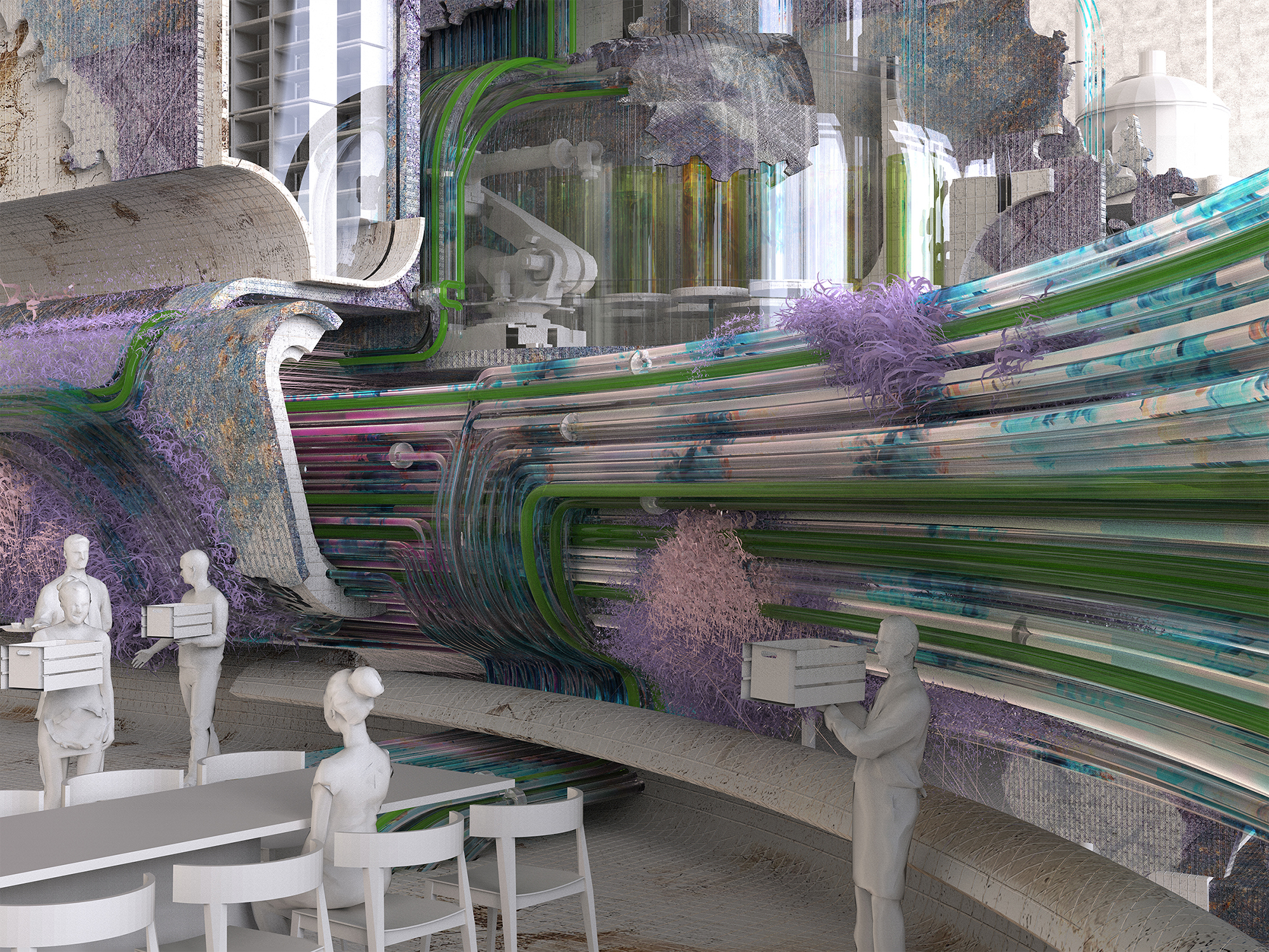
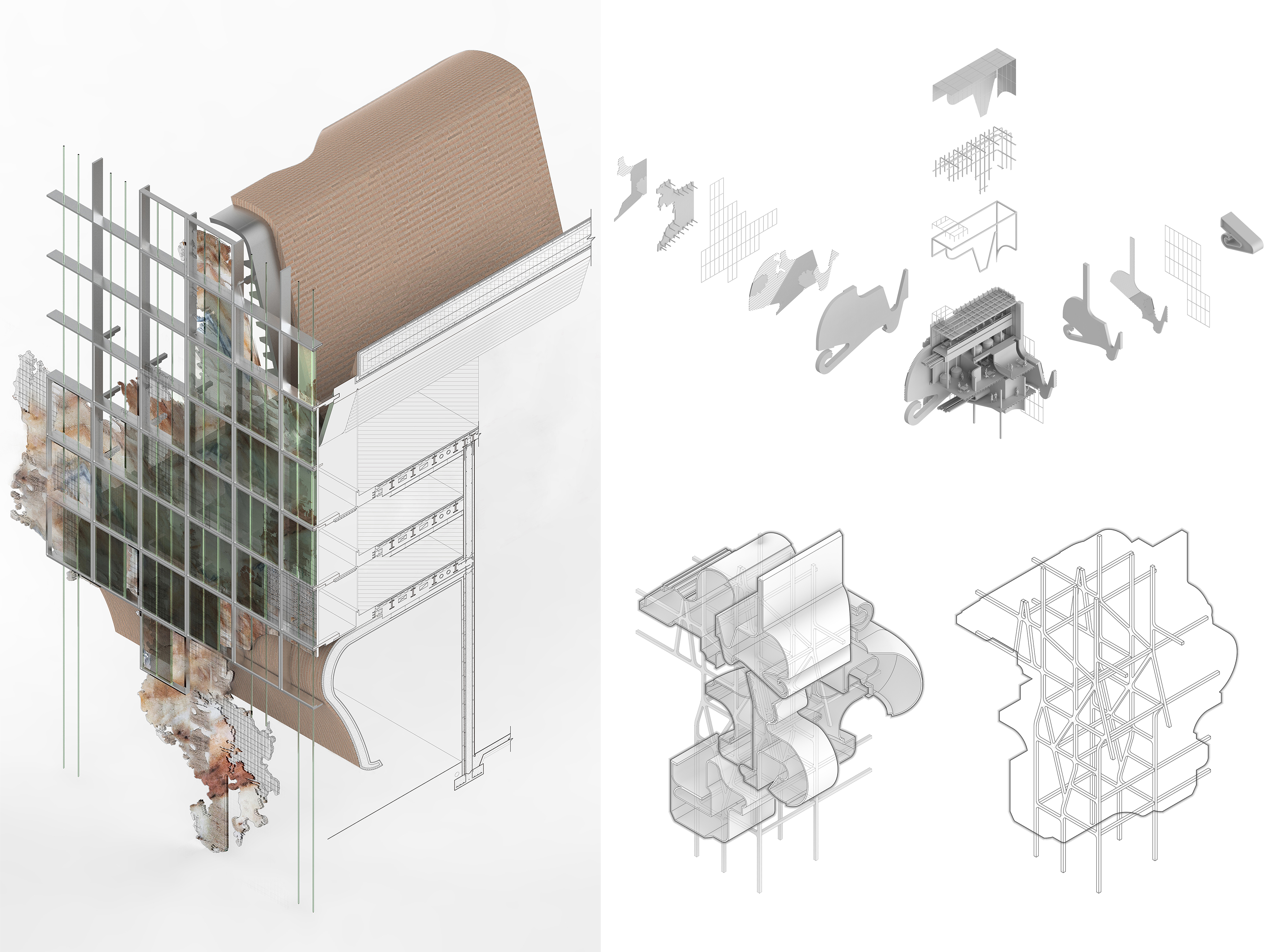
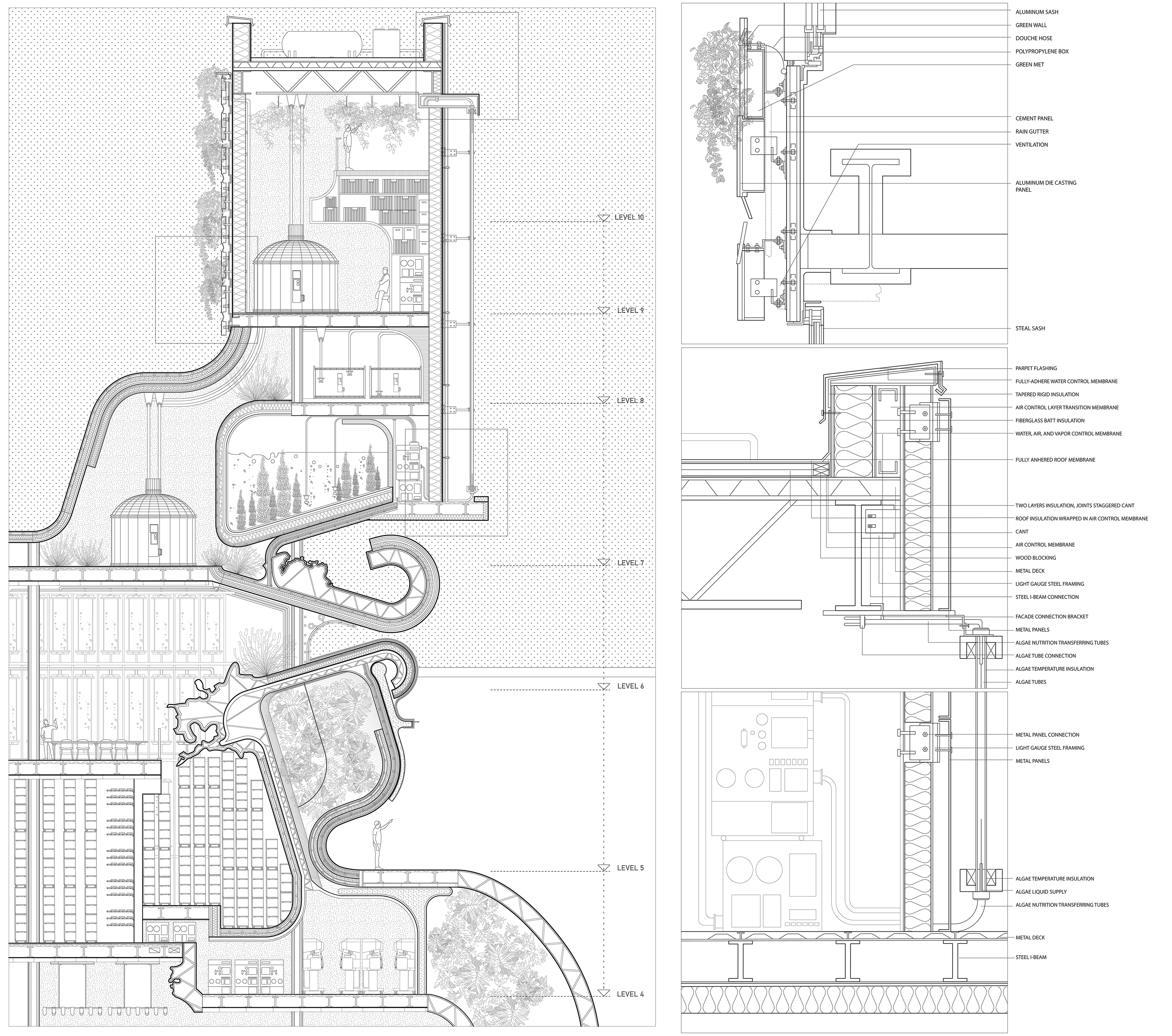
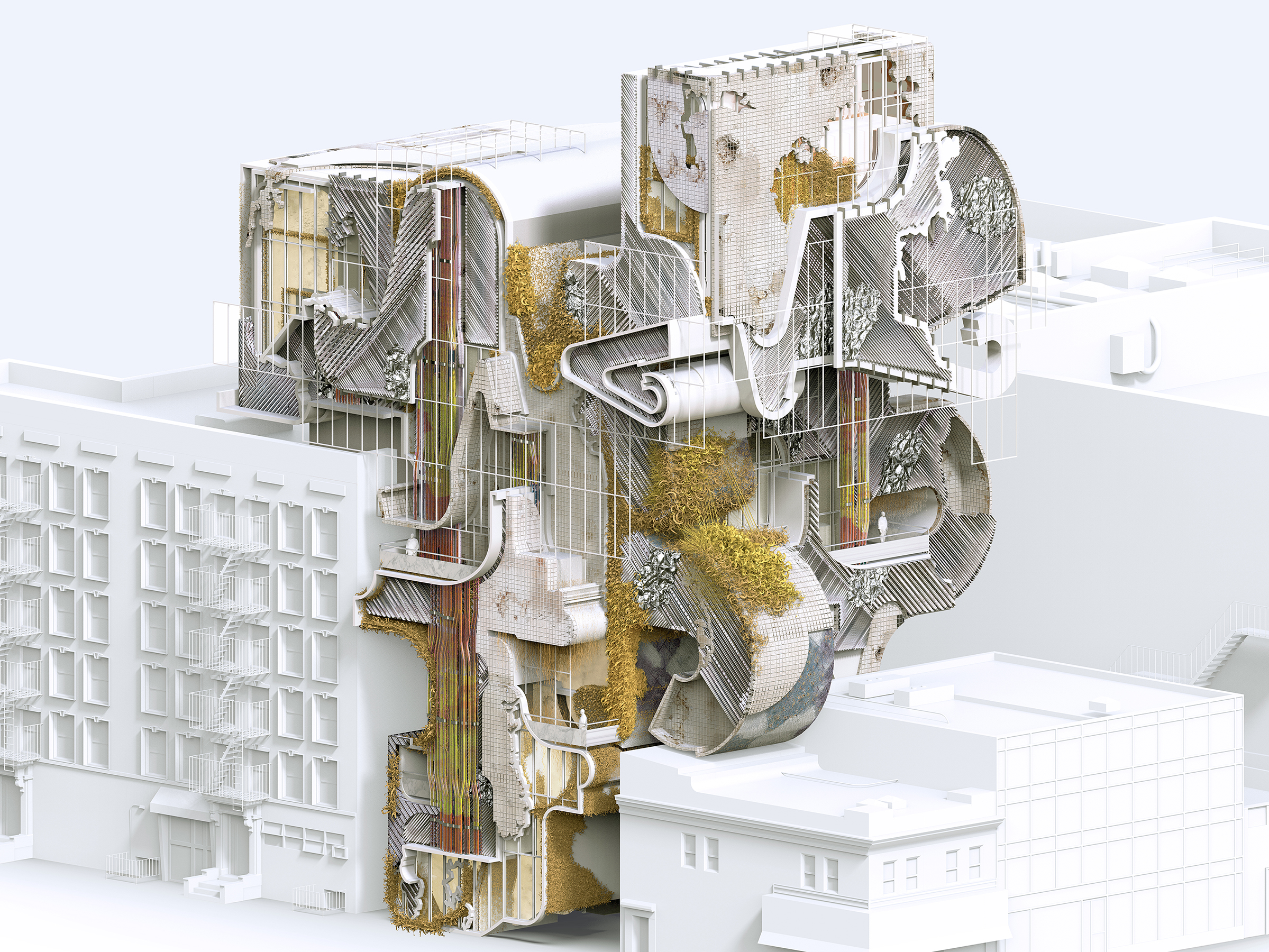
The design rethinks urban food production by positioning algae as both a spatial and infrastructural driver. As a highly efficient and sustainable resource, algae enables continuous food production while also acting as a visible, dynamic medium within the building. Networks of algae-filled pipes, responsive to light, temperature, and nutrients, transform the façade and interior into a living system that evolves over time.
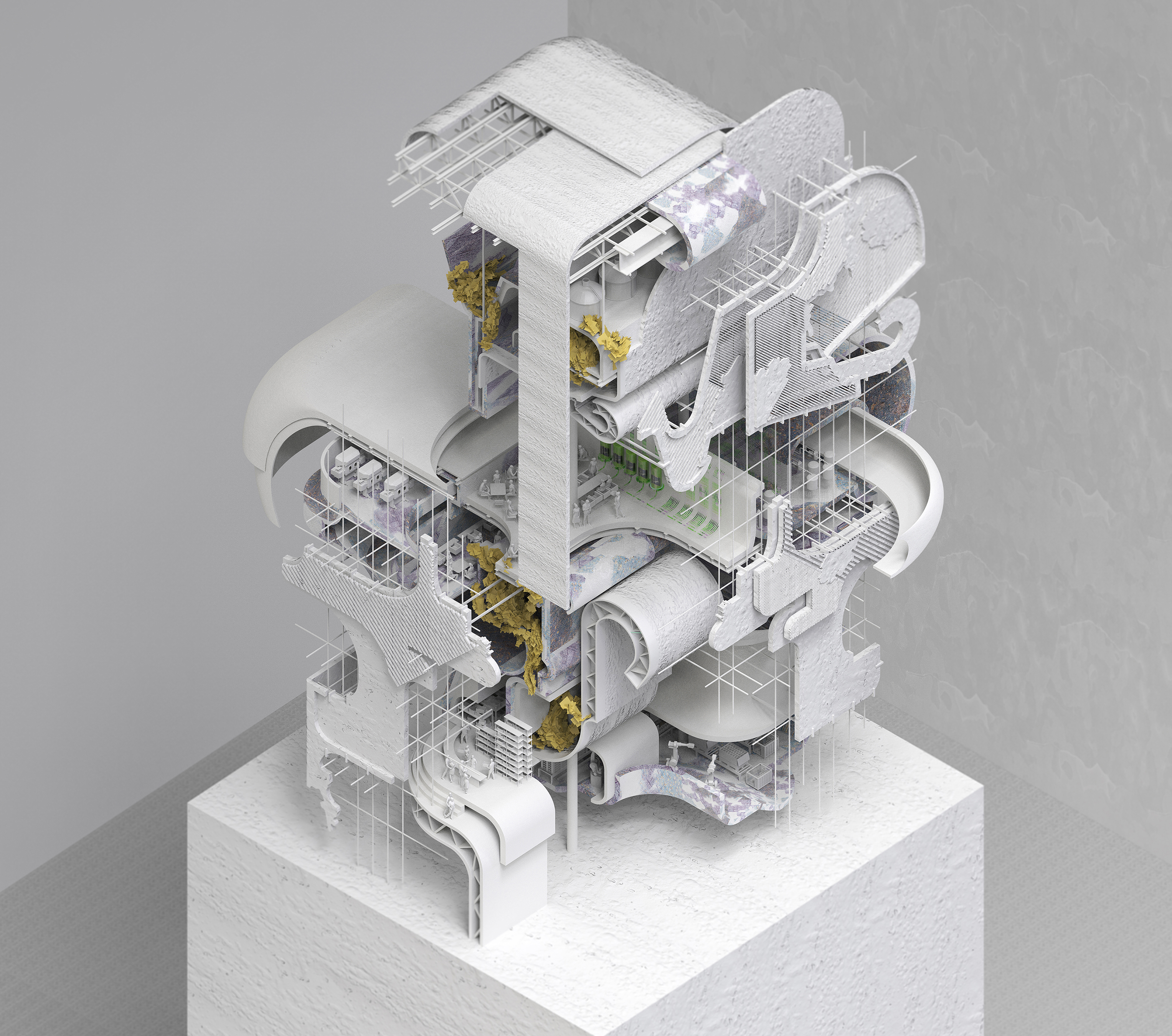
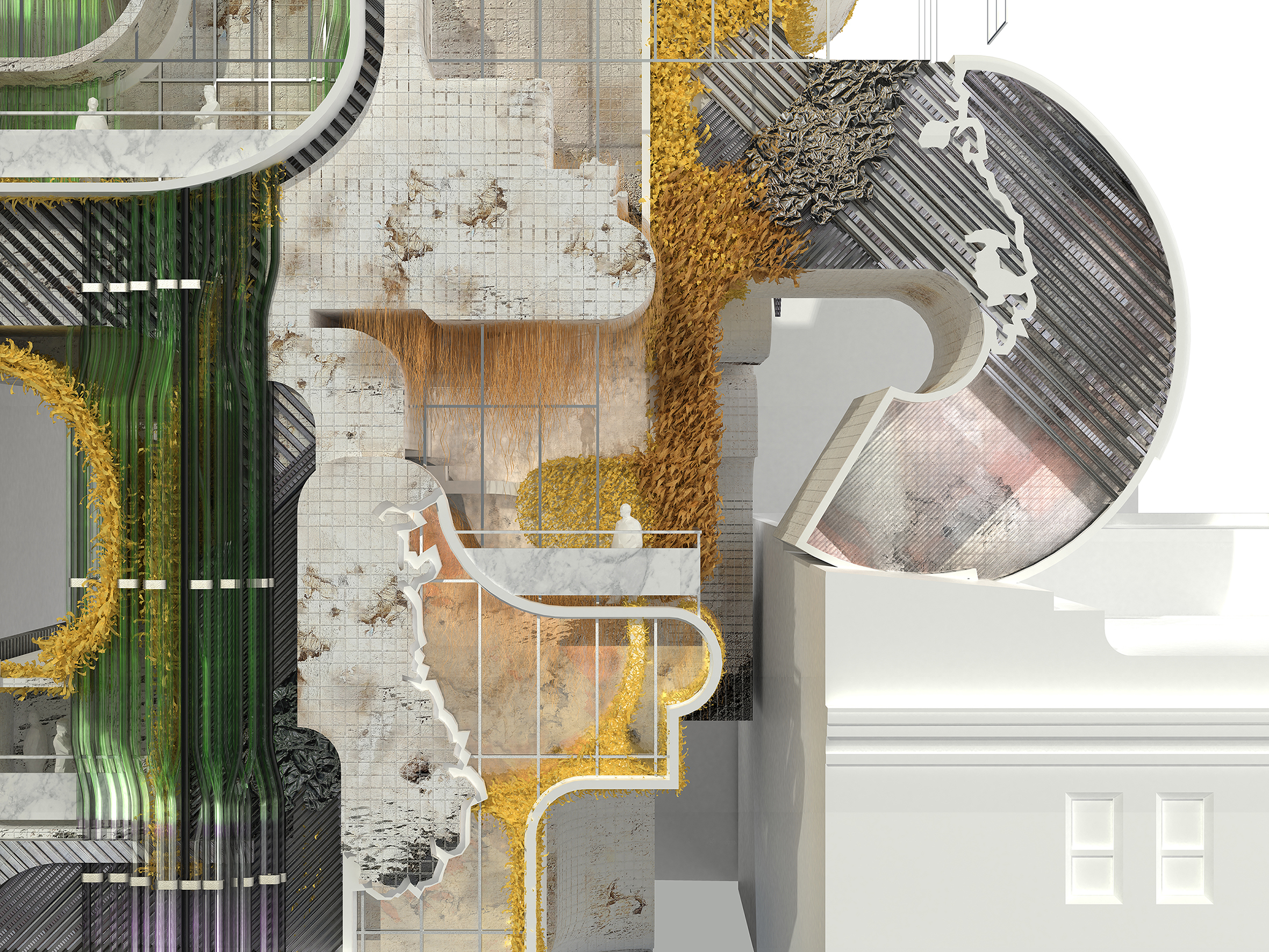
Spatially, the project is organized through layered massing strategies inspired by precedents of geometric composition and enclosure. Distinct volumes for production, research, and public use are interwoven through a series of pockets, gaps, and transitional zones. These in-between spaces act as buffers where natural growth and human activity intersect, creating new forms of spatial and social interaction.
The architectural envelope operates as a multi-layered framework rather than a single enclosure. Structural systems, façade elements, and environmental infrastructures are integrated into a flexible grid that allows multiple layers of occupation and performance. Vegetation, algae systems, and material assemblies combine to produce a hybrid condition that blurs interior and exterior boundaries.
By merging food production, public distribution, and research spaces, the project proposes a new model for urban food infrastructure. It challenges conventional distinctions between nature and technology, offering an adaptive system where architecture becomes both a mediator and an active participant in ecological processes.
Entrant
HOMA INTERIOR DESIGN
Category
Interior Design - Living Spaces

Entrant
Butterfire Co.,Ltd.
Category
Packaging Design - Cosmetics & Fragrance
Entrant
https://www.instagram.com/_doris_mama
Category
Fashion Design - Maternity