
2026
Curation for Emperor Qinshihuang's Mausoleum Site Museum
Entrant
Guangdong Jimei Design & Construction Co., Ltd/ Shao Zhanying
Category
Interior Design - Exhibits, Pavilions & Exhibitions
Client's Name
Emperor Qinshihuang's Mausoleum Site Museum
Country / Region
China
Gallery




About The Entry
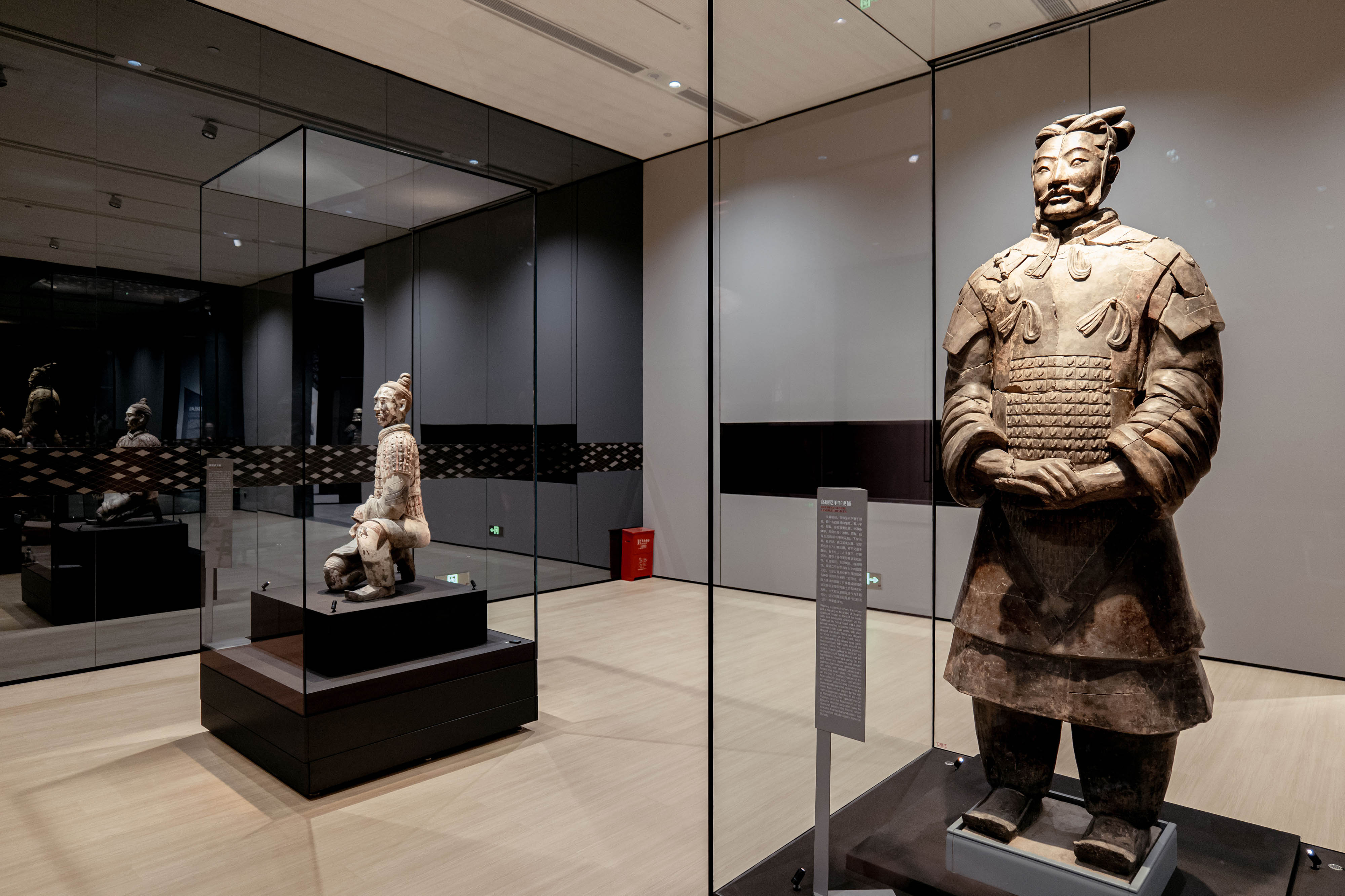
Balancing the heavy weight of history with the expectations of modern audiences has always been a tough challenge in heritage museums. This exhibition design offers a forward-thinking solution. By translating the aesthetic DNA of the Qin Dynasty into a modern spatial language, it sets a new standard for site-specific museum exhibitions.
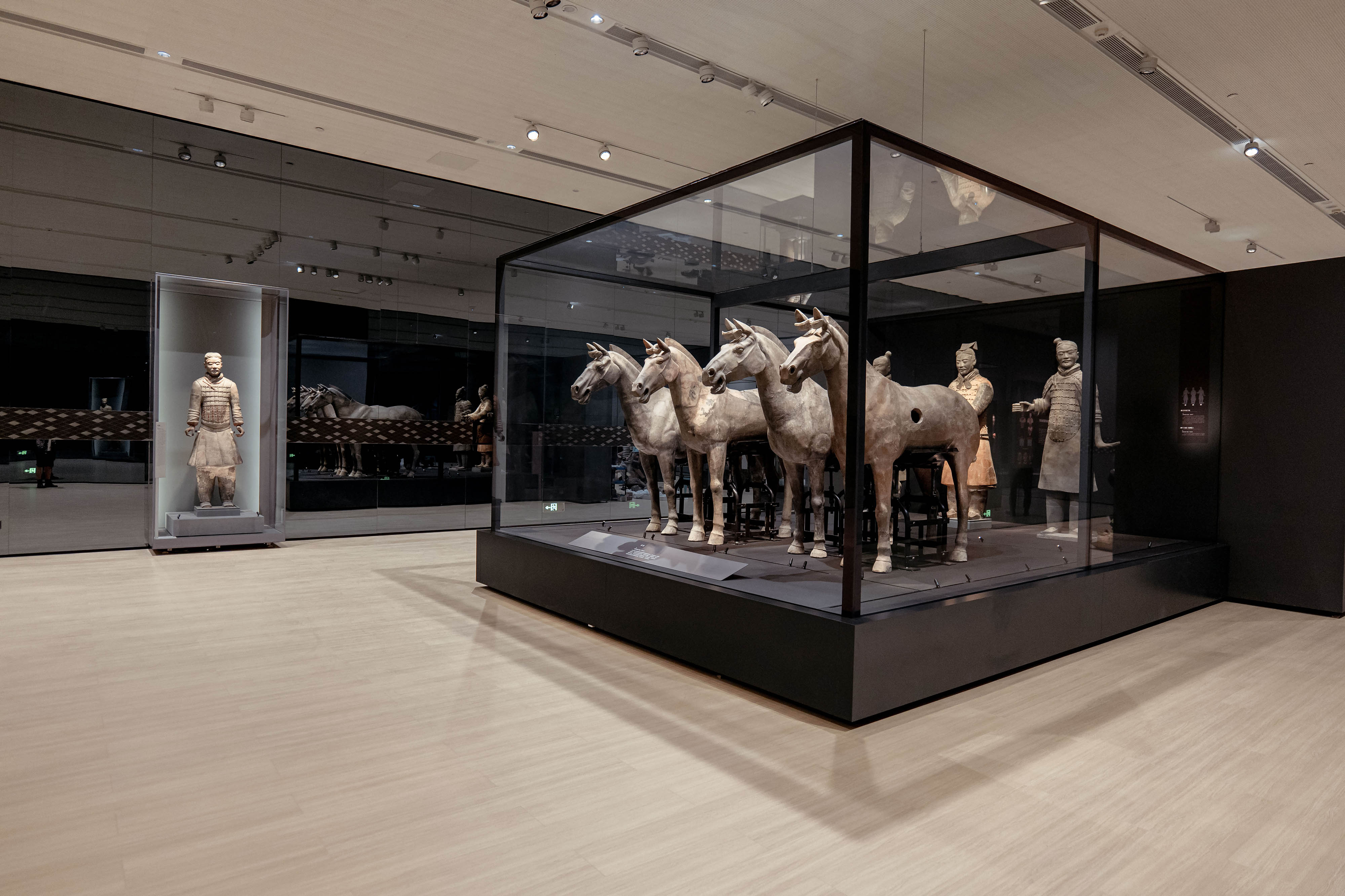
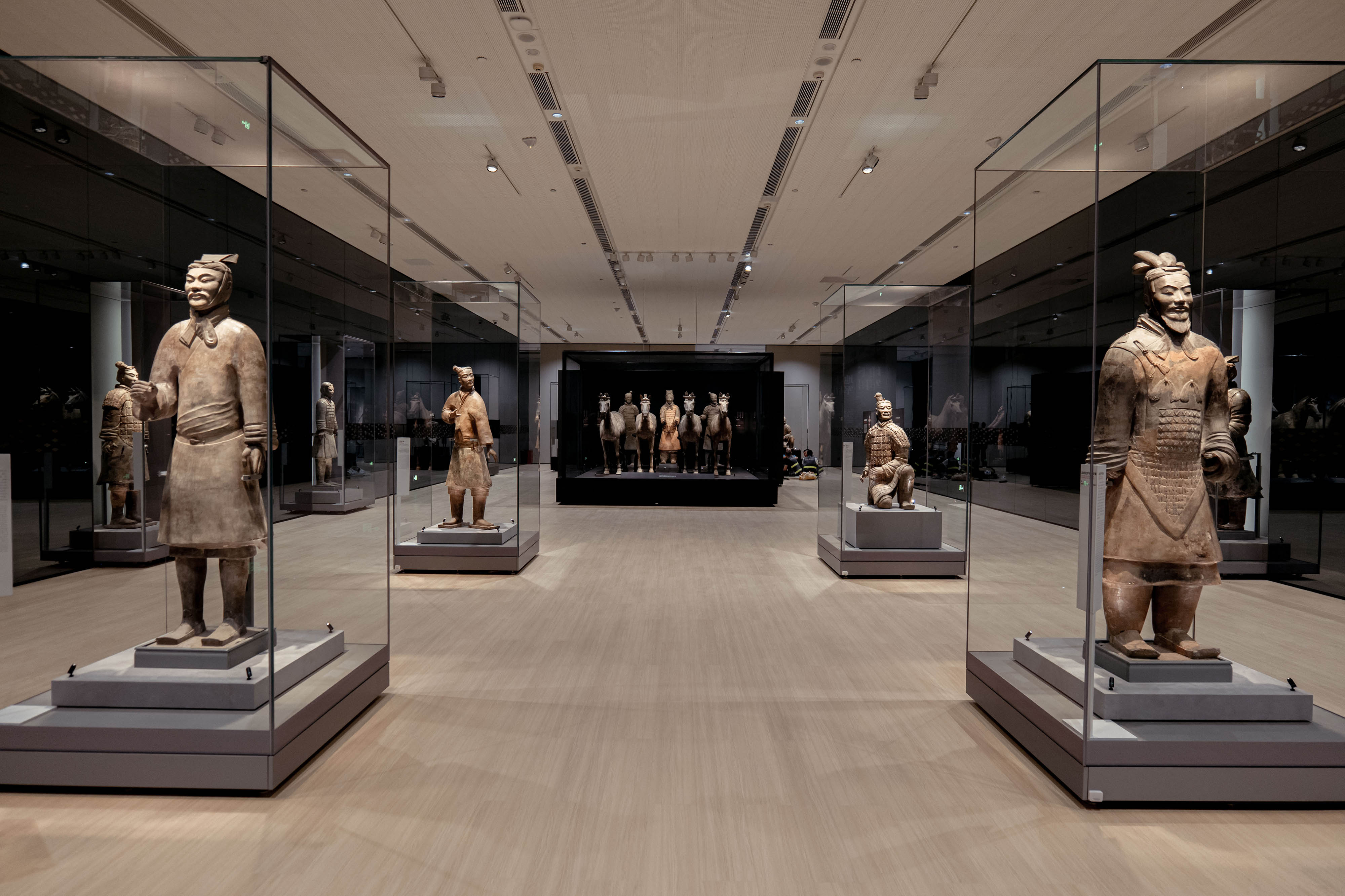
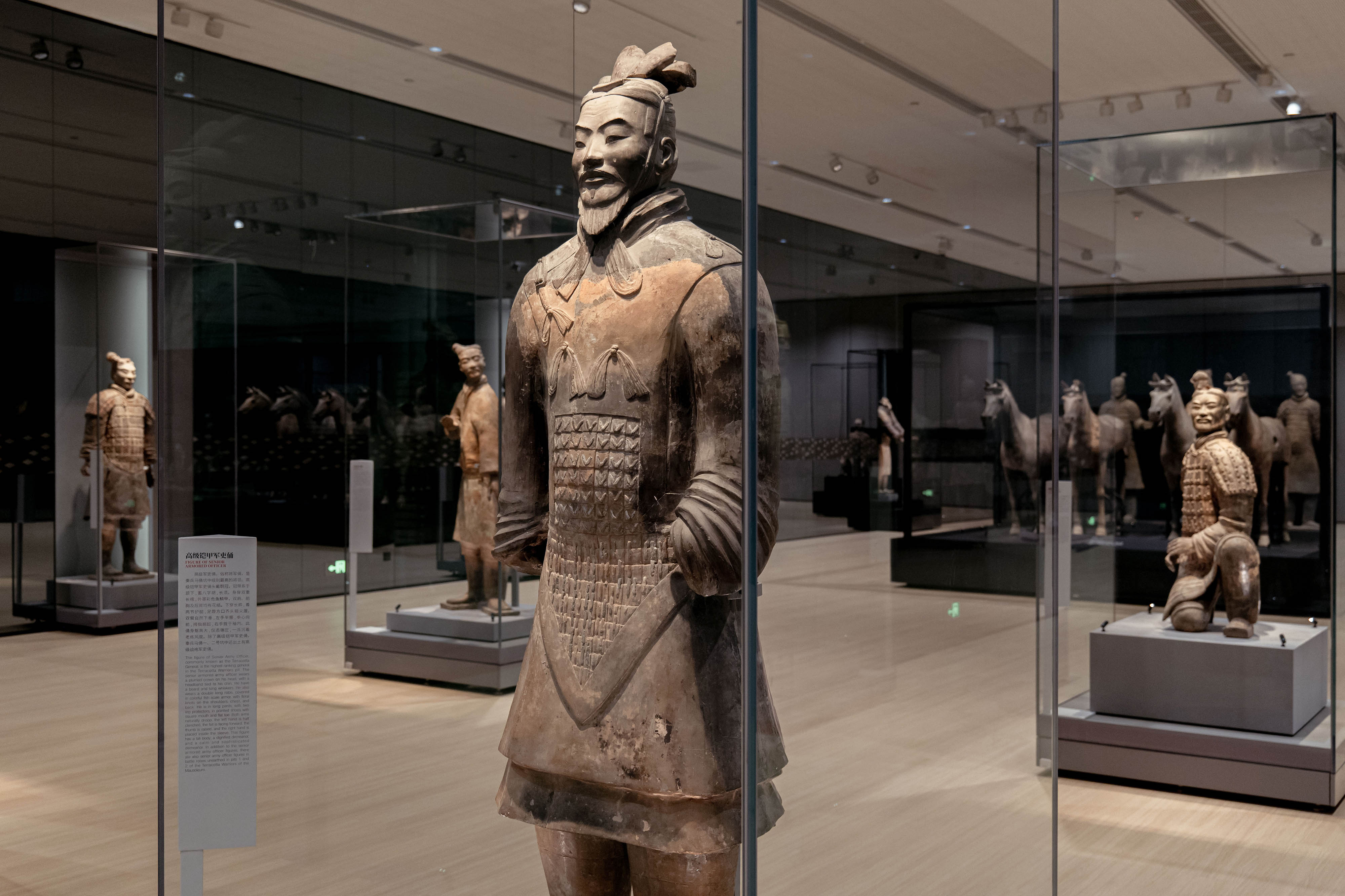
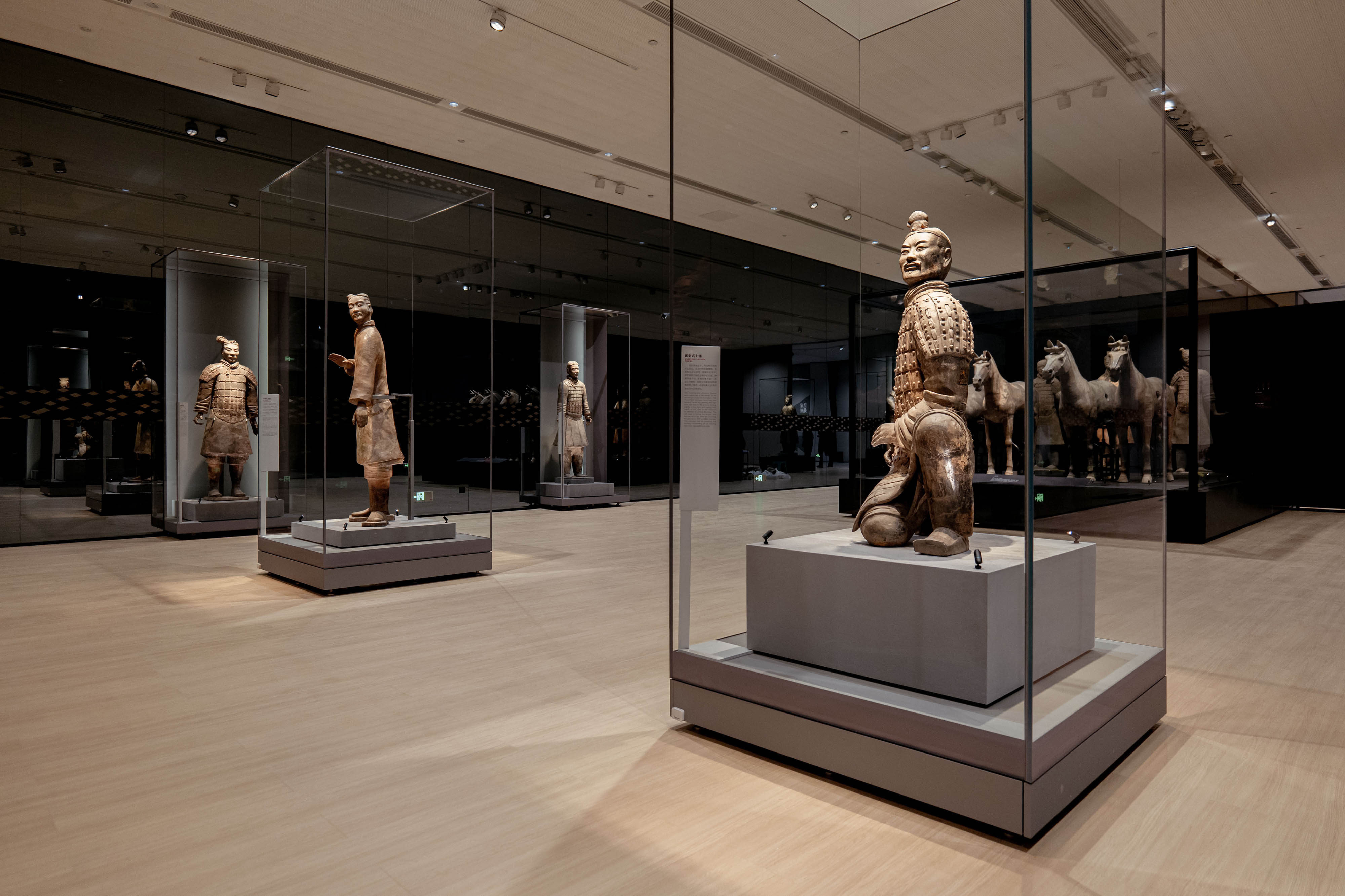
A standout feature of this project is its unified visual system. Instead of superficial decorative motifs, the design takes the diagonal lines of the ancient burial mound and its lozenge patterns, turning them into powerful visual anchors that connect the entire museum. In the first gallery, angled lines run along the walls, and the ceiling folds mimic archaeological excavation grids, making the space itself feel like part of the ancient site. From room layouts to display stands, the lozenge pattern is everywhere, bringing 2D designs to life in 3D spaces. For a more immersive spatial narrative, mirrored walls make the Terracotta Warriors’ formations look endless, even in a smaller room, blending modern minimalism with ancient craftsmanship.
Addressing the tension between spatial constraints and crowd overload in heritage museums, the project employs a “function relocation” strategy to completely rethink how visitors move through the space. It deliberately moves secondary information and interactive features out of the main hall and into the outer corridor. This spatial subtraction unclutters the main gallery. Now, visitors can fully focus on the core artifacts behind the massive glass displays. By separating the busy, interactive areas from the quiet viewing spaces, the design manages to tell a grand story in a compact area. Meanwhile, the outer corridor naturally absorbs the crowd overflow and keeps visitors engaged for longer periods. This effectively increases the space’s capacity without changing the building’s actual footprint.
The entire exhibition design goes beyond a visual journey through time; it is a contemporary translation of historical DNA. By applying the spatial intervention mindset of modern art galleries, the design allows Qin Dynasty aesthetics to resonate with real impact for today’s audiences.
Credits
Entrant
Leon K. Studio
Category
Packaging Design - Luxury

Entrant
ChaCha Food Co.,Ltd
Category
Packaging Design - Snacks, Confectionary & Desserts
Entrant
Bio-architecture Formosana
Category
Architectural Design - Institutional